

Lash Extension Tray: Shop Professional Classic Trays
Choosing the right lash extension tray for professional classic work involves more than picking a curl or length. Lash artists need to compare diameter, length range, curl, fiber material, finish, tray format, and quantity so the extensions fit the intended classic 1:1 application and the artist's existing inventory. This guide is designed as a practical buying hub for comparing classic eyelash extension trays and selecting specifications that make sense for your workflow.
For artists building a professional lash kit, the goal is not to find one universally “best” tray. It is to identify the combination of curl, diameter, length, finish, and format that matches the natural lashes being serviced, the desired lash map, and the types of classic sets performed most often.
Shop Classic Lash Extension Trays
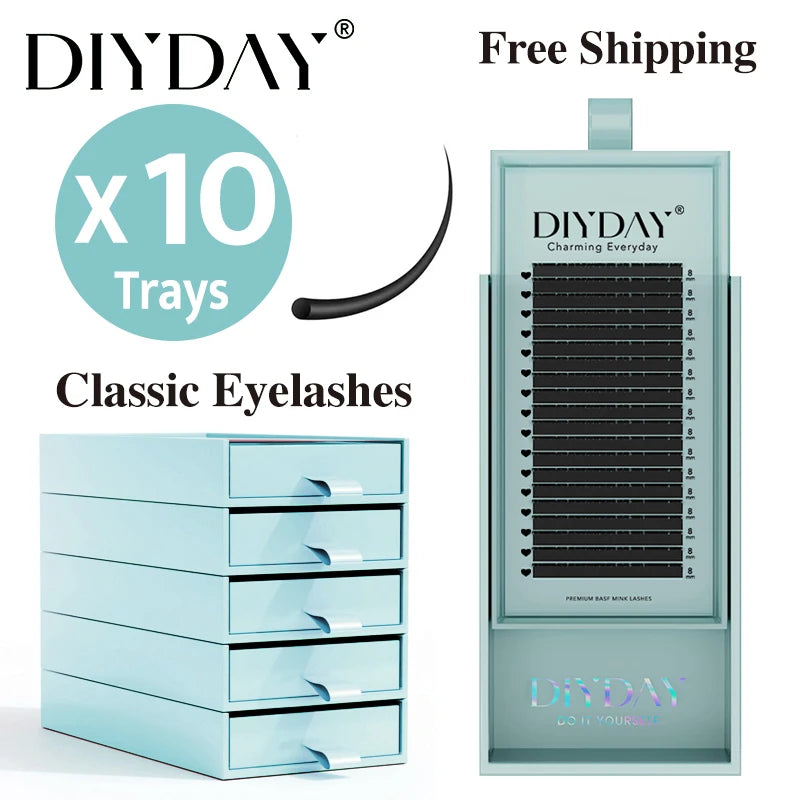
A professional classic lash extension tray should make specification checking straightforward. Before purchasing, compare the stated curl, diameter, available lengths, fiber material, finish, strip format, and tray quantity. If you regularly perform classic sets, consistent labeling is particularly useful because it allows you to replenish the same specifications without rebuilding your inventory system.
Filter by Curl, Diameter, Length, Material, Finish, and Tray Quantity
Start with the specifications that directly affect your lash application. Curl determines the visible bend, diameter affects the appearance and weight of the individual extension, and length contributes to the final lash map. Material and finish help you maintain a consistent visual result, while tray quantity matters when planning regular appointments.
- Curl: Look for the curl profile required by your lash maps, such as B, C, CC, or D where available.
- Diameter: Compare common classic diameters such as 0.10, 0.12, 0.15, 0.18, and 0.20 mm, always considering natural-lash suitability.
- Length: Check whether the tray provides a single length or multiple individual lash lengths.
- Material: Verify whether the manufacturer identifies the fiber as synthetic, PBT, or another specific material.
- Finish: Compare matte or gloss finishes according to the intended aesthetic.
- Quantity: Confirm the number of strips or trays included before calculating how much inventory you need.
Compare Professional Classic Lash Extension Trays
The following matrix gives you a consistent framework for comparing professional trays. Exact specifications should always be verified against the individual product listing before purchase.
| Specification | What to Compare | Why It Matters | Buying Consideration |
|---|---|---|---|
| Curl | J, B, C, CC, D and other available profiles | Controls the visible curve of the extension | Match the curl to the intended design and natural-lash characteristics |
| Diameter | 0.10, 0.12, 0.15, 0.18, 0.20 mm and other options | Changes the appearance and physical characteristics of an individual extension | Select according to professional assessment of the natural lash |
| Length | Single lengths or ranges such as 7–25 mm | Supports different lash maps and styling requirements | Choose a range that fits the sets you regularly create |
| Material | Synthetic fiber, PBT or manufacturer-specified fiber | Provides a standardized description of the extension fiber | Check the manufacturer's stated material rather than assuming it |
| Finish | Matte, gloss or other stated finish | Affects the visual character of the finished set | Choose according to the appearance you want to create |
| Tray format | Mixed-length or single-length strips | Influences organization and application workflow | Choose the format that fits your lash mapping process |
| Quantity | Number of trays, strips or lashes as specified | Determines how much inventory each purchase provides | Confirm the stated quantity before ordering |
Featured professional option: The Classic Eyelash Extension 10 Trays Soft Natural Volume Pro+ is specified as a 10-tray set made from premium synthetic fiber with a matte black finish. The listed curl selection includes B, C, CC, D, DD, L, L+, LU, LC, and LD, with individual lengths from 7–25 mm.
View the classic eyelash extension 10-tray option if its stated specifications match the inventory and styling requirements of your lash services.
Best Classic Lash Trays by Professional Use Case
Best for Classic 1:1 Lash Sets
Classic 1:1 extensions use an individual extension on an individual natural lash. That makes specification discipline especially important. The extension must be selected in relation to the natural lash rather than simply choosing the largest or longest available option.
For a professional classic set, begin by assessing the natural lash and then choose an appropriate diameter, length, and curl. A tray offering several usable specifications can be practical when your appointments include different natural-lash characteristics and styling requests.
The featured 10-tray option is positioned for professional use and provides multiple curl choices and a 7–25 mm length range. That broad selection can make it useful as part of an organized kit, provided the individual specifications are appropriate for the service being performed.
Best Mixed-Length Lash Trays
Mixed-length trays place multiple lengths within one tray format. This can be convenient when an artist frequently changes lengths within a lash map and wants several options available without opening numerous single-length trays.
They are particularly useful when your workflow involves varied lengths across different zones of the eye. Instead of treating the entire set as one fixed length, the artist can select from the available range while following the planned map.
Best Single-Length Lash Trays
Single-length trays are useful for artists who prefer predictable inventory organization. If a particular length is used frequently, a dedicated tray makes that specification easy to identify, restock, and organize at the workstation.
Single-length inventory can also be useful for artists who build sets around repeatable lash maps. The tradeoff is that creating more varied designs may require keeping several individual lengths available.
Best Trays for Stocking a Professional Lash Kit
A practical professional kit should reflect the services you actually perform. Rather than purchasing every available curl and diameter, identify the specifications that appear most often in your lash maps and maintain those first.
- Keep several useful lengths available for your most common maps.
- Separate curls clearly so similar specifications are not confused during appointments.
- Maintain more than one diameter when your professional assessment requires different options.
- Use mixed-length trays when flexibility is more important than strict inventory segmentation.
- Use single-length trays when predictable replenishment and organization are priorities.
- Track tray quantity so you know when frequently used specifications need replenishing.
How to Choose a Lash Extension Tray
To choose a lash extension tray, first identify the curl, diameter, and length required for the intended lash design and natural-lash characteristics. Then verify the fiber material, finish, tray format, and quantity so the product fits both your application technique and inventory system.
Choose the Right Curl
Curl describes the curvature built into an individual lash extension. Common profiles include J, B, C, CC, and D, although the exact naming and availability can vary by manufacturer.
In general terms, lower-curvature profiles can create a subtler appearance, while more pronounced curls create a visibly stronger bend. However, curl should not be selected in isolation. The natural direction of the client's lashes, the desired finished design, and the extension length all affect the appropriate choice.
Always verify the manufacturer's curl designation because naming conventions and available profiles can differ between lash suppliers.
Choose the Right Diameter
Common classic extension diameters include 0.10, 0.12, 0.15, 0.18, and 0.20 mm. Diameter is an important professional-selection factor because the extension is being applied individually in classic 1:1 work.
Do not treat a larger diameter as automatically better. The appropriate diameter depends on the natural lash and the professional assessment made before application. A consistent specification system also makes it easier to select comparable trays when restocking.
Choose the Right Length
Individual lash lengths can be sold as single-length trays or as mixed-length ranges. Shorter and longer extensions may be combined within a planned map to create different visual effects, but length selection should remain appropriate for the natural lash and the intended professional application.
Before purchasing, check the exact range printed in the product specifications. A tray described as offering a broad range should still be evaluated based on which individual lengths are actually included.
Choose the Right Material and Finish
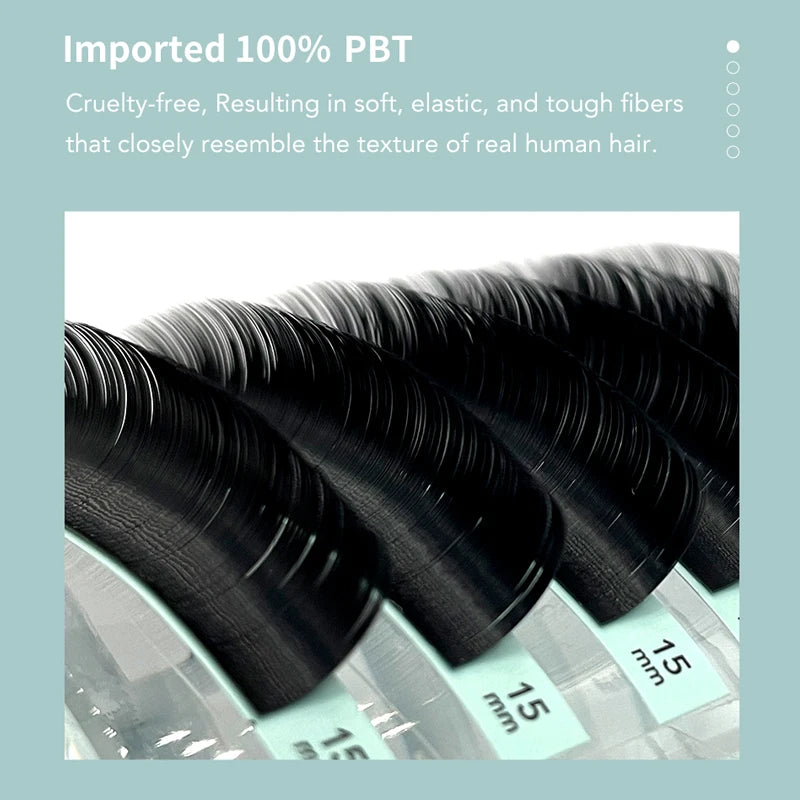
Professional lash trays commonly use synthetic fibers, and some manufacturers specifically identify PBT or another polymer-based fiber. Material terminology should be read literally: if a listing does not specify a particular material, do not assume it.
Finish is another useful comparison point. A matte black finish and a shinier finish can produce different visual characteristics in the completed set. Choose the finish according to the look you want rather than assuming one finish is universally superior.
Choose the Right Tray Format and Quantity
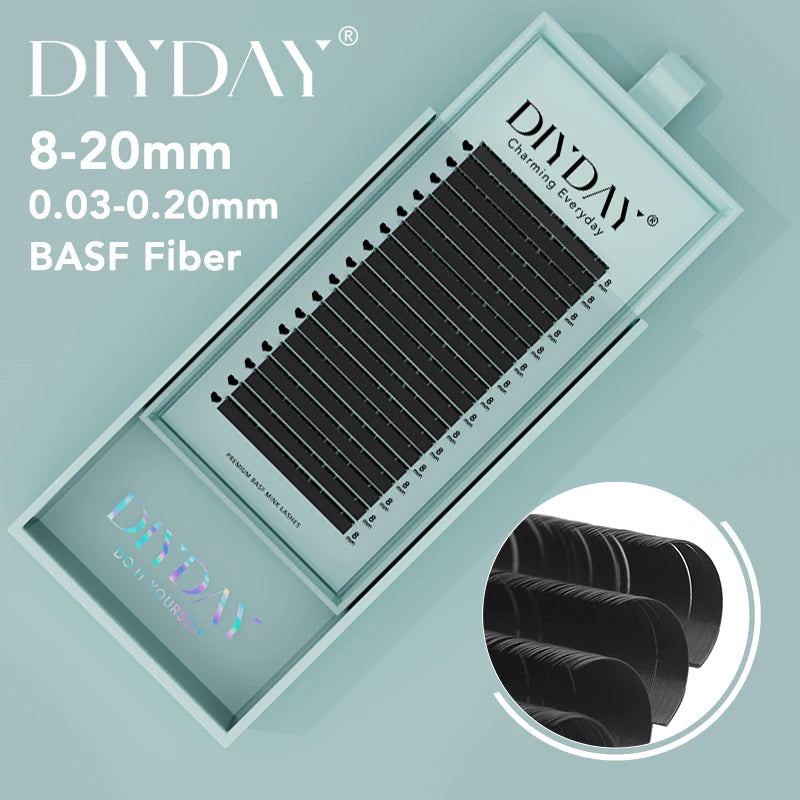
Tray format affects how quickly you can identify and select extensions during an appointment. Strip layouts with clearly labeled lengths, curls, and diameters can simplify workstation organization.
Quantity is equally important for professional buyers. Compare the number of trays or strips included, not simply the package title. If you purchase for regular salon use, recording how quickly each specification is consumed can help determine whether mixed or single-length inventory makes more sense.
Classic Lash Extension Tray Specifications Compared
Curl Comparison: J, B, C, CC, and D
- J curl: A comparatively subtle curl profile where available.
- B curl: A gentle curve that sits between straighter and more pronounced profiles.
- C curl: A commonly used curved profile for a more noticeable lift.
- CC curl: A more pronounced curve than a typical C profile.
- D curl: A stronger, more dramatic curl profile.
These descriptions are reference points rather than universal performance guarantees. Individual manufacturers can differ in how their curl profiles are formed and labeled, so compare the supplier's product specifications when switching brands.
Diameter Comparison for Classic Extensions
Diameter should be considered alongside natural-lash characteristics and the requirements of classic 1:1 application. The commonly encountered sizes below are useful reference points for inventory planning:
- 0.10 mm: A comparatively fine diameter for artists whose classic application calls for a lighter-looking individual extension.
- 0.12 mm: A fine-to-moderate option often considered when building a softer classic appearance.
- 0.15 mm: A commonly encountered classic diameter that provides a more defined individual-lash appearance.
- 0.18 mm: A thicker option that requires careful consideration of the natural lash.
- 0.20 mm: A relatively thick classic diameter that should not be selected without considering natural-lash suitability.
These ranges are not a substitute for professional assessment. The appropriate diameter depends on the individual natural lash and the application circumstances.
Length and Mixed-Length Options
A single-length tray provides one defined length, making it straightforward to identify and replenish. A mixed-length tray combines multiple lengths and can be convenient when the artist regularly builds maps that change length across different sections.
For example, the featured KentDO tray is specified with a 7–25 mm range. The broad range provides multiple length choices within the set, but the correct length for any individual natural lash still needs to be determined professionally.
Material, Finish, and Strip Format
Product comparison becomes easier when every tray is evaluated using the same fields. Record the material, finish, curl, diameter, length range, tray quantity, and strip format for each supplier you use.
This approach also reduces confusion when you reorder. Instead of relying on package appearance alone, you can identify the exact specification combination required for your workstation.
Classic 1:1 Lash Extensions: Matching Trays to Your Set
Selecting Diameter for Classic 1:1 Application
Classic application requires one extension to be attached to one natural lash. Because the extension is not being distributed across a handmade fan, diameter selection deserves particular attention.
Rather than choosing diameter based solely on the desired visual intensity, assess the natural lash and select an extension that is appropriate for that individual lash. Keeping several suitable diameters in your professional kit gives you more flexibility when clients have different natural-lash characteristics.
Building a Balanced Length Mix
A balanced lash map usually involves more than one length. The artist can use a combination of individual lengths to create a planned progression rather than applying one length uniformly across the eye.
Mixed-length trays can simplify this process because several lengths are immediately available. Single-length trays can provide greater inventory control when you already know which lengths are used most frequently.
Matching Curl to the Desired Lash Design
Curl should work with both length and the natural direction of the lash. A stronger curl does not automatically create a better result, and a longer extension does not automatically create a more desirable map.
Think of curl, diameter, and length as a connected specification set. Changing one element can change the overall appearance and application considerations, so avoid selecting each specification independently.
For broader professional beauty resources, artists can also explore the site's Skin and Beauty Care Devices collection and Eye Care Blog for related eye-care and beauty topics.
Review the 10-tray classic extension option when you need a multi-curl, multi-length tray configuration for professional inventory planning.
Mixed-Length vs. Single-Length Lash Trays
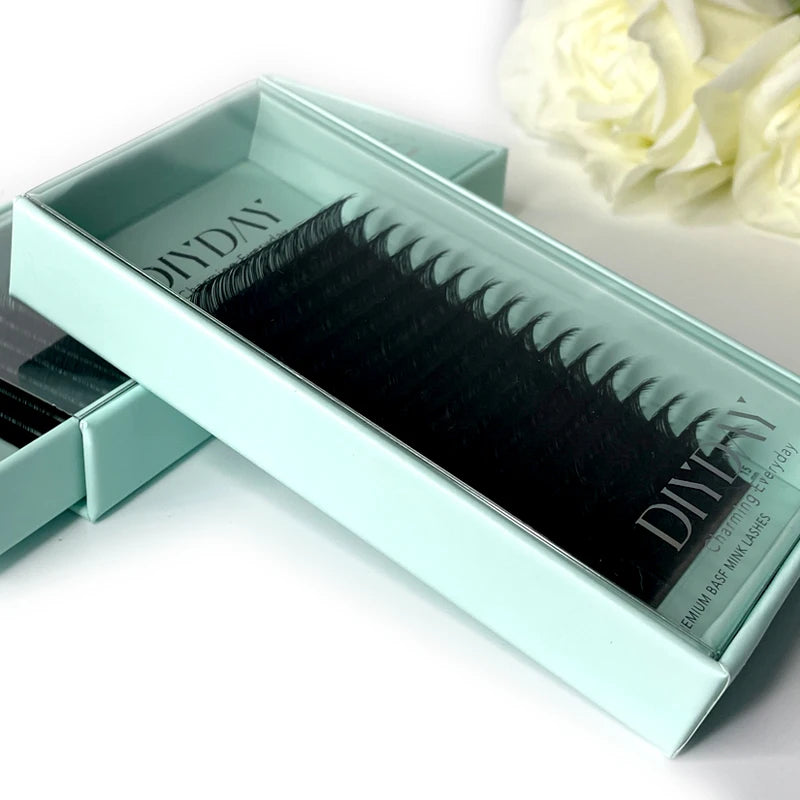
Mixed-Length Trays
Mixed-length trays are designed around variety. Multiple individual lengths in one tray can make them convenient for artists who frequently move between lengths while following different lash maps.
The primary advantage is selection efficiency: several lengths are grouped together rather than stored separately. The potential disadvantage is that some lengths may be consumed more quickly than others, which can affect how you monitor inventory.
Single-Length Trays
Single-length trays prioritize predictability. Each tray corresponds to a defined length, which can make workstation organization and replenishment easier.
They are particularly useful for artists who know their most frequently used lengths and want to maintain dedicated stock. The tradeoff is that varied maps may require several trays to be open or available at the same appointment.
Which Tray Format Should a Lash Artist Buy?
Choose mixed-length lash trays when flexibility and access to several lengths are priorities. Choose single-length lash trays when predictable inventory, repeatable maps, and easy replenishment are more important.
Many professional workflows can benefit from using both formats. A mixed-length tray can provide versatility, while frequently used individual lengths can be maintained separately for consistent demand.
Professional Classic Lash Extension Tray Buying Checklist
Before adding a professional classic lash extension tray to your inventory, run through the same specification checklist every time.
Verify Curl and Diameter Accuracy
Confirm the listed curl and diameter rather than relying on visual comparison alone. Consistent specifications are especially valuable when you reorder products from the same supplier.
Check Length Range and Quantity per Tray
Confirm exactly which individual lengths are included and how many trays or strips the package contains. This prevents assumptions based on product titles or photographs.
Confirm Material, Finish, and Tray Format
Check whether the product is identified as synthetic fiber, PBT, or another material. Confirm the stated finish and whether the tray contains mixed or single lengths.
Review Ratings, Stock, Shipping, and Returns
Before purchasing, review current customer ratings and reviews when available, verify stock status, and check the supplier's current shipping and return policies. These details can change and should be confirmed on the product page at the time of purchase.
Consider Bulk Buying for Regular Lash Services
Artists who perform regular lash services can benefit from tracking consumption by curl, diameter, and length. Instead of buying every specification in large quantities, identify the trays that are used consistently and replenish those according to actual appointment demand.
For a professional beauty business, organized purchasing is often more useful than simply maximizing the number of trays in storage. Keep frequently used specifications accessible and maintain less frequently used options in quantities appropriate to your workflow.
Pros of a well-organized classic lash tray system:
- Faster specification selection during appointments.
- Clearer inventory tracking by curl, diameter, and length.
- Easier replenishment of frequently used specifications.
- More consistent lash mapping across repeat services.
- Better ability to compare products from different suppliers.
Potential drawbacks to consider:
- Maintaining many individual specifications can increase inventory complexity.
- Single-length trays may require more individual packages for varied maps.
- Mixed-length trays can create uneven inventory consumption across included lengths.
- Different suppliers may label curls and materials differently, making direct comparisons less straightforward.
For complementary beauty equipment and supplies, browse the Eye Care Devices collection or explore the Beauty & Self-Care Blog for related professional beauty guidance.
Frequently Asked Questions About Lash Extension Trays
What should you look for when choosing a lash extension tray?
Compare curl, diameter, length, material, finish, tray format, and quantity. For professional classic work, also consider whether the available specifications match your lash maps and the natural-lash characteristics you commonly encounter.
What lash extension tray is best for classic 1:1 sets?
The best tray is the one with specifications appropriate for the natural lashes and design being created. A useful professional tray should clearly state its curl, diameter, length, material, finish, and quantity so the artist can make an informed selection.
What diameter should you choose for classic lash extensions?
Common classic diameters include 0.10, 0.12, 0.15, 0.18, and 0.20 mm, but there is no single diameter that is appropriate for every natural lash. Diameter should be selected based on professional assessment of the natural lash and the intended application.
What is the difference between mixed-length and single-length lash trays?
A mixed-length tray contains several individual lengths in one tray, making it useful for varied lash maps. A single-length tray contains one specified length and can simplify inventory organization when an artist frequently uses that particular size.
How do you choose the right curl and length for classic lash extensions?
Consider the natural lash direction, the desired finished design, and the relationship between curl and length. Confirm the supplier's exact curl designation and available lengths, then select specifications appropriate for the individual natural lashes being serviced.
Choose Your Professional Classic Lash Extension Tray
The right lash extension tray is ultimately the one whose specifications fit your professional workflow. Compare curl, diameter, length, material, finish, format, and quantity together rather than choosing a tray from a single specification.
For classic 1:1 services, prioritize appropriate diameter and length selection for the natural lash, then use curl and finish to support the intended design. Mixed-length trays can provide flexibility, while single-length trays can make repeatable inventory easier to manage.
When you're ready to compare a professional multi-tray option, review the Classic Eyelash Extension 10 Trays Soft Natural Volume Pro+ and verify its current specifications before purchase.
Build your tray inventory around the curls, diameters, and lengths you actually use, keep specifications clearly organized, and replenish according to real service demand. That approach makes your lash station easier to manage while keeping product selection aligned with professional classic lash applications.
Pillar Article: Lash Extension Curl Retention: What Pros Should Look For













