

Synthetic Classic Eyelash Extensions: A Professional Guide
Synthetic classic eyelash extensions are not automatically heavy, stiff, or unnatural simply because they are synthetic. Modern professional extensions are engineered to deliver consistent curl, diameter, finish, and shape, making them highly predictable for classic lash work. In a classic set, one extension is attached to one natural lash, so the fiber's diameter, length, weight, and curl all directly influence the finished look.
For lash artists, the real question is not whether a lash is labeled “synthetic,” but how its construction performs in practice. PBT fiber quality, taper, curl stability, diameter consistency, finish, tray organization, adhesive compatibility, and natural-lash suitability all matter. This guide explains how those factors affect professional classic sets and how synthetic fibers compare with traditional mink and silk categories.
What Are Synthetic Classic Eyelash Extensions?
Synthetic classic eyelash extensions are individual manufactured lash fibers designed to be applied individually to natural eyelashes using the classic 1:1 technique. The term synthetic describes the fiber material, while classic describes the application method. Therefore, synthetic and classic are not competing categories: a classic extension can be synthetic, and synthetic fibers can also be used in other lash techniques.
Synthetic Classic Lashes in Simple Terms
In a classic lash application, the artist isolates one natural lash and attaches one extension to it. The extension adds length, curl, thickness, or a combination of these visual characteristics without creating a handmade fan.
This makes fiber selection particularly important. Because each natural lash carries an individual extension, choosing an appropriate diameter and length is essential for achieving definition without unnecessarily increasing mechanical load.
What Is PBT (Polybutylene Terephthalate)?
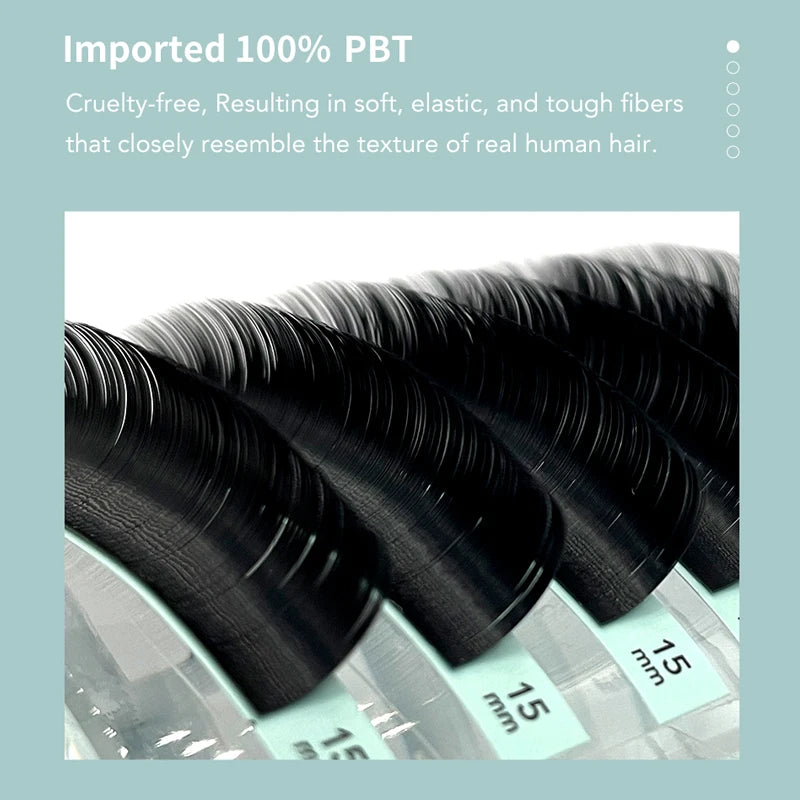
PBT, or polybutylene terephthalate, is a synthetic thermoplastic polymer widely used to manufacture eyelash extension fibers. Its usefulness comes from its ability to be formed into consistent filaments and processed into controlled shapes and curls.
For professional lash products, synthetic PBT construction can provide repeatable dimensions and predictable styling characteristics. The exact feel and appearance still depend on manufacturing, fiber profile, taper, surface finish, diameter, and curl—not merely on the fact that the material is PBT.
How Synthetic Fibers Are Shaped and Finished
Manufacturing determines much of what an artist experiences when picking up a lash. Consistent diameter helps extensions behave predictably, while controlled molding helps maintain a specified curl. Surface treatment can also influence whether a lash appears glossy, matte, soft, or highly defined.
A well-made synthetic fiber should therefore be evaluated by its actual performance: uniformity, curl stability, finish, flexibility, and consistency across the tray.
How 1:1 Synthetic Classic Lash Application Works
What 1:1 Application Means
The 1:1 method means one extension is attached to one isolated natural lash. Unlike volume techniques, the artist is not creating a fan of multiple extensions around a single natural lash. The finished effect is primarily determined by the selected extension and the natural lash pattern.
Why Fiber Selection Matters in Classic Sets
With only one extension assigned to each natural lash, small differences in diameter, length, curl, and finish can noticeably change the result. A fine diameter can produce a softer and lighter appearance, while a larger diameter can create stronger definition.
The artist should consider the natural lash first and the desired visual effect second. A darker or more dramatic appearance should not be achieved by simply selecting the heaviest available extension.
Synthetic Classics vs Volume Extensions
Material and technique describe different characteristics. Synthetic refers to what the extension is made from, while classic refers to 1:1 application. Volume lashes may also be manufactured from synthetic fibers, but they are arranged into fans containing multiple fine extensions.
This distinction prevents a common misunderstanding: choosing synthetic fibers does not determine whether a set is classic or volume. The application structure does.
How to Choose Synthetic Classic Lash Diameter
Common Classic Lash Diameters
Professional classic extensions are commonly available across a range of diameters, with finer options used for lighter, softer sets and thicker options used when greater definition is appropriate. Exact diameter availability varies by manufacturer and product line.
Rather than treating one diameter as universally “best,” artists should think in terms of proportionality. A strong natural lash may tolerate a different extension specification than a fine natural lash, even when both clients request a similar visual style.
Match Diameter to Natural Lash Strength
The natural lash should establish the practical limit. Excessively heavy extensions can place unnecessary mechanical stress on the natural lash and may affect comfort or the appearance of the set as natural lashes grow and shed.
Proper isolation, appropriate length and diameter selection, controlled attachment, and professional application technique are therefore more important than simply choosing a dramatic specification.
Diameter, Weight, and Visual Density
Diameter affects both physical load and visual density. A thicker fiber generally creates a more pronounced line, while a finer fiber can create definition with less visual heaviness. Length also contributes to overall load, so diameter should never be considered independently.
The goal is a balanced extension that complements the natural lash rather than overpowering it.
How to Choose the Right Lash Extension Curl
Common Synthetic Classic Lash Curls
Common lash curls include J, B, C, CC, and D, with additional specialty curls available from some manufacturers. In broad terms, J and B curls create subtler lift, C and CC curls create progressively more visible elevation, and D curls provide a more dramatic upward effect.
Match Curl to Natural Lash Direction
Curl should be selected according to the direction and shape of the natural lash as well as the desired result. A dramatic curl is not automatically better. If the extension does not harmonize with the natural lash direction, the finished styling can look less balanced.
Professional selection also considers eyelid structure, natural lash angle, eye shape, and the client's preferred level of definition.
Curl Selection by Desired Finish
For a subtle result, softer curls can preserve a more natural visual transition. C and CC curls can provide a lifted, open appearance, while D and other pronounced curls can create a stronger statement.
The important principle is consistency: the selected curl should support the styling map and remain compatible with the natural lashes being extended.
Synthetic vs Mink vs Silk Eyelash Extensions
Synthetic Lash Extension Fibers
Synthetic fibers are popular in professional lash work because manufacturing can provide predictable dimensions, curl, finish, and repeatability. They can also be produced in many diameters and styling profiles, giving artists broad control over classic sets.
Mink Eyelash Extensions
Traditional mink extensions are associated with a soft, natural-looking appearance and were historically marketed as a premium alternative to synthetic fibers. However, natural animal fibers can introduce greater variability in texture and appearance, and ethical sourcing is an important consideration.
Artists should also verify exactly what a product labeled “mink” means. Some products use the word as a style descriptor even though the actual fiber is synthetic.
Silk Eyelash Extensions
“Silk” is also frequently used as a lash-industry product category rather than a literal statement that the extension is made from natural silk. Many products marketed as silk lashes are manufactured synthetic fibers engineered to have a particular softness, sheen, or finish.
Synthetic vs Mink vs Silk: Quick Comparison
| Characteristic | Synthetic/PBT | Mink | Silk Category |
|---|---|---|---|
| Material | Manufactured synthetic fiber | Traditionally animal-derived | Often a synthetic product category |
| Consistency | Highly controllable through manufacturing | Can vary with natural fiber | Varies by manufacturer |
| Finish | Can range from matte to glossy | Traditionally soft and natural-looking | Often positioned as soft or satin-like |
| Curl control | Highly customizable | Can be less standardized | Depends on construction |
| Durability | Generally predictable when properly manufactured | Depends on fiber and processing | Depends on product construction |
| Professional use | Broad range of classic styling applications | Chosen for particular aesthetic preferences | Chosen for particular finish and feel |
Are Synthetic Classic Lashes Lightweight and Safe for Natural Lashes?
High-quality synthetic classic lashes can be lightweight enough for professional classic applications. However, “synthetic” does not establish weight by itself. Diameter, length, fiber construction, and the number of extensions applied all influence the mechanical load placed on natural lashes.
What Determines Lash Extension Weight?
For an individual extension, diameter and length are particularly relevant. A longer or thicker extension generally contains more material than a shorter, finer extension. In a complete set, the combined effect also depends on how many natural lashes receive extensions.
How to Protect Natural Lash Health
Appropriate extension selection should account for the natural lash's thickness, length, strength, and condition. Correct isolation prevents multiple natural lashes from becoming unintentionally bonded together, while appropriate attachment and sizing help maintain comfort as natural lashes move through their growth and shedding cycle.
Clients should also follow professional aftercare instructions and avoid aggressive rubbing or pulling. If persistent irritation, swelling, pain, or other concerning symptoms occur, professional or medical advice may be appropriate.
Why “Synthetic” Does Not Mean “Heavy”
Modern manufacturing allows synthetic fibers to be produced in very fine profiles. Consequently, the word synthetic says little about the actual weight of an individual extension. A fine, well-engineered PBT lash may be considerably more suitable for a delicate classic set than a thicker fiber selected simply because it appears darker.
Synthetic Classic Lash Durability, Finish, and Retention
How Long Do Synthetic Classic Extensions Last?
Synthetic classic extensions do not have one universal retention period. Extensions are attached to natural lashes, so they are naturally shed as those lashes complete their growth cycle. Adhesive performance, application quality, environmental conditions, aftercare, oil exposure, rubbing, and individual shedding patterns can all affect how long a set looks full.
Material quality can contribute to consistent performance, but it does not override the natural lash cycle or application variables.
Glossy, Matte, and Natural-Looking Finishes
A glossy black finish can make a classic set appear darker and more defined, while a matte finish can reduce surface shine and create a softer visual impression. Taper and diameter also affect perceived realism.
For natural-looking results, artists should consider the complete combination of fiber profile, curl, diameter, length, and finish rather than treating any single characteristic as decisive.
What Affects Lash Extension Retention?
- Natural lash growth and shedding cycle
- Correct isolation and attachment
- Adhesive selection and compatibility
- Appropriate humidity and curing conditions for the adhesive
- Client aftercare and cleansing habits
- Oil exposure and cosmetic products around the eye
- Rubbing, pulling, or mechanical friction
- Appropriate extension length and diameter
When Synthetic Classic Lashes Are the Better Professional Choice
Best for Consistent Curl and Diameter
Synthetic fibers are particularly useful when repeatability matters. A professional working across multiple appointments benefits from extensions that maintain consistent dimensions and curl throughout the tray.
Best for Customizable Client Looks
Because synthetic lash products can be manufactured in numerous curls, lengths, diameters, and finishes, they offer artists substantial flexibility. This makes them suitable for subtle classic sets as well as more defined styling.
Best for Professional Classic Lash Trays
For salon workflow, the ideal tray is not simply the darkest or softest option. Artists should look for consistent fibers, clearly marked lengths, dependable curl, usable diameter options, and organization that makes pickup efficient.
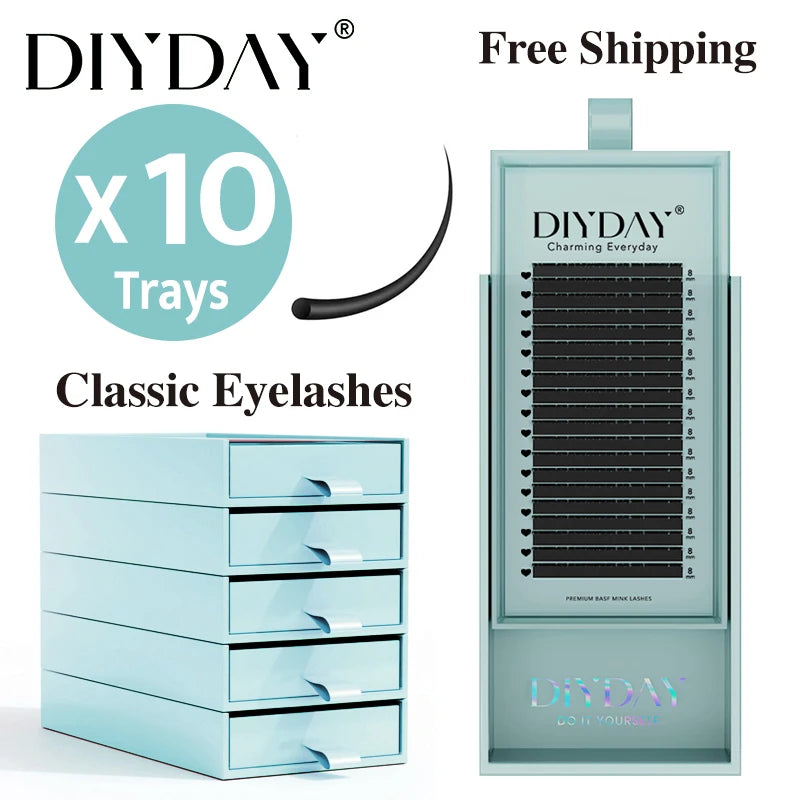
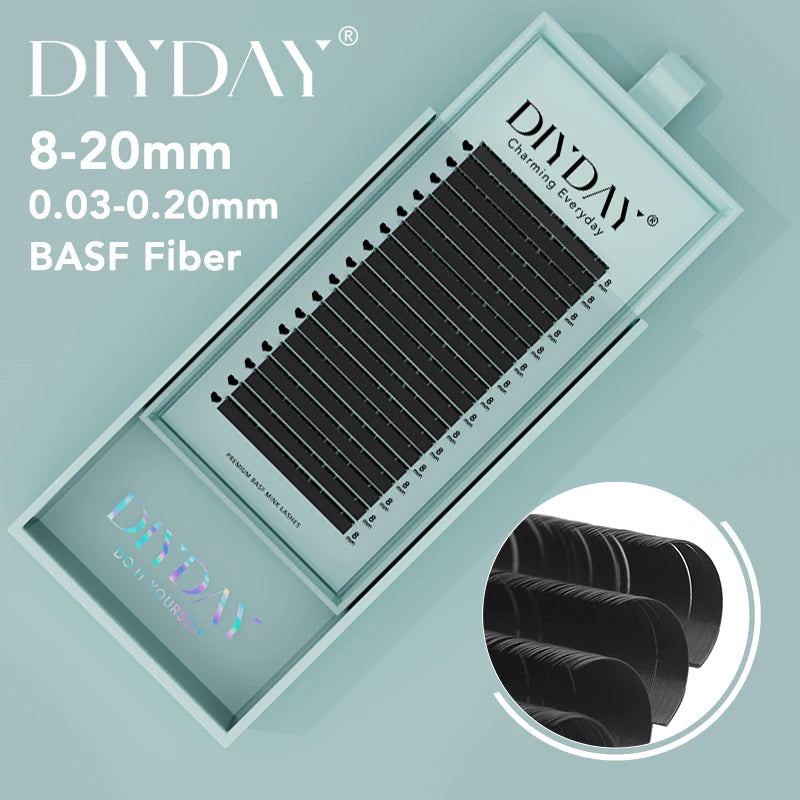
For artists comparing professional options, Classic Eyelash Extension 10 Trays Soft Natural Volume Pro+ is one example of a synthetic classic-lash tray format designed around professional variety. Its listed specifications include matte-black synthetic fibers, lengths from 7–25 mm, and multiple curl options including B, C, CC, D, DD, L, L+, LU, LC, and LD.
The value of a product like this should be judged against the selection criteria discussed above: fiber consistency, available styling range, curl reliability, finish, and how efficiently the tray supports the artist's normal workflow.
When Another Fiber Category May Be Preferred
Another product category may make sense when a client or artist has a very specific preference for tactile feel, sheen, or aesthetic character. The label alone should not determine the decision. Comparing the actual fiber construction and performance specifications is more useful than assuming that “mink” or “silk” automatically means softer or more natural.
How to Select Synthetic Classic Lash Trays for Professional Use
Check Fiber Consistency
Inspect whether individual fibers appear uniform in thickness, taper, curl, and finish. Inconsistent fibers can make pickup and placement less predictable and may create visible differences within a set.
Check Length and Diameter Range
A useful professional tray should contain the specifications needed for the artist's most common styling patterns. A broad length range can reduce the need to switch between multiple trays, while suitable diameter choices allow the artist to adapt to different natural-lash characteristics.
Check Curl Stability and Finish
Consistent curl is especially important in classic sets because each individual extension contributes directly to the overall lash line. A predictable finish also makes it easier to reproduce a client's preferred appearance from appointment to appointment.
Check Tray Organization and Pickup Efficiency
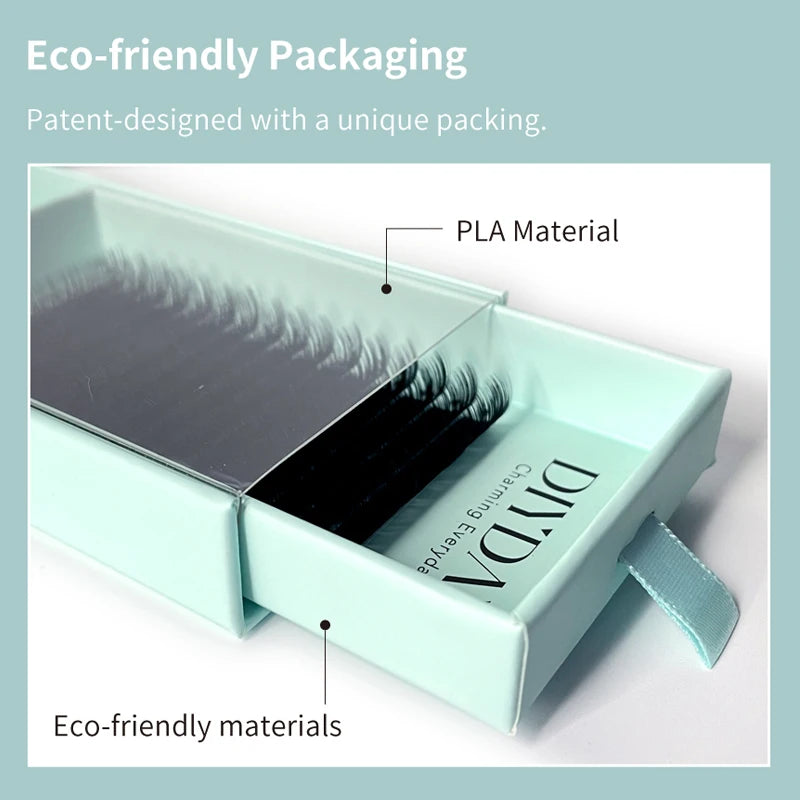
Clear length markings and well-organized strips can improve workflow. For busy professionals, tray design is not merely cosmetic; fast identification of length, curl, and diameter can reduce unnecessary handling during application.
Common Misconceptions About Synthetic Eyelash Extensions
Myth: Synthetic Always Means Heavy
Weight depends on extension dimensions and construction, not the word synthetic alone. Fine synthetic fibers can be appropriate for lightweight classic applications when selected according to the natural lash.
Myth: Synthetic Always Looks Unnatural
Appearance depends on diameter, taper, curl, length, finish, and styling. A well-selected matte or natural-finish synthetic fiber can create a subtle result, while the same material category can also produce a much more dramatic look.
Myth: Material Alone Determines Retention
Retention is multifactorial. Adhesive behavior, application technique, environmental conditions, aftercare, natural shedding, and mechanical stress all contribute. A high-quality fiber cannot compensate for poor application or inappropriate aftercare.
Synthetic Classic Lash Selection Checklist
Choose the Fiber
Start with a reputable synthetic or PBT construction and decide whether the desired finish is matte, glossy, soft, or highly defined.
Choose the Diameter
Prioritize the strength and characteristics of the natural lash rather than choosing the thickest extension that creates the darkest appearance.
Choose the Curl
Match curl to natural lash direction and the intended eye effect. Consider whether the result should look natural, lifted, open, or more dramatic.
Choose the Length
Balance the client's styling goal with natural-lash capacity and proportionality. Longer is not automatically better.
Choose the Right Tray
Look for consistent fibers, clear labeling, useful length and diameter ranges, stable curl, and organization that supports efficient professional pickup.
Final Takeaway
The best synthetic classic eyelash extensions are defined by controlled fiber performance rather than the word “synthetic” itself. PBT construction can provide consistent curl, diameter, shape, and finish, but the final result depends on how those properties are matched to the natural lash and the client's styling goal.
For professional classic work, evaluate the complete system: fiber construction, diameter, length, curl, weight, finish, tray consistency, application technique, adhesive conditions, and aftercare. Synthetic fibers can be an especially practical choice when predictable specifications and repeatable salon results matter.
Artists ready to compare professional options can use the same criteria when reviewing synthetic classic lash trays: consistent fibers first, appropriate natural-lash compatibility second, and styling flexibility third.
Pillar Article: Lash Extension Curl Retention: What Pros Should Look For













