
UV Lash Glue Curing Kit Comparison: Best Options for Professional Lash Artists
Choosing a UV lash glue curing kit involves more than comparing lamp prices or advertised curing speeds. Professional lash artists need to evaluate wavelength compatibility, optical output, adhesive requirements, lamp positioning, included accessories, safety provisions, and after-sales support before investing in a new application system. Two kits may look similar but offer very different levels of technical documentation and practical usability.
This comparison examines three main configurations: standalone UV lash curing lamps, complete professional starter kits, and advanced salon systems. It also evaluates the Professional UV LED Eyelash Glue Curing Light Kit by Pinky Leem (model TL02), helping technicians understand its documented features, limitations, and suitability for different professional workflows.
UV Lash Glue Curing Kit Comparison: What Professional Lash Artists Should Know
A professional UV lash glue curing kit is an equipment package designed to support eyelash extension placement and the light-activated curing of compatible adhesive. Depending on the configuration, it may include a UV LED lamp, power accessories, positioning equipment, precision tweezers, and other application tools. Its value depends on verified adhesive compatibility, documented light specifications, safety provisions, and workflow suitability.
Before purchasing, distinguish between three common equipment configurations.
Standalone UV Lash Curing Lamps
A standalone UV lash curing lamp provides the light source required by a compatible UV-responsive eyelash adhesive. It is generally appropriate for technicians who already own precision tweezers, extension supplies, suitable protective equipment, and other essential application tools.
Advantages:
- Potentially lower initial equipment costs when the technician already owns the necessary accessories.
- Allows experienced lash artists to select individual accessories according to their workflow.
- Can be integrated into an existing professional workstation if positioning and operating requirements are suitable.
Disadvantages:
- Additional purchases may be necessary.
- Accessories, positioning equipment, and protective provisions may not be included.
- Compatibility must be checked separately against the adhesive manufacturer's requirements.
Complete UV Lash Professional Starter Kits
A complete starter kit combines a curing light with selected application accessories. Depending on the manufacturer, these packages may include precision tweezers, a lamp stand, power accessories, and compatible adhesive.
The main advantage is purchasing convenience. However, the word complete does not guarantee that every item required for professional operation is included. Buyers should inspect the exact package contents rather than relying on product photographs or general marketing descriptions.
Professional Salon UV Curing Systems
Advanced salon systems are designed around repeated professional use. Their potential advantages include adjustable lamp positioning, stable mounting, documented operating parameters, accessible replacement components, and manufacturer technical support.
For established studios, repeatability and serviceability may be more important than the lowest purchase price. A system with clear technical documentation and dependable replacement-part availability can be a more practical investment than an inexpensive lamp with incomplete specifications.
UV Lash Glue Curing Kit Comparison: Specifications, Features, and Value
The following comparison evaluates the three purchasing configurations and a currently listed product. An important distinction is that the available Pinky Leem TL02 listing confirms certain product details but does not disclose wavelength, optical output power, manufacturer-approved adhesive compatibility, or validated curing times.
Complete UV Lash Curing Kit Comparison Matrix
- Standalone UV curing lamp: Configuration includes a curing light. Additional accessories depend on the seller. Wavelength, optical output, curing time, and adhesive compatibility must be verified before purchasing. Best suited to technicians who already own application equipment.
- Complete professional starter kit: Configuration may combine a lamp, tweezers, power accessories, and compatible adhesive. Confirm every included component and request manufacturer documentation. Best suited to technicians building an application workstation.
- Advanced salon UV system: Configuration may offer adjustable positioning, mounting stability, documented output, and service support. Specifications and warranty vary by manufacturer. Best suited to established salons requiring repeatable operating conditions.
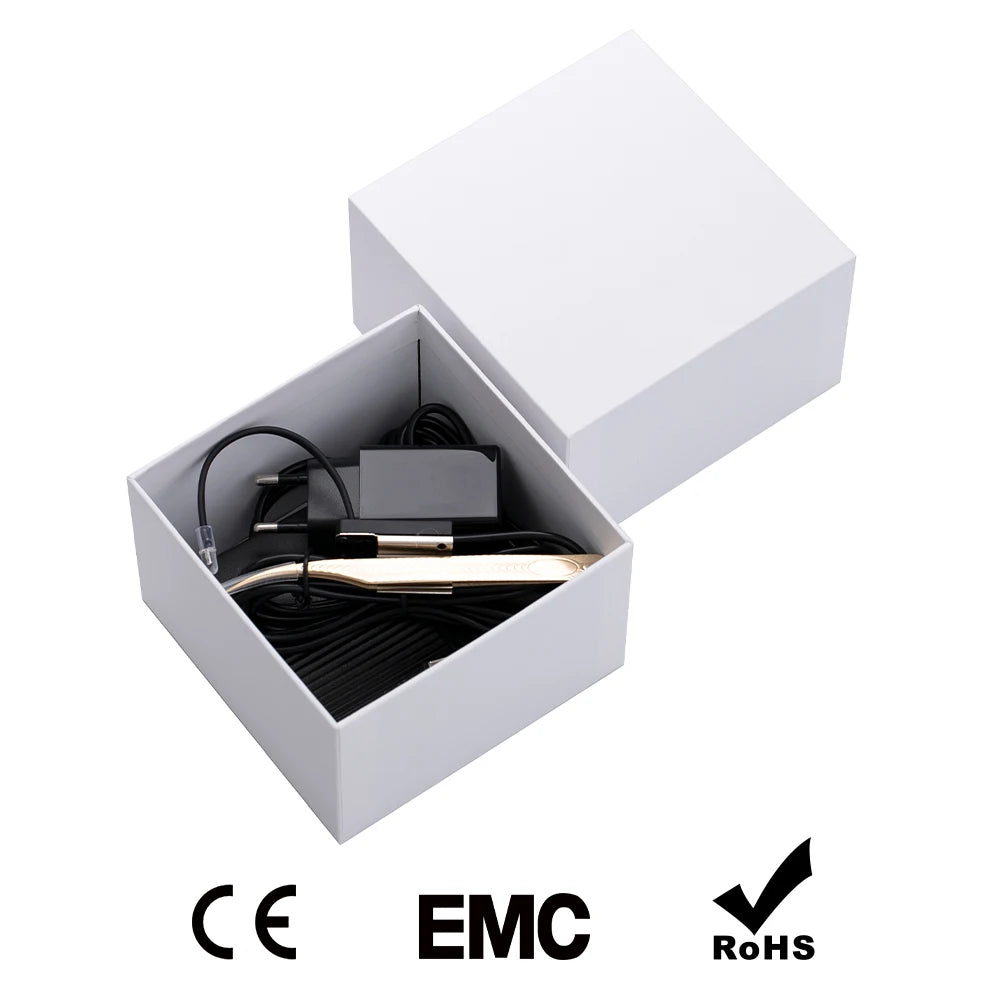
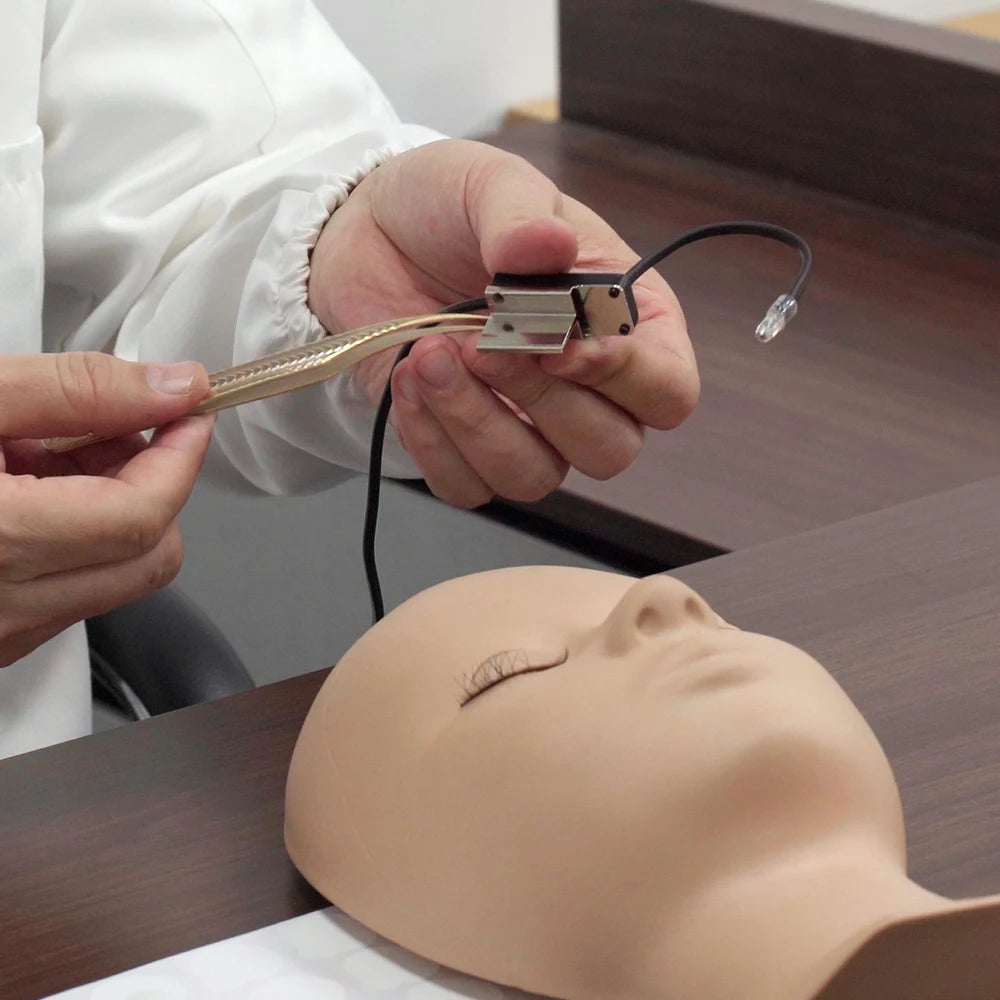
- Pinky Leem TL02 UV LED kit: Listed as one makeup tool kit featuring UV LED technology and precision tweezers. Material: plastic. Listed weight: 0.5 kg. Quantity: one kit. Wavelength, optical output, validated curing time, adhesive compatibility, warranty, and protective accessories are not disclosed in the supplied product information. Best considered by buyers who want a light-and-tweezers configuration and can independently verify the missing technical requirements.
Which UV Lash Curing Kit Offers the Best Overall Value?
The best value depends on what the technician already owns and what the new equipment must provide.
A standalone lamp may be economical for an experienced artist with an established workstation. A starter kit may reduce the effort of sourcing individual tools. A professional salon system may justify a higher investment when it provides documented technical performance, reliable positioning, replacement components, and responsive manufacturer support.
The Professional UV LED Eyelash Glue Curing Light Kit is one option to examine when comparing light-and-tweezers configurations. Its listing identifies the Pinky Leem brand name, TL02 model, plastic construction, and 0.5 kg listed weight. Buyers should request the missing wavelength, output, compatibility, safety, and operating documentation before deciding whether it meets their professional requirements.
Verified Specifications vs. Marketing Claims
Professional buyers should separate measurable technical information from promotional descriptions. Terms such as rapid curing, professional-grade, high efficiency, and instant bonding do not establish that a lamp is compatible with a particular adhesive.
Request the following documentation when evaluating any UV lash curing system:
- Manufacturer-specified wavelength or wavelength range, measured in nanometers.
- Optical irradiance or output measurements, including the measurement conditions.
- Recommended working distance and exposure duration.
- Validated adhesive compatibility information.
- Operating instructions and appropriate protective equipment requirements.
- Warranty terms, replacement-part availability, and technical support details.
If these specifications are unavailable, classify them as not disclosed rather than estimating values based on the lamp's appearance, electrical wattage, or advertised performance.
UV Wavelength, LED Output Power, and Curing Speed Explained
UV LED curing depends on the interaction between emitted light and the adhesive formulation. A lamp's specifications must match the photochemical requirements of the adhesive. Neither a higher wattage rating nor a shorter advertised curing time independently proves that a system will produce reliable results.
Understanding UV Wavelength in Nanometers
Wavelength describes the spectral characteristics of emitted light and is measured in nanometers (nm). Different photoinitiator systems respond to different wavelength ranges. Therefore, the lamp must emit light within the range specified by the adhesive manufacturer.
When comparing UV lash lamps, request the actual wavelength specification instead of relying on descriptions such as UV LED or violet light. A general technology label does not establish compatibility with every UV-responsive adhesive.
Understanding LED Optical Output Power
Electrical power consumption and optical output power are different measurements. A lamp may consume a particular number of watts without delivering a corresponding amount of usable optical energy to the adhesive.
For meaningful comparisons, ask manufacturers for irradiance measurements, typically expressed in mW/cm², and the distance at which those measurements were obtained. A reading taken directly at the light source may not represent the exposure conditions at the lash application area.
What Determines Lash Adhesive Curing Time?
Curing time depends on several interacting variables:
- Wavelength: The emitted light must match the adhesive's photoinitiator requirements.
- Irradiance: The optical energy reaching the adhesive influences the curing process.
- Exposure duration: The adhesive must receive the manufacturer-specified exposure.
- Working distance: The position of the lamp affects the light delivered to the application area.
- Adhesive formulation: Different formulations have different photochemical requirements.
- Application conditions: Adhesive quantity, placement, and other manufacturer-specified conditions can affect results.
Consequently, a claim of instant curing should not be treated as a universal performance guarantee. Only use curing times validated for the specific adhesive and equipment combination.
Why Lamp Positioning and Working Distance Matter
Even a technically suitable lamp may produce inconsistent results when positioning is unstable or the recommended working distance is not maintained.
Evaluate whether the system provides a stable stand, adjustable angle, predictable positioning, and clear operating instructions. The technician should be able to follow the manufacturer's specified exposure conditions without repeatedly repositioning the equipment.
UV Adhesive Compatibility: Which Lash Glues Work With UV Curing Kits?
Adhesive compatibility is one of the most important purchasing considerations. A UV LED curing lamp is not automatically compatible with every eyelash extension adhesive. Buyers must distinguish purpose-formulated UV-responsive products from conventional lash adhesives that cure through a different chemical mechanism.
UV Eyelash Extension Adhesive and Photoinitiators
UV-responsive eyelash adhesives contain photoinitiator systems designed to initiate polymerization when exposed to appropriate light. When the correct wavelength and exposure conditions are used, light activates the specified curing process.
The adhesive manufacturer's technical documentation should identify the compatible wavelength range, recommended equipment requirements, exposure conditions, and handling precautions.
UV Adhesive vs. Conventional Cyanoacrylate Lash Adhesive
Traditional cyanoacrylate eyelash extension adhesives generally polymerize through moisture-related chemical reactions rather than relying on a UV LED light source as their primary curing mechanism.
UV-responsive formulations use a light-activated curing mechanism. These systems therefore require compatible equipment and manufacturer-defined operating conditions.
Do not assume that conventional cyanoacrylate adhesive can be used with a UV lamp simply because both products are designed for eyelash extensions. Likewise, do not assume that every UV adhesive works with every UV curing system.
UV Lash Adhesive Compatibility Matrix
- Manufacturer-approved UV-responsive adhesive: Intended for light-activated curing. A UV lamp is required when specified by the adhesive manufacturer. Purchase only equipment confirmed to meet the adhesive's wavelength and exposure requirements.
- Conventional cyanoacrylate adhesive: Primarily moisture-triggered curing. A UV lamp should not be assumed necessary or compatible. Follow the adhesive manufacturer's conventional application instructions.
- Adhesive with unclear curing technology: Intended mechanism is not established. Do not purchase a curing lamp based on assumptions. Obtain written technical confirmation before use.
- UV adhesive with an unspecified lamp requirement: Compatibility remains unverified. Request the recommended wavelength, irradiance, distance, and exposure duration from the adhesive supplier.
How to Verify Adhesive and Lamp Compatibility Before Buying
- Identify the exact adhesive brand, product name, and formulation.
- Read the technical data sheet and safety data sheet.
- Find the manufacturer's recommended wavelength range.
- Confirm the required irradiance, working distance, and exposure duration.
- Compare these requirements against the lamp manufacturer's technical documentation.
- Request written confirmation if either manufacturer does not explicitly establish compatibility.
For technicians building a broader workstation, relevant equipment categories can be explored through the skin and beauty care devices collection. However, general beauty equipment listings should not replace product-specific UV compatibility verification.
What Makes a Professional UV Lash Curing Kit Worth Buying?
Technical specifications determine whether a UV lash system is suitable for a particular adhesive, but practical construction determines whether the equipment fits the technician's daily workflow.
Lamp Stability and Adjustable Positioning
Look for a stable mounting structure that resists unwanted movement during application. Adjustable positioning can help technicians maintain the manufacturer-specified distance and angle.
Before buying, check:
- Whether the lamp has a secure base or mounting system.
- Whether the light angle can be adjusted.
- Whether the position remains stable during use.
- Whether the working distance is clearly documented.
- Whether replacement mounting components are available.
Activation Controls and Workflow Convenience
Different systems may use manual switches, timers, foot controls, or other activation methods. Do not assume that a particular control is included unless the manufacturer confirms it.
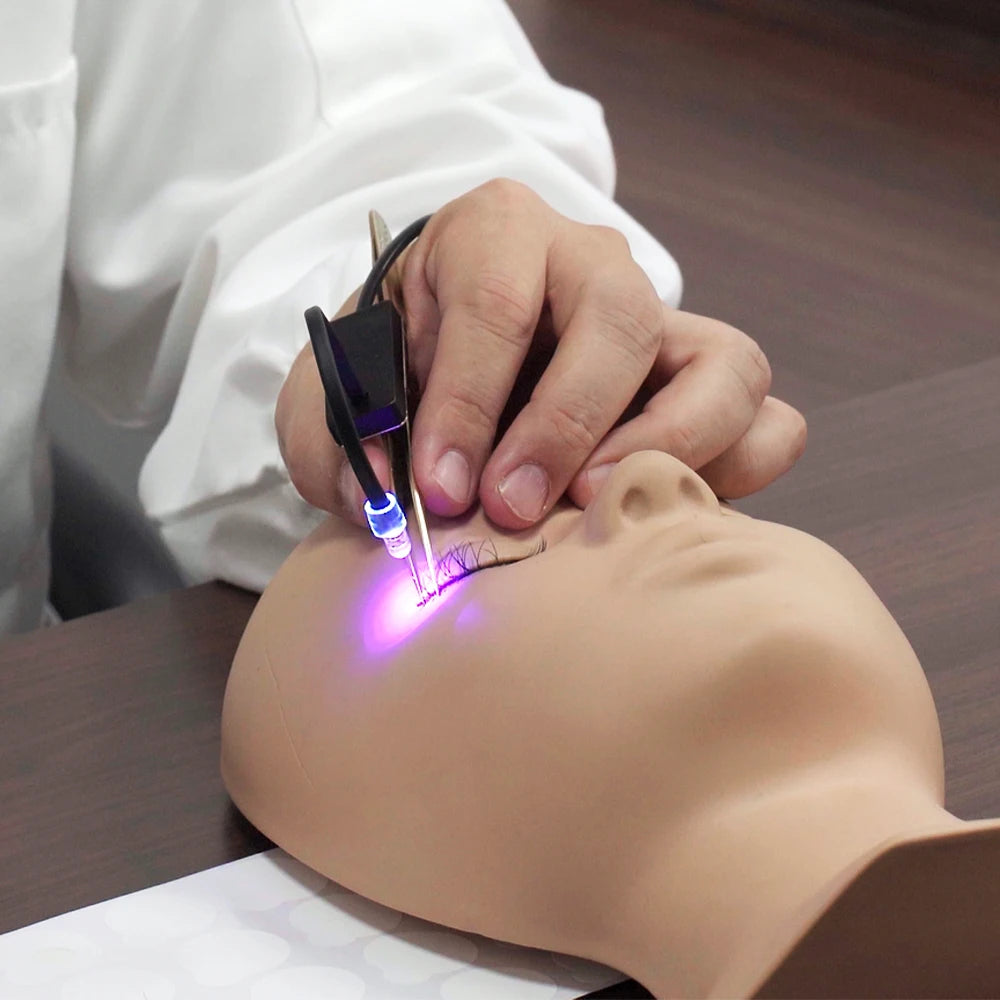
For the Pinky Leem TL02, the supplied product description confirms UV LED technology and precision tweezers but does not specify the activation method, timer functions, or adjustable operating modes. These details should be verified before purchasing.
Portability and Workspace Requirements
Mobile lash artists should consider overall equipment weight, dimensions, power requirements, storage, and transport protection. A portable system should also remain stable and allow the technician to follow the specified operating distance and exposure conditions.
The TL02 listing identifies a product weight of 0.5 kg and plastic construction. These details offer a starting point for assessing portability, although the dimensions, power supply, and cable arrangement are not disclosed in the available description.
Durability, Cleaning, and Replacement Parts
Professional equipment should withstand regular handling and routine cleaning according to its manufacturer's instructions. Check whether optical components are protected, whether the housing is easy to clean, and whether replacement parts can be obtained.
Plastic construction can contribute to a lightweight design, but material information alone does not establish long-term durability. Ask about component lifespan, warranty coverage, and repair procedures.
Included Accessories and Total Kit Value
A kit should be evaluated according to its actual contents rather than the number of items shown in promotional photographs. Confirm whether the package includes:
- UV LED curing light.
- Precision eyelash extension tweezers.
- Power supply and required cables.
- Positioning stand or mounting accessories.
- Compatible UV-responsive adhesive, if advertised.
- Appropriate protective equipment, if supplied.
- Operating instructions and technical documentation.
The TL02 listing identifies one kit and describes precision tweezers as part of the product. It does not establish that adhesive, protective eyewear, a positioning stand, or additional accessories are included.
Technicians considering this configuration can review the Pinky Leem UV LED curing kit and its listed features before requesting additional specifications. Compare its documented contents against the requirements of your adhesive and workstation rather than treating it as a universally compatible professional system.
UV Lash Curing Kit Safety: Eye Protection and Exposure Considerations
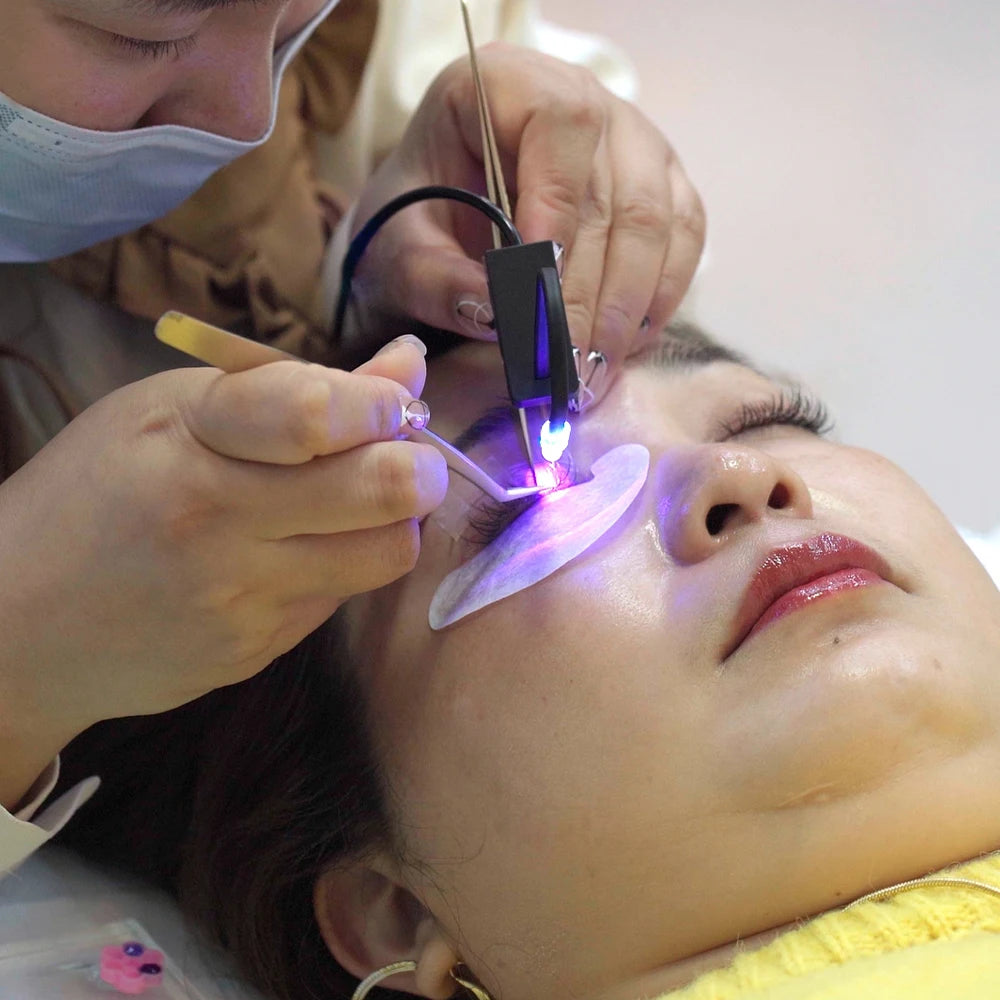
UV lash curing requires careful attention to eye and skin exposure. The presence of an LED light source does not make a device inherently risk-free. Buyers should assess the emitted wavelength, exposure conditions, equipment design, and manufacturer safety instructions before introducing a system into a professional salon.
UV Protective Eyewear and Exposure Protection
Use protective eyewear specified for the equipment's actual wavelength range and exposure conditions. Technicians should also establish appropriate protective measures for clients, based on manufacturer instructions and professional safety guidance.
Do not assume ordinary sunglasses, cosmetic eye shields, or generic protective glasses provide adequate protection. Protective eyewear also does not eliminate every possible exposure risk.
Minimizing Unnecessary Eye and Skin Exposure
Follow the equipment manufacturer's specified working distance and exposure duration. Avoid looking directly into the light source, unnecessary activation, and positioning that directs light toward unintended areas.
Keep the working area organized so that the lamp can be positioned consistently. Do not modify equipment, bypass safety features, or increase exposure beyond documented operating instructions to compensate for inconsistent curing.
Client Screening and Professional Training
Professional lash technicians should understand the equipment and adhesive requirements before offering UV-assisted application. Screening should consider relevant eye conditions, known adhesive sensitivities, photosensitivity concerns, and contraindications identified by manufacturers.
When a client reports an existing eye condition, unusual sensitivity, or a medical concern that may affect treatment suitability, seek appropriate professional guidance rather than making an independent medical assessment.
Manufacturer Instructions and Safety Documentation
Before purchasing, request the equipment operating manual, wavelength information, exposure specifications, and relevant safety documentation. Review the adhesive safety data sheet separately because equipment safety and adhesive handling involve different considerations.
Where applicable, also check the manufacturer's declarations and relevant electrical or product safety certifications. Never interpret the presence of a certification logo as proof that a particular adhesive and lamp combination is compatible.
How to Set Up and Maintain a Professional UV Lash Curing Kit
Consistent equipment preparation supports a more organized application process and helps identify potential problems before a client appointment.
Pre-Use Equipment Inspection Checklist
- Inspect the lamp housing for cracks, damage, or loose components.
- Check power cables, adapters, and connections.
- Confirm that activation controls function according to the manual.
- Check the mounting system and lamp positioning stability.
- Review the current adhesive compatibility documentation.
- Confirm that required protective equipment is available.
- Check that the lamp and adhesive specifications remain consistent with the manufacturer's instructions.
Adhesive Storage and Preparation
UV-responsive adhesives may have formulation-specific storage and handling requirements. Follow the manufacturer's instructions for temperature, humidity, light exposure, storage position, and expiration date.
Do not transfer storage recommendations from one adhesive brand to another. Improper storage or expired materials may affect product performance and suitability.
Lamp Positioning and Workspace Setup
Prepare the workstation so that the lamp can be positioned according to its documented operating requirements. Ensure the power source is appropriate, cables are organized, and the equipment cannot be accidentally knocked out of position.
Maintain the recommended distance and exposure conditions throughout the application process. Avoid improvising exposure settings when the manufacturer has not provided sufficient technical information.
Cleaning, Maintenance, and Replacement
Clean the lamp and housing according to the manufacturer's approved procedure. Avoid harsh chemicals or abrasive materials unless explicitly permitted. Inspect optical components regularly and check for physical damage or changes in operation.
If the lamp becomes damaged, behaves inconsistently, or no longer meets documented operating specifications, discontinue use until it has been inspected or replaced. Use approved replacement components rather than unverified substitutes.
Which UV Lash Glue Curing Kit Is Best for Your Professional Workflow?
The right configuration depends on experience, appointment volume, existing equipment, and the level of technical support required. The following recommendations provide a practical purchasing framework rather than declaring one universal best product.
Best Configuration for Beginner Lash Technicians
New technicians should prioritize simplicity, clear instructions, manufacturer-approved adhesive compatibility, and accessible technical support. A starter kit may be convenient, but only when its actual contents and operating requirements are documented.
The Pinky Leem TL02 offers a listed UV LED light-and-tweezers configuration. Beginners should request its wavelength, output, operating instructions, protective equipment requirements, and adhesive compatibility confirmation before incorporating it into professional services.
Best Configuration for Established Salon Professionals
Established salons should prioritize repeatability and technical transparency. A system with documented irradiance, wavelength, working distance, compatible adhesive specifications, and replacement-part availability is generally easier to evaluate for regular professional use.
Compare the TL02 against these criteria rather than assuming that a lightweight kit automatically provides the same functionality as a dedicated salon workstation.
Best Configuration for Mobile Lash Artists
Mobile artists may prefer compact equipment with manageable weight, convenient power requirements, and secure storage. However, portability should never take priority over stable positioning or documented safety requirements.
The TL02 has a listed weight of 0.5 kg, which may be useful when evaluating a portable setup. Its full dimensions and power requirements should be confirmed before adding it to a mobile equipment case.
Best Configuration for High-Volume Lash Studios
High-volume studios should evaluate equipment through a longer-term ownership perspective. Consider the consistency of operating conditions, lamp durability, replacement components, technical support, warranty, and the ability to maintain the equipment across repeated appointments.
A complete professional system with documented operating specifications may be more appropriate than an entry-level kit when multiple technicians share the same workstation.
For technicians comparing the TL02 with other beauty workstation purchases, the body care and health devices collection provides an additional equipment category to explore. It should be treated as a general product collection, not a source of UV adhesive compatibility certification.
Warranty, Return Policies, and How to Evaluate Customer Reviews
A professional UV lash curing kit is a working tool, so after-sales support deserves attention before purchase. A low initial price may become less attractive if the lamp cannot be repaired, replacement components are unavailable, or compatibility questions cannot be answered.
What to Check in a UV Lash Curing Kit Warranty
Review the warranty duration, covered components, exclusions, repair procedures, and replacement policies. Determine whether the lamp, power adapter, switches, and positioning accessories receive separate coverage.
The supplied Pinky Leem TL02 product description does not disclose warranty duration or coverage. Buyers should confirm these details directly through the product seller before ordering.
Return Policies and Replacement-Part Availability
Check the return window, defective-product procedures, return shipping responsibilities, and whether opened equipment remains eligible for return. For professional systems, ask whether replacement lamps, adapters, and other essential components can be purchased independently.
Do not assume that all accessories are replaceable simply because the product is sold as a kit.
How to Identify Useful Professional Customer Reviews
Useful reviews provide specific information rather than general statements about product quality. Look for feedback covering:
- Actual kit contents compared with the listing.
- Clarity of operating instructions.
- Equipment stability and positioning.
- Repeated-use observations.
- Adhesive compatibility documentation.
- Durability and maintenance experience.
- Customer support and warranty handling.
Be cautious of reviews claiming universal adhesive compatibility or instant curing without identifying the adhesive formulation, lamp specifications, and test conditions.
UV Lash Glue Curing Kit Buying Checklist: Questions to Ask Before Ordering
Before choosing a UV lash curing kit, use this checklist to compare the equipment against your actual professional requirements.
The Professional UV Lash Kit Purchase Checklist
- Wavelength: Is the wavelength range documented by the manufacturer?
- Optical output: Are irradiance measurements available at a stated working distance?
- Adhesive compatibility: Has the adhesive manufacturer confirmed compatibility with the exact lamp or specified system?
- Curing specifications: Are exposure duration and operating conditions documented?
- Positioning: Does the lamp provide stable and adjustable positioning?
- Safety: Are protective equipment and exposure instructions clearly specified?
- Accessories: Are precision tweezers, power supplies, mounting components, and other advertised items actually included?
- Power requirements: Are voltage, adapter, and connection specifications available?
- Warranty: Are coverage duration and exclusions clearly stated?
- Maintenance: Can essential replacement components be obtained?
- Seller support: Can the seller answer technical compatibility questions in writing?
For the Pinky Leem TL02, the documented information includes UV LED technology, plastic material, precision tweezers, one kit, and a listed weight of 0.5 kg. The wavelength, optical output, validated curing speed, adhesive compatibility, safety accessories, and warranty remain undisclosed in the supplied description. These are important questions to resolve before treating it as a fully verified professional UV curing solution.
Final Verdict: Choosing the Right UV Lash Glue Curing Kit
The best UV lash glue curing kit is not necessarily the most expensive system or the one advertising the fastest curing time. It is the configuration that matches the adhesive manufacturer's requirements, provides verifiable wavelength and optical output information, supports stable positioning, includes useful accessories, and offers appropriate safety documentation and after-sales support.
Standalone lamps can suit experienced technicians with existing equipment, while complete starter kits may offer greater purchasing convenience. Established salons and high-volume studios should place additional emphasis on repeatability, serviceability, technical support, and long-term ownership costs.
The Professional UV LED Eyelash Glue Curing Light Kit by Pinky Leem (TL02) is a light-and-tweezers configuration worth examining as part of the purchasing comparison. Its listed specifications establish the basic product construction and intended professional application, but buyers should obtain additional technical documentation before confirming suitability for a specific UV adhesive.
Ultimately, prioritize verified compatibility, appropriate exposure controls, and transparent product specifications over broad marketing promises. Reviewing these details before ordering can help you select equipment that better supports your professional lash application workflow.
Article Structured Data
Pillar Article: Eyelash Adhesive Curing Lamp: Professional UV LED Buying Guide