
UV Lash System Comparison: How to Choose the Right Professional Kit in 2026
Choosing a professional UV lash system involves more than comparing lamp designs or advertised curing speeds. Different systems can vary in wavelength output, irradiance, working distance, adhesive compatibility, operating controls, safety documentation, and included accessories. A suitable system must match the technical requirements of its UV-curable adhesive while supporting a consistent, comfortable, and safety-conscious lash application workflow.
A professional UV lash system typically combines a UV LED curing lamp, compatible eyelash extension adhesive, operating controls, and application accessories. Before purchasing, lash technicians should evaluate spectral output, irradiance, recommended exposure conditions, protective equipment, manufacturer documentation, warranty coverage, and total ownership costs. This guide compares the available system options and explains how to make an informed professional purchasing decision in 2026.
What Is a Professional UV Lash System?
A UV lash system is a specialized eyelash extension application setup that uses ultraviolet light to initiate the curing process of a compatible light-curable adhesive. Unlike conventional eyelash extension adhesives that generally polymerize through moisture-related chemical reactions, UV-curable formulations contain photoinitiators that respond to particular light wavelengths.
When the appropriate light reaches a compatible adhesive under validated operating conditions, the photoinitiator helps initiate polymerization. This creates a controlled curing process that can support a more structured application workflow for trained lash artists.
However, UV curing is not simply a matter of shining any ultraviolet lamp at any lash adhesive. The lamp's spectral characteristics, irradiance, exposure duration, working distance, and adhesive formulation must work together.
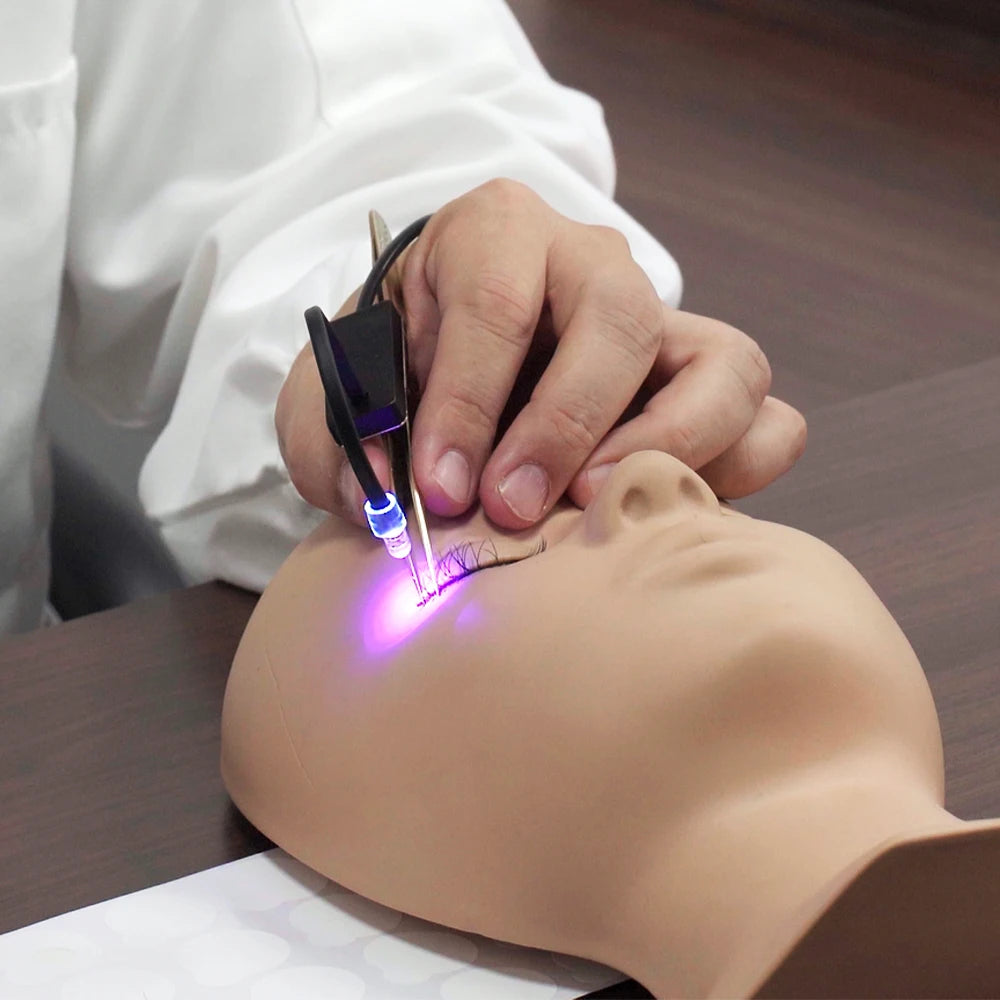
What Does a Complete UV Lash Kit Include?
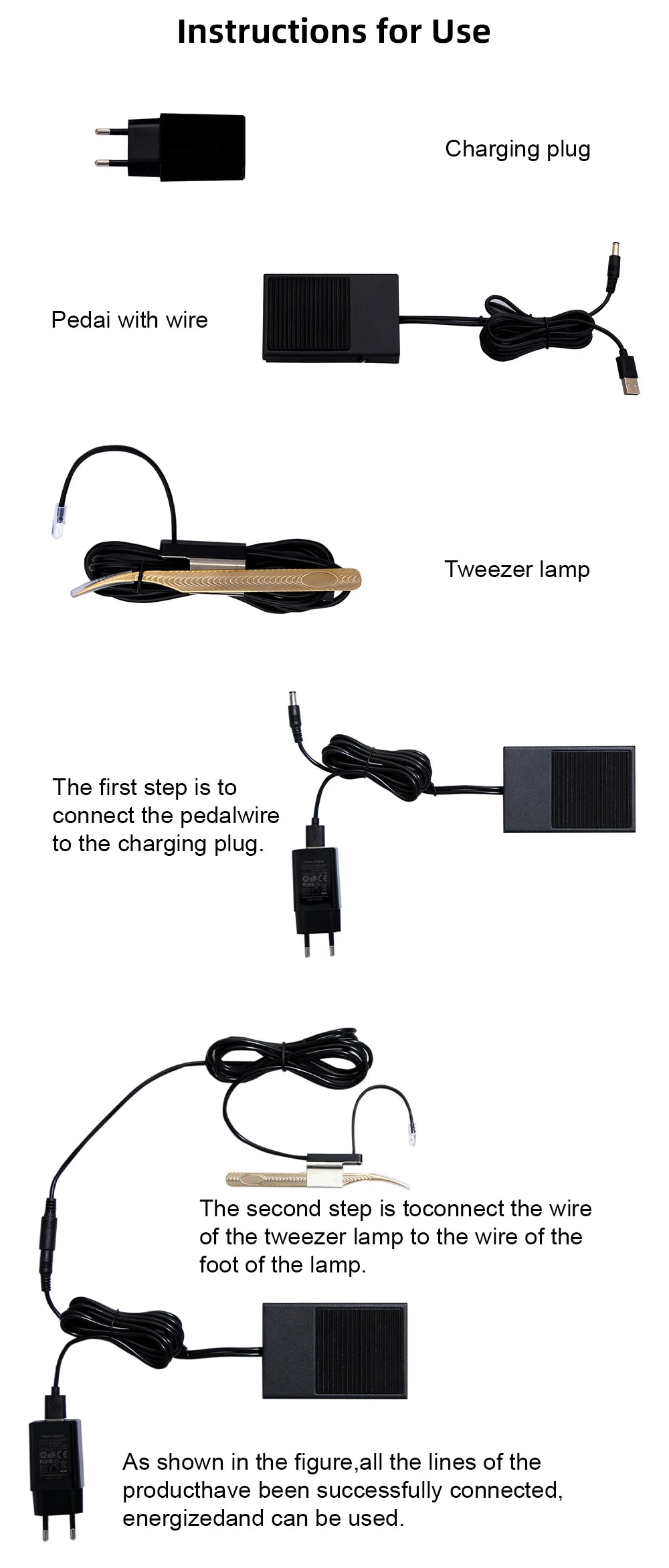
A professional UV lash kit may contain several components designed to work together. The exact configuration varies between manufacturers and product listings.
UV LED curing lamp: Provides the light output required by compatible UV-curable lash adhesive.
Control unit: Manages operating functions and may provide intensity or activation controls.
Power supply: Provides the electrical connection required to operate the equipment.
Positioning stand: Supports stable lamp placement and helps maintain the recommended working position.
Foot pedal: Some systems include hands-free activation to help technicians manage their application workflow.
Precision tweezers: Assist with isolating natural lashes, handling extensions, and accurate placement.
Compatible UV adhesive: A formulation specifically designed for the system's documented spectral and exposure requirements.
Protective accessories: Appropriate wavelength-specific protective eyewear and other manufacturer-recommended safety equipment.
Not every UV lash system includes all these components. Buyers should distinguish between accessories included in the purchase and items that must be ordered separately.
UV Lash System vs. Standalone UV Lamp vs. UV Adhesive
These three purchasing categories serve different purposes. Understanding the differences helps prevent compatibility problems and unnecessary equipment purchases.
Complete UV lash system: A coordinated equipment package intended to support light-assisted adhesive curing. Buyers should still verify which accessories and adhesive products are included.
Standalone UV lamp: Provides the light source but may require a separately purchased compatible adhesive, positioning equipment, and protective accessories.
UV lash adhesive: Provides the light-curable bonding formulation but cannot operate as intended without a compatible curing source and validated exposure conditions.
Purchasing a complete kit can simplify equipment selection, but the word complete does not automatically establish technical compatibility or safety. Always request the relevant documentation.
Who Should Consider a Professional UV Lash System?
UV lash systems may be worth evaluating for independent lash artists, established beauty salons, and high-volume studios that want to incorporate light-assisted adhesive curing into their services.
They may be particularly relevant to professionals who:
- Want to evaluate alternatives to conventional adhesive application workflows.
- Have completed appropriate training in UV lash application.
- Can follow adhesive-specific curing instructions.
- Have suitable protective equipment and controlled working conditions.
- Need equipment that fits their salon layout and service procedures.
Beginners should prioritize professional education, equipment instructions, and safety documentation before introducing UV technology into client services.
Best UV Lash Systems Compared: Professional Buying Criteria for 2026
The professional UV lash market includes complete curing kits, standalone UV LED lamps, and adhesive-specific equipment systems. Rather than assigning unsupported rankings to products with incomplete technical specifications, the following comparison evaluates the available product information against the criteria professionals should verify before purchasing.
Professional UV Lash System Comparison Matrix
The following matrix distinguishes listed product information from specifications that have not been disclosed. It is designed to help buyers identify what can be established from a product listing and what still requires manufacturer confirmation.
-
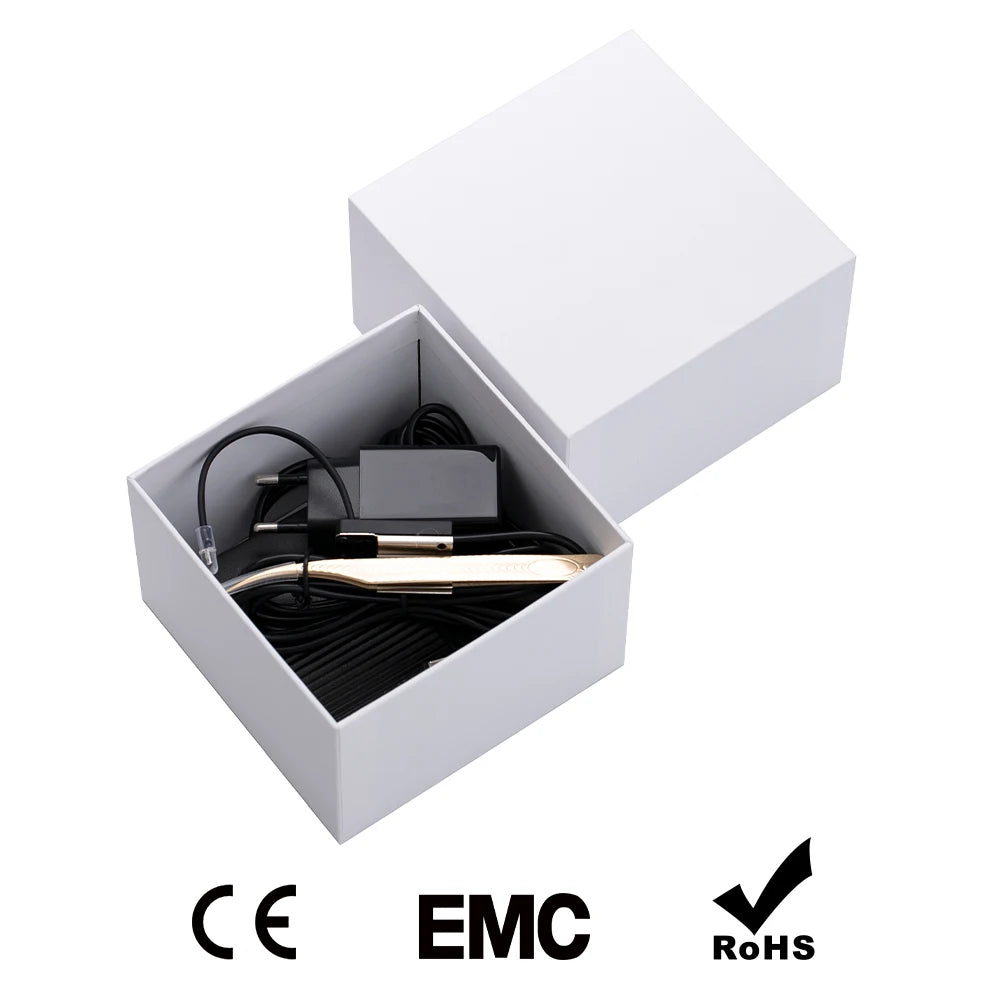
Product: Pinky Leem TL02 UV LED Eyelash Glue Curing Light Kit
- System category: UV LED eyelash glue curing light kit.
- Listed components: UV LED curing light system and precision tweezers, as identified by the product description and title.
- Technology: UV LED.
- Wavelength range: Not disclosed.
- Irradiance: Not disclosed.
- Recommended curing distance: Not disclosed.
- Adjustable intensity: Not confirmed.
- Foot pedal operation: Not confirmed.
- Adhesive compatibility: Requires confirmation from the adhesive manufacturer.
- Material: Plastic.
- Listed product weight: 0.5 kg.
- Warranty: Verify with the seller.
- Price: Check the current product listing.
-
Professional complete UV curing systems from other manufacturers
- System category: Manufacturer-specific coordinated curing equipment.
- Included components: Vary by manufacturer.
- Wavelength range: Verify the published spectral output.
- Irradiance: Request measured output and measurement conditions.
- Working distance: Verify the validated operating distance.
- Intensity adjustment: Manufacturer-specific.
- Foot pedal: Manufacturer-specific.
- Adhesive compatibility: Must be confirmed for the exact formulation.
- Warranty and support: Verify the manufacturer's published terms.
- Price: Obtain a current quotation.
-
Standalone professional UV LED lamps
- System category: Individual curing equipment.
- Included components: Depends on the seller.
- Wavelength and irradiance: Must be independently documented for the specific model.
- Working distance: Verify before purchasing an adhesive.
- Controls and positioning: Compare available operating features.
- Compatible adhesive: Requires technical confirmation.
- Additional purchases: May include compatible adhesive, stands, controls, and protective accessories.
-
UV lash adhesive-only products
- System category: Light-curable adhesive without a complete curing setup.
- Included components: Adhesive formulation only, unless otherwise specified.
- Photoinitiator requirements: Obtain from the adhesive manufacturer.
- Compatible wavelength: Verify the actual spectral requirements.
- Exposure duration: Follow validated product instructions.
- Additional purchases: Compatible curing equipment and required protective accessories.
Comparison methodology: This comparison uses the available product listing and a consistent professional evaluation framework. It does not represent independent laboratory testing or verified performance rankings. Missing technical information is identified as undisclosed rather than estimated.
For a closer look at the available equipment, review the Professional UV LED Eyelash Glue Curing Light Kit. Its listed model is TL02, under the Pinky Leem product listing name, and its described configuration includes precision tweezers. Confirm the technical specifications and compatible adhesive before deciding whether it fits your application requirements.
How to Evaluate Lamp Wavelength and UV Output
Wavelength is one of the most important technical characteristics of a UV lash system. It describes the spectral position of the emitted light and is measured in nanometers (nm).
Professional buyers should request information about:
- The actual emitted wavelength range.
- The spectral distribution rather than only a single advertised wavelength.
- Whether the output is suitable for the intended adhesive photoinitiator.
- Whether the manufacturer provides measurement documentation.
- Whether the stated wavelength applies to the exact lamp model being purchased.
A product description that simply states UV LED technology does not provide enough information to determine adhesive compatibility. A professional system should have documented spectral characteristics that can be compared with the adhesive manufacturer's technical requirements.
Adjustable Intensity, Foot Pedals, and Operating Controls
Operating controls influence the practical usability of a curing system. Adjustable intensity may provide more control over equipment operation, but it should never be used to compensate for an incompatible adhesive or an incorrect curing procedure.
Foot pedals can provide hands-free activation, potentially reducing interruptions during application. However, a foot pedal should be treated as a workflow feature rather than proof of better curing performance.
When evaluating operating controls, consider:
- Whether activation is easy to access during lash placement.
- Whether intensity adjustment is documented.
- Whether output remains consistent under normal operating conditions.
- Whether activation can be controlled to minimize unnecessary exposure.
- Whether replacement controls and accessories are available.
Included Accessories, Warranty, and Technical Support
Accessories influence the overall value of a UV lash system. A kit containing precision tweezers may offer a convenient starting point for lash placement, but buyers should separately establish whether protective eyewear, positioning equipment, compatible adhesive, and other essential accessories are included.
Warranty and technical support are equally important. Before purchasing, confirm:
- Warranty duration and coverage.
- Availability of replacement lamps and power components.
- Whether technical assistance is available.
- Whether the manufacturer provides operating instructions.
- Whether equipment servicing is possible.
- Whether replacement accessories remain available.
Which UV Lash System Offers the Best Value?
The best-value system is not necessarily the cheapest or the one advertising the fastest curing speed. A professional should evaluate the complete cost of operating the equipment.
Consider the purchase price alongside compatible adhesive costs, protective accessories, maintenance, replacement components, training, and warranty coverage.
A lower-priced lamp may require additional purchases or may lack the technical documentation needed to establish compatibility. Conversely, a more expensive system is not automatically better if its specifications and support arrangements are unclear.
Understanding UV Lash System Specifications Before Buying
Understanding the relationship between light output and adhesive chemistry is essential when selecting professional curing equipment. The lamp and adhesive must function as a compatible system under validated operating conditions.
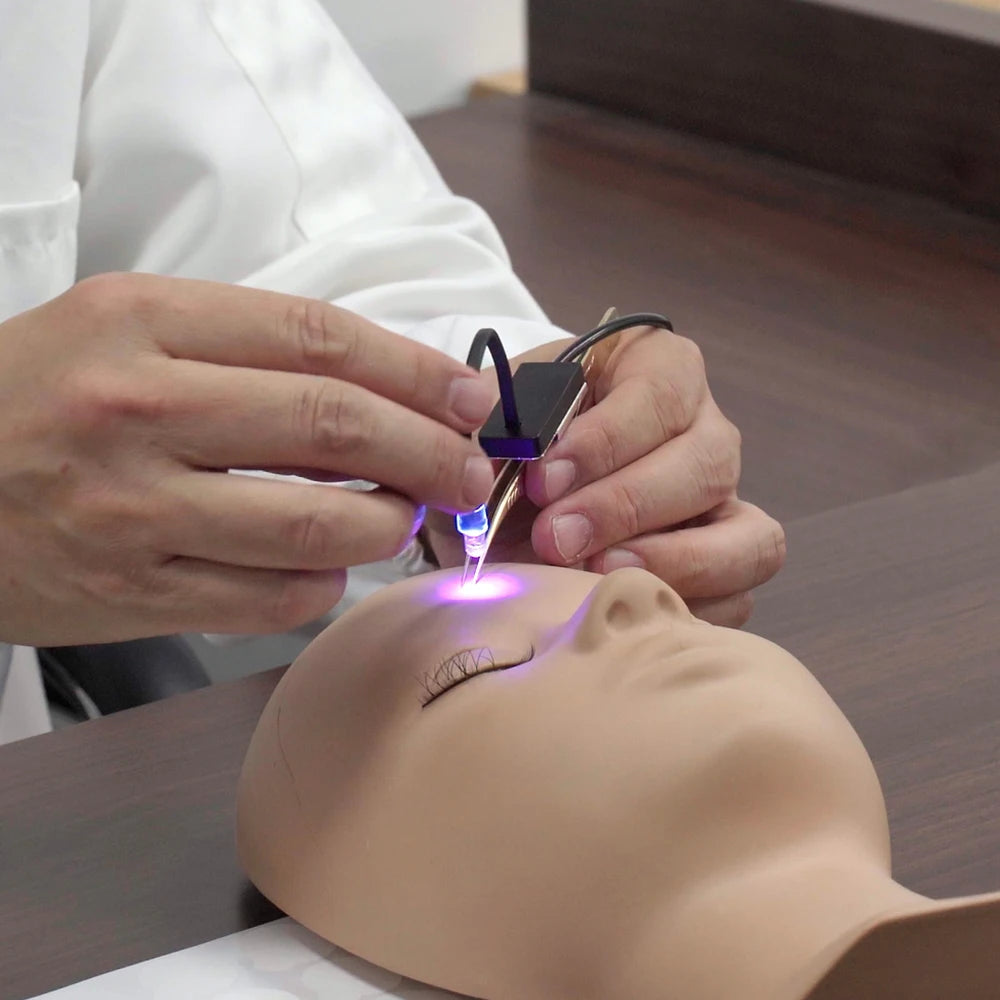
UVA Wavelength: What Range Should a Professional System Use?
Ultraviolet A (UVA) refers to a region of ultraviolet radiation commonly described as approximately 315–400 nanometers. However, not every UVA wavelength is appropriate for every UV-curable adhesive.
The correct wavelength depends on the photoinitiator chemistry used in the adhesive. Different photoinitiators respond to different spectral regions, so professionals should not assume that a lamp will work simply because its product description identifies it as UVA or UV LED.
Before purchasing, request:
- Documented wavelength or spectral output.
- Adhesive-specific wavelength recommendations.
- Written confirmation of compatibility.
- Instructions covering the complete curing process.
If the product listing does not disclose its wavelength, treat compatibility as unverified until the manufacturer supplies the necessary information.
Irradiance (mW/cm²): Why UV Output Matters
Irradiance measures the optical power reaching a particular surface area and is commonly expressed in milliwatts per square centimeter (mW/cm²).
It is important to distinguish irradiance from the electrical wattage or total power advertised for a lamp. A lamp's electrical rating does not establish how much useful UV energy reaches the adhesive at the actual working distance.
Several factors influence irradiance at the adhesive location:
- Distance between the lamp and the application area.
- Optical design and beam distribution.
- Actual spectral output.
- Intensity settings, where available.
- Equipment condition and output consistency.
Higher irradiance is not automatically better. Excessive or inappropriate exposure may introduce additional safety concerns, and the correct operating conditions must be determined by the adhesive manufacturer's validated instructions.
Curing Distance, Exposure Time, and Light Positioning
Distance and exposure time influence the amount of optical energy reaching the adhesive. Moving a lamp farther away can change the irradiance at the application point, while incorrect positioning may produce inconsistent exposure across different lash areas.
Professionals should evaluate:
- The manufacturer's recommended working distance.
- The specified exposure duration.
- Whether the light beam covers the intended application area.
- Whether the equipment can maintain a stable position.
- Whether the adhesive manufacturer's instructions agree with the lamp's operating requirements.
Do not independently increase exposure duration or move the lamp closer to compensate for incomplete curing. Stop using the setup until the underlying compatibility or equipment problem has been identified.
Photoinitiators and UV Lash Adhesive Chemistry
Photoinitiators are chemical components that absorb suitable light energy and initiate reactions involved in polymerization. In UV-curable adhesives, their properties help determine which wavelengths and exposure conditions are required.
This differs from conventional cyanoacrylate-based lash adhesives, which generally cure through moisture-related polymerization rather than requiring a UV lamp.
UV-curable lash adhesives may contain different reactive ingredients and formulation systems. Therefore, the adhesive's technical data sheet is essential when selecting equipment.
Why Matching Wavelength Alone Does Not Guarantee Complete Curing
Two lamps may advertise similar wavelength ranges while delivering different curing performance. This is because successful polymerization depends on several interacting factors rather than one specification.
The complete curing relationship includes:
- Compatibility between the lamp spectrum and photoinitiator.
- Appropriate irradiance at the adhesive location.
- Validated exposure duration.
- Correct working distance.
- Beam coverage and positioning.
- Adhesive formulation and application conditions.
A wavelength match is therefore a necessary consideration, not sufficient proof of complete curing. Professionals should request documented confirmation from both equipment and adhesive manufacturers.
How to Check UV Lash System and Adhesive Compatibility
Compatibility should be established before purchasing separate equipment components or applying a new adhesive to clients. A lamp that works with one UV lash formulation may not work correctly with another.
Check the Adhesive Manufacturer's Recommended Wavelength
Begin by reviewing the adhesive's technical data sheet, product instructions, and safety documentation.
Look for:
- Recommended UV or UVA wavelength.
- Photoinitiator-related technical information where disclosed.
- Compatible lamp requirements.
- Recommended curing conditions.
- Any limitations on equipment selection.
If the adhesive manufacturer does not provide sufficient information, request written confirmation before selecting a curing lamp.
Verify Irradiance, Working Distance, and Exposure Duration
Compatibility requires more than matching wavelength labels. The lamp must deliver suitable optical energy at the recommended working distance and exposure duration.
Request the lamp's irradiance measurements, including the distance and conditions under which they were recorded. Then compare these details with the adhesive manufacturer's operating instructions.
Do not rely on generalized curing-time claims. A curing time advertised for one adhesive and lamp combination should not be transferred to another system without supporting documentation.
Can You Mix Different UV Lash System Brands?
Mixing equipment and adhesive brands may be possible in some situations, but compatibility should never be assumed. Different manufacturers may use different photoinitiators, spectral requirements, irradiance specifications, and application conditions.
Before combining products, obtain written technical confirmation that the exact lamp model and adhesive formulation are compatible. If either manufacturer cannot verify the combination, select a documented compatible system instead.
Manufacturer Documentation to Request Before Purchasing
A professional purchasing decision should be supported by more than product photography and promotional descriptions.
Ask the supplier for:
- Technical specifications showing spectral output.
- Irradiance measurements and measurement conditions.
- Recommended working distance.
- Validated curing duration.
- Compatible adhesive product names or formulations.
- Operating and maintenance instructions.
- Product-specific photobiological safety documentation.
- Protective eyewear specifications.
- Warranty and replacement-component information.
The Pinky Leem TL02 UV LED curing light kit is one product to investigate when comparing lash application equipment. Its listing identifies UV LED technology and precision tweezers, but wavelength, irradiance, working distance, and adhesive compatibility should be confirmed before professional use.
For additional beauty equipment options, the skin and beauty care devices collection provides a broader category of equipment to explore.
UV Lash System Safety: Eye Protection and Professional Exposure Control
UV lash technology requires careful attention to optical radiation exposure. The fact that a device is designed for cosmetic applications does not automatically establish that it is safe under every operating condition.
Both clients and technicians should be protected through appropriate equipment selection, documented operating procedures, controlled positioning, and exposure minimization.
Understanding IEC 62471 Photobiological Safety
IEC 62471 is an international standard addressing photobiological safety assessment of lamps and lamp systems. It provides a framework for evaluating potential hazards associated with optical radiation, including ultraviolet, visible, and infrared emissions within its scope.
For UV lash equipment, the standard is relevant because it provides a structured approach to assessing potential exposure risks.
However, referencing IEC 62471 in a product description does not prove that a specific device has been tested, assessed, or certified according to the standard.
Buyers should request product-specific assessment reports and supporting documentation. Where available, these should identify the tested model, operating conditions, applicable hazard assessment, and relevant measurement results.
Direct and Reflected UV Exposure During Lash Application
UV exposure can occur through direct light from the lamp or reflected radiation from nearby surfaces. Incorrect lamp positioning may also expose areas beyond the intended application point.
Professional exposure-control practices include:
- Positioning the lamp according to manufacturer instructions.
- Preventing unnecessary activation when the equipment is not being used.
- Keeping reflective objects away from the light path where practical.
- Using appropriate protective barriers when specified.
- Minimizing unnecessary exposure duration.
- Inspecting equipment for damaged housings or optical components.
Do not modify the lamp or bypass its operating controls to change exposure characteristics.
UV Protective Eyewear and Client Positioning
Appropriate protective eyewear should provide documented protection for the actual wavelengths emitted by the equipment. General sunglasses or ordinary protective glasses should not be assumed to provide suitable UV protection.
Professional procedures should address both the client and technician. Closing the client's eyes alone is not a substitute for appropriate protective measures because eyelids should not be treated as guaranteed UV barriers.
Check that protective eyewear:
- Has documented wavelength-specific protection.
- Provides appropriate coverage.
- Fits correctly without significant gaps.
- Is suitable for the equipment's actual spectral output.
- Can be used according to its manufacturer's instructions.
Also establish a controlled client position and ensure that the technician's eyes are protected throughout equipment operation.
Adhesive Fumes, Cyanoacrylate, and Acrylate Sensitization
UV exposure and adhesive-related chemical exposure are separate safety considerations.
Some conventional eyelash extension adhesives contain cyanoacrylate compounds, which can cause irritation or allergic reactions in susceptible individuals. UV-curable adhesive formulations may contain other reactive ingredients, including substances capable of causing skin sensitization.
Acrylate-related sensitization and cyanoacrylate-related reactions should not be treated as identical conditions. Their chemical mechanisms and ingredient profiles can differ.
Professional risk-management practices include:
- Reviewing adhesive ingredient information and safety documentation.
- Maintaining appropriate salon ventilation.
- Reducing unnecessary exposure to uncured adhesive.
- Avoiding direct skin contact with reactive ingredients.
- Following the adhesive manufacturer's storage and handling instructions.
- Maintaining appropriate hygiene and application procedures.
Clients who develop suspected allergic reactions should discontinue exposure and seek appropriate medical evaluation. Eye pain, swelling, or vision changes warrant prompt medical attention.
Does UV Curing Eliminate Allergy Risks?
No. UV curing does not eliminate the possibility of allergic reactions or chemical sensitization.
Although light-activated polymerization changes the curing process, the adhesive may still contain ingredients capable of causing irritation or sensitization. Complete curing also does not establish that all chemical exposure risks have been eliminated.
Professionals should avoid claims that UV lash systems are allergy-proof or universally safer than conventional adhesives. Product selection, ingredient information, exposure controls, and client suitability all remain important.
UV Lash Systems vs. Traditional LED and Conventional Lash Adhesives
Choosing between UV-assisted curing and conventional eyelash extension adhesives requires understanding how the technologies differ. The appropriate option depends on the adhesive chemistry, equipment requirements, professional experience, and salon operating conditions.
UV LED Lash Curing vs. Conventional Cyanoacrylate Adhesive
Conventional cyanoacrylate lash adhesives generally polymerize through reactions involving moisture. Their performance can be influenced by humidity, temperature, adhesive formulation, and application technique.
UV-curable lash adhesives use light-activated photoinitiators to initiate polymerization. This requires compatible curing equipment and controlled exposure conditions.
UV-curable adhesive: Requires a compatible UV LED light source and validated exposure parameters.
Conventional adhesive: Generally relies on moisture-related curing and does not require a UV curing lamp.
Equipment: UV systems require additional lamp setup, positioning, and protective procedures.
Environmental requirements: Conventional adhesive performance is often more directly affected by humidity-related conditions, while UV formulations have their own formulation-specific operating requirements.
Training: Both technologies require appropriate professional application knowledge, with UV systems adding light-exposure and equipment-compatibility considerations.
UV Lash Systems vs. Other LED Eyelash Extension Curing Systems
LED and UV are not necessarily opposing technologies. LED describes a light-emitting diode used as a light source, whereas UV describes a region of the electromagnetic spectrum.
A UV LED lamp uses light-emitting diodes to produce ultraviolet radiation. Therefore, a professional should evaluate the actual wavelength and spectral output instead of relying exclusively on product labels such as LED lash lamp or UV lash lamp.
The relevant purchasing questions remain the same:
- What wavelengths does the lamp actually emit?
- What irradiance reaches the adhesive?
- Which photoinitiator system does the adhesive use?
- What working distance and exposure time are required?
- Is the complete system supported by appropriate safety documentation?
Which Technology Fits Different Professional Workflows?
Conventional adhesives may suit technicians who prefer a familiar workflow without specialized UV equipment. UV-curable systems may interest professionals who want to evaluate controlled light-assisted curing and are prepared to follow additional equipment and safety procedures.
Neither technology is universally superior. A professional should compare actual adhesive performance, working conditions, training requirements, and operational costs before switching.
What Affects Eyelash Extension Retention With UV Adhesive?
Retention is influenced by multiple factors, including adhesive formulation, correct curing, natural lash preparation, extension placement, application technique, and client aftercare. UV curing alone does not guarantee longer-lasting extensions.
Adhesive Formulation and Complete Curing
The adhesive must be compatible with the curing lamp and applied according to the manufacturer's specifications. Incorrect wavelength, inadequate irradiance, unsuitable distance, or improper exposure duration may interfere with the intended polymerization process.
Using an appropriate complete system helps establish the conditions needed for the adhesive to perform as intended. However, no equipment specification should be interpreted as a guarantee of retention.
Natural Lash Preparation, Isolation, and Application Technique
Natural lash preparation is essential for professional extension application. Residual makeup, oil, dirt, and other contaminants can interfere with adhesive contact.
Technicians should pay attention to:
- Appropriate cleansing and preparation of natural lashes.
- Accurate isolation of individual natural lashes.
- Correct extension placement.
- Suitable adhesive quantity.
- Consistent application technique.
- Appropriate extension selection for natural lash condition.
Precision tweezers can help with isolation and extension handling. The precision tweezers identified in the UV LED eyelash glue curing kit are therefore a relevant accessory to consider when evaluating the overall application setup.
Humidity, Temperature, and Environmental Conditions
Environmental conditions affect lash adhesives differently depending on their formulation.
Conventional cyanoacrylate adhesives generally have moisture-related curing requirements. Humidity and temperature can influence their working characteristics and polymerization behavior.
UV-curable adhesives depend on their specific chemical formulation and light exposure requirements. Although they use a different curing mechanism, professionals should still follow the manufacturer's recommended storage and operating conditions.
Do not assume that UV adhesives are completely independent of environmental conditions or that conventional adhesive settings can be transferred to UV formulations.
Aftercare and Realistic Retention Expectations
Aftercare also influences the condition and longevity of eyelash extensions. Clients should receive product-specific care instructions covering cleansing, maintenance, and activities that may affect their extensions.
Natural lash growth cycles also contribute to extension shedding. Lifestyle, cosmetic habits, individual lash characteristics, and maintenance appointments create differences between clients.
For these reasons, professionals should avoid guaranteeing a particular retention period or promising a specific percentage improvement when changing curing technology.
How to Choose the Best UV Lash System for Your Professional Setup
The best purchasing decision depends on how the equipment will be used. A beginner working independently has different priorities from an established salon or a studio operating multiple application stations.
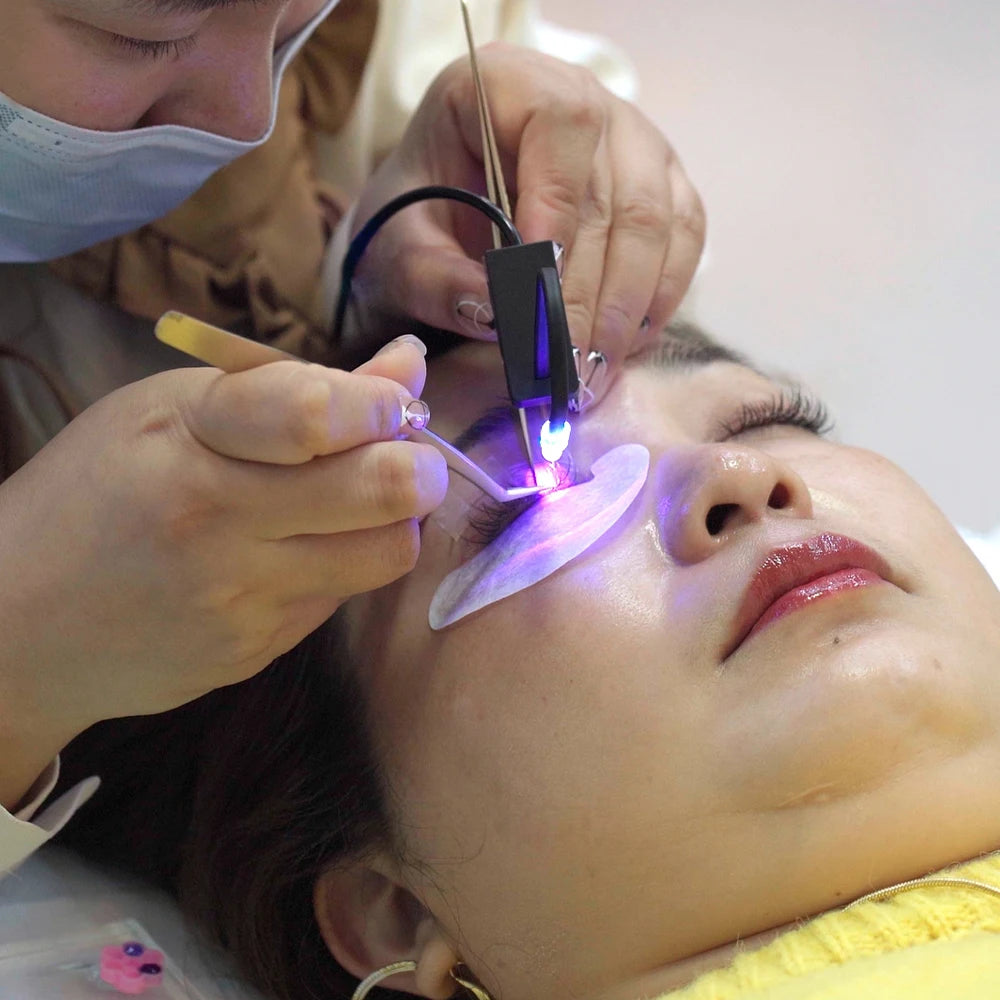
Best Considerations for Beginner Lash Artists
Beginners should prioritize simplicity, clear instructions, documented compatibility, and professional training.
Important considerations include:
- A clearly documented equipment configuration.
- Manufacturer instructions that explain safe operation.
- Written confirmation of compatible adhesives.
- Accessible technical support.
- Suitable protective eyewear.
- Training in UV exposure control and adhesive application.
Beginners should avoid purchasing a lamp solely because it advertises rapid curing. Technical compatibility and safe operating procedures are more important than marketing claims.
Best Considerations for Independent Lash Artists
Independent professionals often need equipment that fits a smaller working environment while remaining practical for regular appointments.
Consider lamp positioning, portability, accessible operating controls, compatible adhesive availability, replacement accessories, and total ownership costs.
The Pinky Leem TL02 kit is one option to investigate if a UV LED curing light and precision tweezers match your preferred equipment configuration. The listed plastic construction and 0.5 kg product weight provide basic purchasing information, but technical performance and compatibility remain matters to verify.
Review the UV LED eyelash glue curing light product details before making a purchase decision.
Best Considerations for Established Lash Salons
Established salons should evaluate reliability and consistency across daily appointments. The equipment should fit existing service procedures and be supported by clear technical documentation.
Important purchasing criteria include:
- Repeatable operating procedures.
- Documented lamp and adhesive compatibility.
- Staff training requirements.
- Warranty coverage.
- Replacement component availability.
- Appropriate protective equipment.
- Manufacturer technical support.
Salons should also maintain standardized equipment inspection and safety procedures so that different technicians follow consistent operating practices.
Best Considerations for High-Volume Lash Studios
High-volume studios should place particular emphasis on equipment serviceability and business continuity.
Consider whether the manufacturer can provide replacement components, technical support, and consistent equipment specifications across multiple stations.
Other factors include:
- Availability of compatible adhesives.
- Replacement lamp and power supply availability.
- Ease of cleaning and maintenance.
- Staff competency and training documentation.
- Standardized client protection procedures.
- Long-term operating costs.
A system that is inexpensive initially may create additional costs if replacement components or technical assistance are difficult to obtain.
How Much Should You Budget for a Professional UV Lash System?
There is no reliable universal price for professional UV lash equipment because configurations, specifications, accessories, and warranty arrangements differ.
Rather than relying on broad market averages, calculate the total cost of ownership for the specific product under consideration.
Include the following expenses:
- Initial equipment purchase.
- Compatible UV-curable adhesive.
- Protective eyewear and safety accessories.
- Replacement lamps and electrical components.
- Maintenance and cleaning supplies.
- Professional training.
- Potential servicing and warranty-related expenses.
For the Pinky Leem TL02 kit, check the current product listing for the actual purchase price and confirm the complete package contents before comparing its value with other systems.
UV Lash System Troubleshooting and Maintenance
Even an appropriately selected UV lash system may experience operating problems. Identifying the cause requires checking the adhesive, equipment, positioning, and documented operating conditions.
Why Is UV Lash Adhesive Not Curing Properly?
Incomplete or inconsistent curing may have several possible explanations:
- The lamp's wavelength does not match the adhesive's photoinitiator requirements.
- The irradiance at the application point is unsuitable.
- The working distance differs from the recommended distance.
- The exposure duration does not follow the validated instructions.
- The adhesive is incompatible with the curing equipment.
- The lamp or its electrical components are malfunctioning.
- The adhesive has been stored incorrectly or is past its recommended use period.
Stop using the affected setup until the problem has been identified. Do not attempt to compensate by increasing exposure or modifying the equipment without manufacturer guidance.
How to Address Inconsistent Curing Performance
If performance varies between applications, review the equipment setup and operating procedure.
Check:
- Whether the lamp is positioned consistently.
- Whether the correct operating settings are being used.
- Whether the power supply and connections are functioning normally.
- Whether the optical components are clean and undamaged.
- Whether the adhesive remains within its recommended storage and use conditions.
- Whether the documented curing parameters are being followed.
If the equipment continues to operate inconsistently, contact the manufacturer rather than attempting unauthorized repairs.
Routine UV Lamp Cleaning and Equipment Maintenance
Regular maintenance helps keep professional equipment in suitable operating condition.
Follow the manufacturer's cleaning and maintenance instructions. General precautions include:
- Disconnecting the equipment when required before cleaning.
- Using only approved cleaning materials.
- Avoiding liquid entry into electrical components.
- Inspecting cables and power connections.
- Checking the housing and optical components for damage.
- Storing equipment in a clean, dry location.
- Following manufacturer-recommended inspection and replacement schedules.
When to Contact the Manufacturer or Replace Components
Professional servicing may be necessary when the lamp shows unstable output, damaged wiring, unusual operation, or visible physical deterioration.
Contact the supplier when technical specifications are unavailable, compatibility cannot be established, or replacement parts are difficult to obtain.
Do not continue using damaged equipment or a system that cannot be operated according to documented safety instructions.
Professional UV Lash System Buying Checklist
Before purchasing a UV lash system, use the following checklist to compare equipment based on verified specifications rather than promotional descriptions.
Essential Features to Compare Before Ordering
- Complete kit contents and included accessories.
- Documented wavelength and spectral output.
- Irradiance measurements and measurement conditions.
- Recommended curing distance.
- Validated exposure duration.
- Intensity adjustment, if available.
- Foot pedal operation, if required.
- Compatible adhesive formulations.
- Ergonomic design and lamp positioning.
- Portability and workstation suitability.
- Protective eyewear availability.
- Warranty and technical support.
- Replacement component availability.
- Total ownership cost.
Manufacturer Specification Verification Checklist
Request documentation to verify the following technical and safety information:
- Actual spectral output of the lamp.
- Irradiance at a specified measurement distance.
- Recommended adhesive exposure conditions.
- Written compatibility information.
- Product-specific photobiological safety assessment where applicable.
- Relevant IEC 62471 assessment documentation, if claimed.
- Wavelength-specific protective eyewear specifications.
- Operating and maintenance instructions.
- Warranty and servicing terms.
If a specification is unavailable, classify it as unverified. Do not interpret missing documentation as proof of compliance or incompatibility.
Final Purchase Decision: Which System Should You Choose?
Use the following decision framework to narrow down your options:
For beginners: Prioritize professional training, clear instructions, verified compatibility, and manufacturer support.
For independent lash artists: Evaluate ergonomic positioning, equipment size, included accessories, adhesive availability, and ownership costs.
For established salons: Prioritize repeatable procedures, warranty coverage, replacement parts, and staff training.
For high-volume studios: Focus on service continuity, consistent equipment configurations, technical support, and long-term operating expenses.
If you are evaluating a compact UV LED lash application kit, the Professional UV LED Eyelash Glue Curing Light Kit is a product worth reviewing alongside these criteria. Its listing provides basic construction and accessory information, while additional technical confirmation is necessary before determining whether it meets your adhesive and safety requirements.
Frequently Asked Questions About Professional UV Lash Systems
What wavelength should a professional UV lash system use?
The appropriate wavelength depends on the photoinitiator chemistry and technical requirements of the UV-curable adhesive. Professionals should verify the lamp's actual spectral output and obtain confirmation that it matches the adhesive manufacturer's recommended curing conditions. A general UVA or UV LED label is not sufficient proof of compatibility.
Can you use any UV lash adhesive with any UV lash system?
No. UV lash adhesives have formulation-specific requirements. Wavelength, irradiance, working distance, and exposure duration must be compatible with the adhesive. Always check both manufacturers' documentation before combining equipment and adhesive products from different brands.
How quickly does a UV lash system cure eyelash extension adhesive?
Curing time varies according to adhesive formulation, photoinitiator chemistry, wavelength, irradiance, working distance, and exposure conditions. Do not assume that every UV lash system cures adhesive within the same time. Follow the validated operating instructions for the exact lamp and adhesive combination.
Are UV lash systems safe for clients and lash technicians?
Safety depends on product-specific photobiological assessment, appropriate protective eyewear, correct positioning, exposure minimization, and professional operating procedures. Buyers should request relevant technical documentation and verify wavelength-specific eye protection. A cosmetic-use designation alone does not establish safety under every operating condition.
Can UV lash adhesive cause allergic reactions or acrylate sensitization?
Yes. UV-curable adhesives may contain reactive ingredients capable of causing irritation or sensitization. Conventional cyanoacrylate adhesives can also cause allergic reactions. UV curing does not eliminate these risks, so professionals should review ingredient documentation, maintain ventilation, minimize chemical exposure, and refer clients with suspected reactions for medical evaluation.
Conclusion: Choosing the Right UV Lash System in 2026
Selecting the right professional UV lash system requires balancing technical compatibility, safety, workflow requirements, and long-term ownership costs. The most powerful, expensive, or fastest-advertised lamp is not automatically the best choice.
For beginners, clear operating instructions and professional training should come first. Independent lash artists may prioritize portability, practical controls, and manageable operating costs. Established salons should evaluate reliability, staff training, and replacement support, while high-volume studios need dependable equipment and standardized operating procedures.
Above all, verify wavelength, irradiance, working distance, exposure duration, and adhesive compatibility before purchasing or using a UV curing system. Request product-specific safety documentation, including relevant photobiological assessment information, and establish appropriate protective procedures for clients and technicians.
The Pinky Leem TL02 Professional UV LED Eyelash Glue Curing Light Kit offers a listed UV LED curing setup with precision tweezers for lash application. Its product specifications provide a starting point for evaluation, but buyers should confirm the undisclosed technical parameters and adhesive compatibility before professional use.
Explore the Professional UV LED Eyelash Glue Curing Light Kit to review its listed components and determine whether it fits your professional equipment requirements.
A well-informed purchase should always prioritize documented compatibility, appropriate safety procedures, practical usability, and reliable manufacturer support over marketing promises.
Pillar Article: Eyelash Adhesive Curing Lamp: Professional UV LED Buying Guide