
Multifunctional Push Up Board Set: Features, Exercises & Buying Guide
Building upper-body strength at home does not require a bulky weight machine or several separate workout accessories. The right affordable home push up training equipment can make bodyweight workouts more versatile while keeping storage and setup simple. A multifunctional push-up board set combines a portable exercise board, multiple hand-position options, and detachable padded handles to support different push-up variations. This guide compares push-up boards, traditional bars, rotating stands, ergonomic handles, and parallettes to help you evaluate construction, stability, comfort, versatility, and overall value before buying.
What Is a Multifunctional Push Up Board Set?
A multifunctional push-up board set is a bodyweight training system that uses a board with designated handle positions to create different push-up configurations. Instead of placing your hands in the same position for every repetition, you can change their spacing and angle to emphasize different upper-body muscles.
How the Multifunctional Push-Up Board System Works
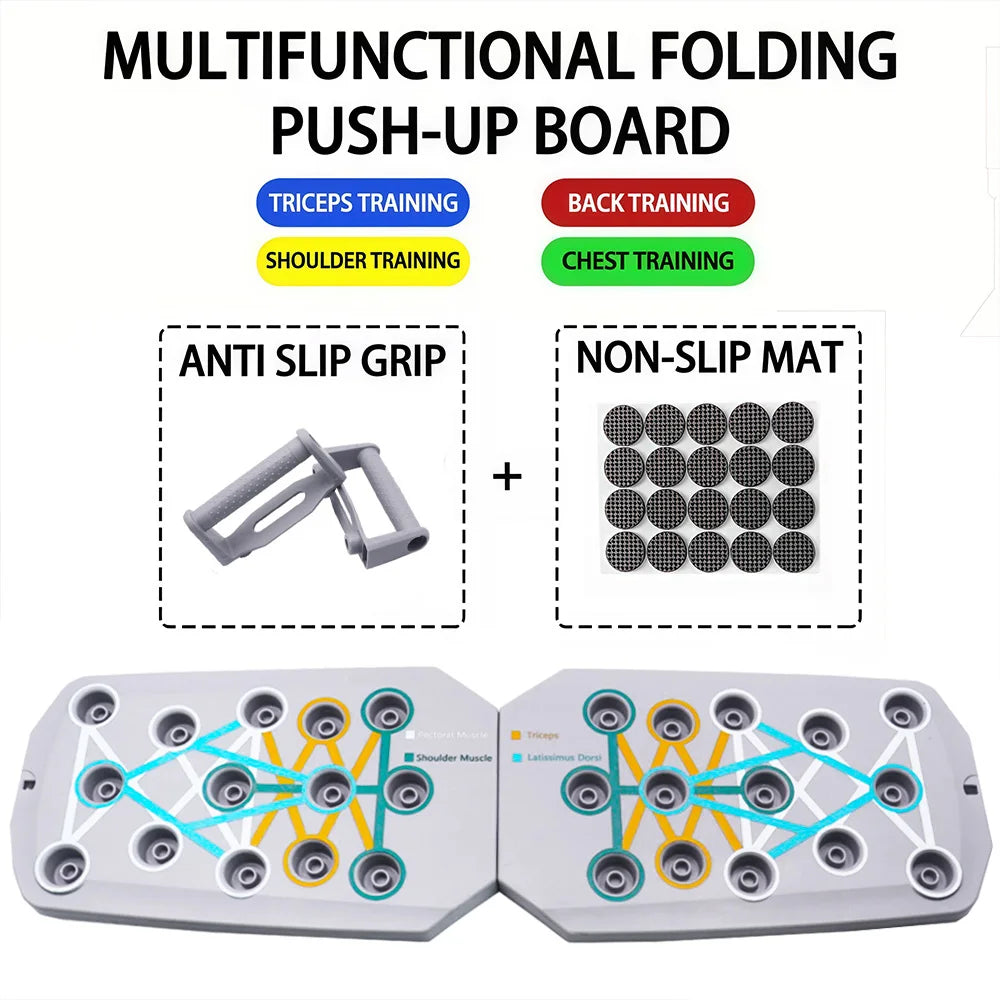
The system generally consists of a flat board with multiple slots and a pair of removable handles. You insert the handles into compatible positions to establish your preferred hand placement before performing push-ups.
Different configurations can change:
- Hand spacing: Wider or narrower positions influence the relative contribution of the chest and triceps.
- Hand angle: Angled grips change wrist and forearm positioning.
- Elbow movement: Hand placement influences the direction of your elbows during each repetition.
- Training variety: Multiple configurations provide alternatives to repeating standard push-ups.
What Makes a Complete Push-Up Board Set Different?
A basic push-up board may provide only the board and handles. Expanded fitness kits sometimes include resistance bands, door anchors, ankle straps, or additional attachments.
However, not every multifunctional push-up board includes these accessories. Buyers should distinguish between the equipment shown in promotional photographs and the components explicitly listed in the package description.
Who Should Consider This Home Workout Equipment?
- Beginners: People learning different push-up hand positions and developing foundational upper-body strength.
- Home fitness enthusiasts: Users who want several push-up variations without purchasing multiple separate handles.
- Apartment residents: People who prefer compact equipment over large strength machines.
- Frequent travelers: Users who want portable workout accessories, provided the packed dimensions and weight are suitable.
- Budget-conscious buyers: People seeking a relatively simple way to diversify bodyweight training.
Color-Coded Muscle Targeting Zones Explained
Color-coded positions are one of the main advantages of multifunctional push-up boards. They make it easier to identify different hand-placement configurations and switch between exercises. However, color assignments are manufacturer-specific, and no color guarantees isolated activation of a particular muscle.
Common Push-Up Board Colors and Muscle Groups
Some boards use color conventions similar to the following. Always check the markings and instructions supplied with the actual equipment.
| Common Color | Typical Position | Primary Emphasis | Secondary Muscles | Training Purpose |
| Blue | Wide hand placement | Chest | Triceps and anterior deltoids | Chest-focused push-ups |
| Red | Forward or angled placement | Shoulders | Chest and triceps | Shoulder-oriented pushing |
| Green | Narrow hand placement | Triceps | Chest and shoulders | Arm-focused push-ups |
| Yellow | Rearward or alternative placement | Varies by design | Stabilizing muscles | Additional movement variations |
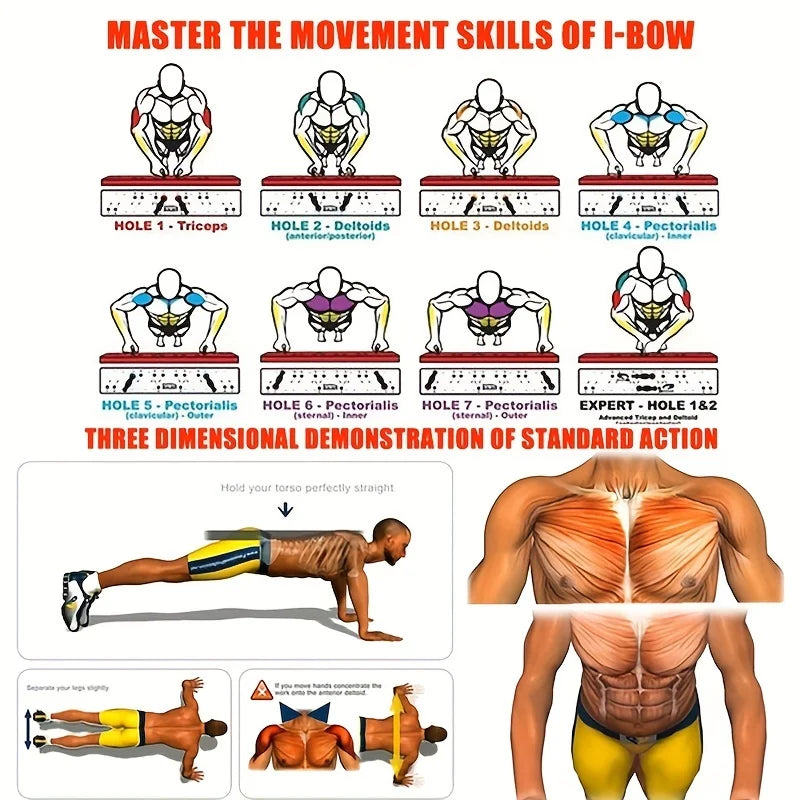
How Hand Placement Changes Muscle Recruitment
Push-up mechanics depend on hand spacing, elbow direction, shoulder positioning, and body alignment.
- Wide positions: Increase the relative emphasis on the pectoralis major, although shoulder involvement remains important.
- Narrow positions: Generally increase the relative contribution of the triceps brachii.
- Forward positions: Can increase the demands placed on the anterior deltoids, depending on body angle and movement mechanics.
- Angled positions: Provide alternative wrist and forearm orientations while maintaining a pushing movement.
Understanding Chest, Shoulder, Triceps, and Back Positions
Push-up boards primarily support pushing exercises. The pectoralis major contributes to chest movement, the triceps brachii extend the elbows, and the deltoid muscles assist with shoulder movement. Core muscles help stabilize the trunk throughout the exercise.
One important distinction concerns back training. Standard push-ups do not provide the same pulling stimulus as rows or pulldowns. Although the upper back and shoulder stabilizers contribute to positioning, developing the latissimus dorsi requires dedicated pulling exercises, such as resistance-band rows.
Essential Features to Compare Before Buying
Affordable equipment should be evaluated by its practical construction and functionality rather than the number of colors, attachments, or marketing claims. These criteria help distinguish useful budget equipment from products that may not meet your training needs.
Board Dimensions, Material, and Construction Quality
Board dimensions influence comfort, stability, and storage. A board should accommodate your preferred hand positions without forcing your arms into uncomfortable angles.
Check the following specifications:
- Overall length and width.
- Board thickness and resistance to bending.
- Material composition and reinforcement.
- Slot dimensions and handle attachment quality.
- Surface finish and resistance to wear.
Some budget boards use molded plastic, while other designs use reinforced composite or metal components. Material alone does not establish durability. Construction quality, connection points, and manufacturer testing are equally important.
Handle Stability, Grip Comfort, and Ergonomic Design
Handles should remain securely attached during repetitions. Padded grips can make extended workouts more comfortable, while non-slip surfaces help maintain hand contact.
Look for secure attachment points, comfortable grip diameter, durable padding, and bases that do not move excessively under pressure. Ergonomic handles may provide an alternative wrist position compared with palms placed directly on the floor, but they do not guarantee protection against wrist pain or injury.
Weight Capacity and User Safety
Check whether the manufacturer provides a maximum user weight or load rating. Do not assume that a board can support any body weight simply because it appears thick or reinforced.
Also distinguish between static load ratings and dynamic exercise loading. Push-ups involve repeated movement and shifting forces, so a static rating alone may not fully describe performance during exercise. If the manufacturer does not publish a verified capacity, treat that specification as unknown.
Portability, Storage, and Floor Compatibility
Portable equipment should be easy to assemble, disassemble, carry, and store. Check the packed dimensions and total weight rather than relying only on the word portable.
Floor compatibility is equally important. Hardwood, tile, carpet, and exercise mats can affect equipment stability differently. A firm, level surface generally provides a more predictable foundation than thick or uneven carpeting. Check whether the board has a non-slip underside and avoid using it on slippery surfaces.
Multifunctional Push-Up Board Feature Comparison
Compare the following configurations before choosing a set:
| Evaluation Criteria | Basic Configuration | Multifunctional Set | Expanded Accessory Set | What to Check |
| Hand positions | Limited | Multiple positions | Multiple positions | Available configurations |
| Handles | Basic grips | Detachable handles | Handles and possible extras | Grip padding and locking |
| Versatility | Basic push-ups | Different push-up variations | Potentially additional exercises | Actual included accessories |
| Portability | Usually compact | Compact board design | Depends on package size | Dimensions and weight |
| Construction | Varies | Varies | Varies | Materials and load rating |
Which Features Are Worth Paying More For?
Prioritize reliable handle connections, reinforced construction, comfortable grips, stable contact with the floor, and clear instructions. These features influence everyday usability more directly than decorative design elements.
Additional accessories are worthwhile only when you intend to use them. A more expensive kit is not automatically better if its attachments remain unused or its construction specifications are unclear.
Product Example: Portable Multifunctional Push-Up Board
The LINGPENG Push-Up Board Set for Full Upper Body Strength Training is one example of a portable system designed around adjustable hand positions.
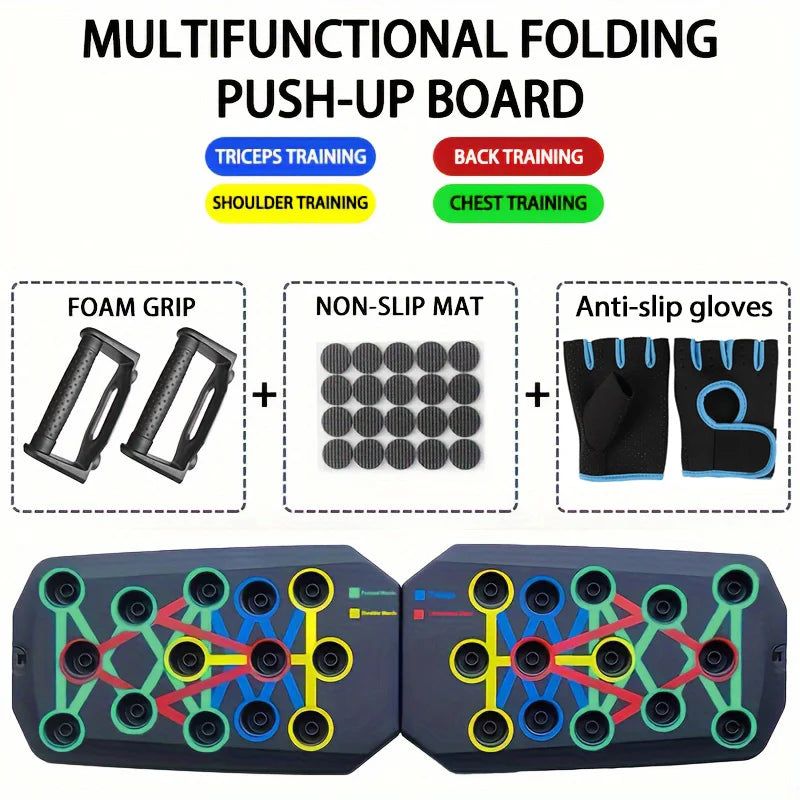
- Brand: LINGPENG.
- Product type: Multifunctional push-up board set.
- Training focus: Strength training.
- Position system: Color-coded exercise positions.
- Handles: Padded, non-slip grips.
- Design: Portable and designed for easy assembly and storage.
- Material: Not specified in the supplied product specifications.
Its main practical appeal is the combination of different hand-placement options and portable storage. Buyers should check the current listing for exact dimensions, weight capacity, material details, package contents, warranty, and return conditions before ordering.
If you are comparing compact exercise accessories with other home-use products, the Lifestyle collection provides another place to explore practical equipment and everyday accessories.
What Is Included in a Multifunctional Push Up Board Set?
Package contents vary between manufacturers and product versions. The core configuration generally centers on the board and compatible handles, while additional resistance equipment may be optional.
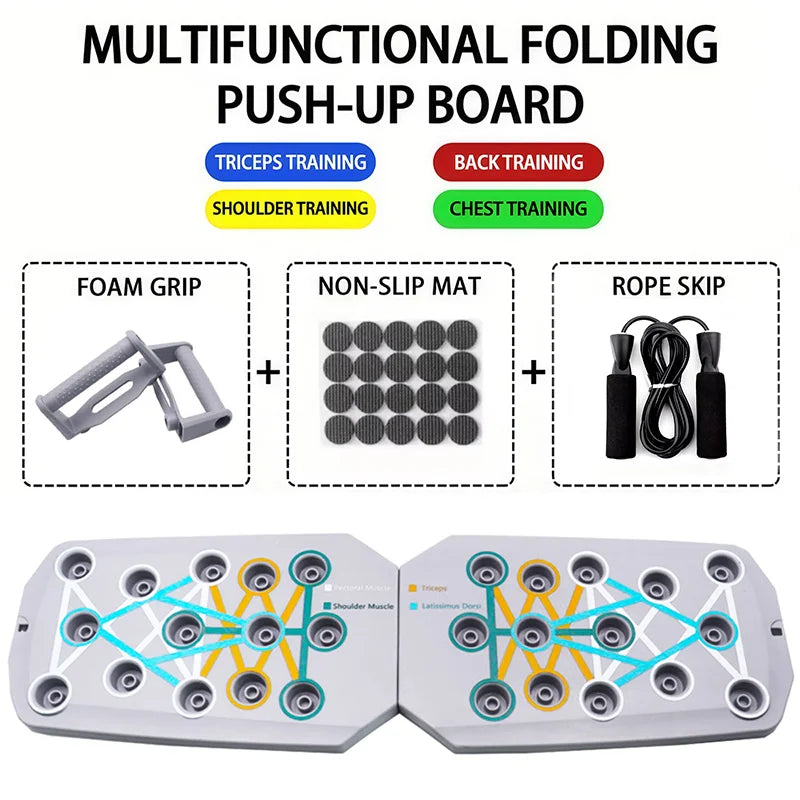
Standard Components: Board and Ergonomic Push-Up Handles
The primary components of a multifunctional board system are:
- A board with designated handle slots.
- A pair of detachable push-up handles.
- Grip surfaces designed to provide a comfortable handhold.
- Assembly instructions where supplied.
The LINGPENG model described here specifies a portable board and padded, non-slip handles. Its supplied specifications do not establish the exact material composition or a complete inventory of every package component.
Optional Accessories: Resistance Bands and Attachments
Some expanded push-up kits advertise resistance bands, door anchors, ankle straps, and additional grips. These accessories can extend training beyond conventional push-ups, but they should not be assumed to come with every board.
Resistance bands can support pulling movements such as standing rows and band pull-aparts. These exercises complement push-ups by introducing movement patterns that target the back and other muscles involved in shoulder stabilization.
Complete Accessory Checklist Before Ordering
Use this checklist to compare the product description with the actual package:
- Multifunctional push-up board.
- Pair of detachable handles.
- Handle locking or securing mechanism.
- Resistance bands, if advertised.
- Door anchor, if advertised.
- Additional grip attachments, if advertised.
- Assembly and exercise instructions.
- Storage or carrying bag, if advertised.
- Warranty and customer support information.
For the portable LINGPENG push-up board set, verify the current product listing for the precise package contents instead of assuming that every accessory shown in an illustrative photograph is included.
Best Exercises to Perform With a Multifunctional Push-Up Board
A push-up board is most useful when you understand how to select positions and maintain consistent technique. Start with movements appropriate to your current strength and increase difficulty gradually.
Wide-Grip Push-Ups for Chest Emphasis
Wide-grip push-ups emphasize the chest while also involving the shoulders and triceps.
- Place the handles in a suitable wide position.
- Assume a plank position with your hands beneath or slightly wider than your shoulders.
- Keep your body aligned from head to heels.
- Lower your chest under control without excessively flaring your elbows.
- Push back to the starting position.
Use a comfortable range of motion. An excessively wide grip is not necessary for effective chest training.
Narrow-Grip Push-Ups for Triceps
Narrow-grip push-ups increase the relative contribution of the triceps brachii.
- Position the handles closer together.
- Keep your elbows relatively close to your torso.
- Lower your body while maintaining a stable trunk.
- Press through the handles until your elbows extend comfortably.
This variation can feel more demanding than standard push-ups. Beginners may benefit from performing it with their knees supported or hands elevated.
Shoulder-Focused Push-Up Variations
Forward hand positions and more challenging body angles can increase shoulder involvement. However, conventional push-ups still involve several muscle groups rather than isolating the deltoids.
Maintain controlled repetitions and avoid positions that cause uncomfortable shoulder pressure. Users with limited shoulder mobility should begin with a comfortable, less demanding variation.
Back and Resistance-Band Exercises
Push-up boards are primarily designed for pushing movements. If your set includes compatible resistance bands, additional exercises may help balance your upper-body routine.
- Standing band rows: Pull the bands toward your torso while keeping your shoulders controlled.
- Band pull-aparts: Move your hands outward to engage the upper-back musculature.
- Resistance-band curls: Train the elbow flexors as a complement to pushing exercises.
Use only accessories confirmed as compatible and included with your equipment. Inspect bands for tears and deterioration before each session.
Core Stabilization During Push-Ups
Push-ups also require the abdominal muscles, obliques, and spinal stabilizers to maintain body alignment. Brace your abdomen, keep your hips from sagging, and avoid excessive arching in the lower back.
For beginners, elevated push-ups against a stable surface can help develop the coordination needed for full plank-based repetitions.
Proper Form, Common Mistakes, and Safety Tips
Common mistakes include:
- Using handles that are not securely attached.
- Allowing the hips to sag during repetitions.
- Flaring the elbows excessively.
- Reducing the range of motion to complete more repetitions.
- Locking the elbows aggressively at the top.
- Training on an uneven or slippery surface.
- Increasing workout difficulty before mastering basic technique.
Stop if you experience sharp pain, unusual joint discomfort, dizziness, or other concerning symptoms. People recovering from upper-body injuries or dealing with persistent shoulder, elbow, or wrist pain should seek appropriate professional guidance before starting a new training routine.
Beginner-to-Advanced Multifunctional Push-Up Board Workout Plans
One advantage of adjustable hand positions is the ability to organize different variations into a structured workout. The following examples are starting points rather than mandatory training prescriptions.
Beginner Routine: Build Foundational Upper-Body Strength
Start with two sets of each exercise, performing approximately 6–10 controlled repetitions.
- Elevated push-ups: 6–10 repetitions.
- Knee-supported push-ups: 6–10 repetitions.
- Comfortable standard-grip push-ups: 6–8 repetitions.
Rest for approximately 60–120 seconds between sets or longer if needed. Focus on alignment and controlled movement rather than maximizing repetition count.
Intermediate Routine: Develop Strength and Exercise Variety
Once standard push-ups become manageable, introduce different hand placements.
- Wide-grip push-ups: 2–3 sets of 8–12 repetitions.
- Standard push-ups: 2–3 sets of 8–12 repetitions.
- Narrow-grip push-ups: 2 sets of 6–10 repetitions.
- Resistance-band rows, if suitable equipment is available: 2–3 sets of 10–15 repetitions.
Adjust repetitions according to your ability and maintain good technique throughout each set.
Advanced Routine: Increase Training Challenge
Experienced users can increase the challenge through controlled tempo, additional sets, or more demanding bodyweight variations.
- Wide-grip push-ups: 3 sets of 10–15 repetitions.
- Narrow-grip push-ups: 3 sets of 8–12 repetitions.
- Slow-tempo push-ups: 2 sets of 6–10 repetitions.
- Resistance-band rows: 3 sets of 12–15 repetitions, if compatible bands are available.
More repetitions are not always better. Increase training volume progressively while preserving a controlled range of motion.
How Often Should You Train With a Push-Up Board?
Two or three upper-body sessions per week can provide a practical starting point for many people. Allow sufficient recovery between demanding sessions, especially when training the chest, shoulders, and triceps.
A balanced strength program should also include pulling movements and lower-body exercises. A push-up board is a training accessory, not a complete replacement for all forms of resistance training.
If you want to explore the available configurations for a compact home routine, review the multifunctional push-up board and its padded handle design before deciding whether its features match your exercise preferences.
Multifunctional Push-Up Board vs. Traditional Push-Up Bars
The best equipment depends on how much exercise variety you need, how much space you have, and how much you want to spend. A multifunctional board offers more guided hand-placement options, while traditional push-up bars are often simpler and easier to store.
Multifunctional Board vs. Basic Push-Up Board
A basic board may offer a limited selection of handle positions, whereas a multifunctional model provides more configurations. However, more positions do not automatically mean better workouts. The spacing must suit your body mechanics and preferred movements.
Multifunctional Board vs. Traditional Push-Up Bars
Traditional push-up bars use separate handles rather than a larger positioning board. They offer flexibility because users can place them at different widths and angles without being restricted to preset slots.
The main differences are:
- Multifunctional boards: Organized hand-placement options and convenient position changes.
- Traditional bars: Simpler construction, flexible placement, and often a smaller storage footprint.
- Ergonomic handles: A straightforward option for users prioritizing grip comfort and a raised hand position.
Budget Comparison of Affordable Home Push-Up Training Equipment
The following US price ranges are indicative market estimates, not verified live prices or quotations for specific products. Actual prices vary by retailer, materials, accessories, and construction quality.
| Equipment Type | Typical US Price Range | Common Materials | Stability | Portability | Ideal User |
| Basic push-up bars | $10–$25 | Plastic or metal | Depends on base design | High | Budget beginners |
| Ergonomic push-up handles | $15–$35 | Plastic, metal, foam | Depends on frame and grip | High | Regular home users |
| Multifunctional push-up boards | $20–$50 | Typically molded plastic or composite | Depends on board and slots | Moderate to high | Users seeking multiple positions |
| Rotating push-up stands | $20–$60 | Plastic and metal components | Depends on rotating base | High | Experienced users seeking movement variation |
| Compact parallettes | $25–$80 | Metal or wood | Depends on frame and base | Moderate | Advanced bodyweight trainees |
Which Equipment Offers Better Value?
For someone who only performs standard push-ups, inexpensive bars may provide all the functionality needed. For users who frequently change hand positions, a multifunctional board can offer greater convenience.
Compact parallettes are more appropriate for advanced bodyweight movements, including support holds and certain progressions, but may be unnecessary for basic chest and triceps training.
The key is to compare the actual functionality rather than purchasing equipment based on the highest number of advertised features.
Limitations and Important Buying Considerations
Fixed Hand Positions May Not Fit Every User
Preset board slots may not accommodate every shoulder width, arm length, or preferred wrist angle. If possible, compare the distance between positions with your natural push-up stance. Do not force your hands into an uncomfortable configuration simply because it is marked as a particular muscle-targeting zone.
Weight Restrictions and Structural Durability
Low-cost equipment can vary considerably in construction quality. Inspect handle attachments, board flex, connection points, and surface wear. If the manufacturer does not publish a clear weight capacity, do not assume a particular load rating.
Resistance bands also require regular inspection because damaged or aging elastic material can fail during use.
Floor Compatibility and Stability Concerns
Even a well-designed board may move on an unsuitable surface. Test the equipment before beginning a demanding workout, and make sure all handles are properly secured. Avoid uneven floors and surfaces that become slippery during exercise.
What a Push-Up Board Cannot Replace
A multifunctional board is not a complete home gym. Its main purpose is to support pushing exercises, particularly variations involving the chest, shoulders, and arms.
It does not independently provide progressive resistance equivalent to a full dumbbell or barbell system. Nor does it replace dedicated pulling exercises, lower-body training, or a comprehensive strength-conditioning program.
How to Choose the Right Multifunctional Push-Up Board Set
The most suitable purchase depends on your training experience, budget, available floor space, and intended exercise variations.
Best Features for Beginners
Beginners should prioritize stable handles, comfortable padding, easy assembly, and clear instructions. A simple configuration is often more useful than a complicated system with numerous attachments.
Choose a board that allows comfortable hand spacing and supports manageable push-up variations. Knee-supported and elevated push-ups can help you build foundational strength before progressing to more demanding movements.
Best Features for Experienced Home Workouts
Experienced users should pay closer attention to structural reinforcement, handle locking mechanisms, board dimensions, and documented load specifications.
Additional resistance accessories may be useful if they support a balanced workout. However, the board itself should remain stable during repeated exercise.
Best Features for Small Spaces and Travel
Apartment residents and travelers should compare overall dimensions, packed size, total weight, and assembly requirements. A portable board is most convenient when it can be stored without occupying a large amount of floor space.
Also consider whether the equipment is practical to carry. Portable does not necessarily mean lightweight enough for every travel situation.
Warranty, Shipping, Returns, and Customer Reviews
Before purchasing, review the retailer's warranty coverage, shipping costs, delivery estimates, return window, and customer support information.
Customer reviews can provide useful information about real-world handle stability, grip comfort, assembly, and durability. Look for consistent patterns across multiple reviews rather than relying on a single positive or negative experience.
Recommended Product: LINGPENG Portable Push-Up Board Set
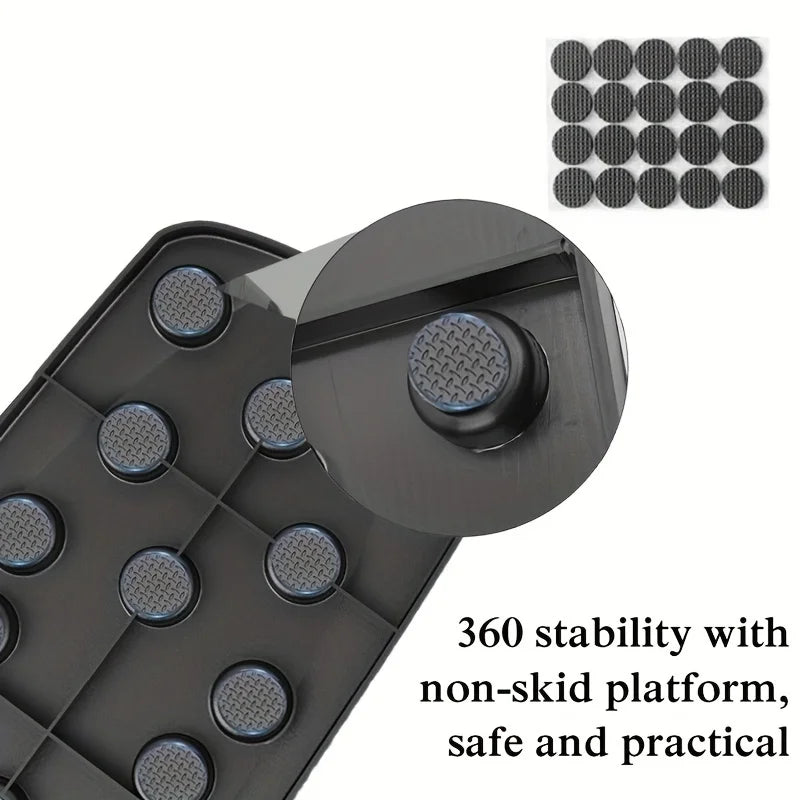
The LINGPENG multifunctional push-up board set is worth considering if your priority is a portable system with multiple color-coded hand positions and padded, non-slip handles.
Verified product details:
- Multiple color-coded exercise positions.
- Detachable positioning options for push-up variations.
- Padded, non-slip handles.
- Portable design intended for convenient assembly and storage.
- Upper-body training focus, including chest, shoulders, arms, and back-related workout routines.
Specifications requiring confirmation: The supplied product information does not specify the construction material, exact dimensions, maximum user weight, complete accessory inventory, or warranty terms. Check the current product listing for these details before making a purchase.
View the LINGPENG Push-Up Board Set and check its current product details to determine whether its available configurations and handle design fit your home training needs.
Final Pre-Purchase Checklist
- Are the board dimensions suitable for your body and workout space?
- Are the handles comfortable and securely attached?
- Are the hand-position configurations appropriate for your training goals?
- Does the manufacturer provide material and weight-capacity information?
- Are all advertised accessories included in the package?
- Is the board suitable for your available floor surface?
- Can the equipment be assembled and stored conveniently?
- Are warranty, shipping, and return conditions clearly explained?
Final Verdict: Is a Multifunctional Push-Up Board Worth Buying?
A multifunctional push-up board can be a practical investment for people who want to add variety to upper-body bodyweight training without buying several separate exercise accessories. Its main advantages are multiple hand-placement configurations, portable construction, padded handles, and convenient storage.
For basic push-up training, traditional bars may offer better value at a lower price. For people who want organized hand positions and a more versatile push-up setup, a multifunctional board can justify the additional cost, provided its construction and specifications meet their requirements.
The LINGPENG Push-Up Board Set offers a combination of color-coded positions, padded non-slip handles, and a portable design. It is a relevant option for shoppers seeking affordable home upper-body training equipment, although material composition, load capacity, exact dimensions, and package contents should be confirmed before ordering.
If these features match your workout preferences, explore the LINGPENG Push-Up Board Set for a more versatile home push-up routine and review the available product specifications before purchasing.
For additional home-use equipment and wellness accessories, you can also explore the Body Care and Health Devices collection or browse the Beauty & Self-Care blog.
Pillar Article: Multifunctional Push Up Board Set: Features, Exercises & Buying Guide