
Push Up Board with Handles: 7 Best Options Compared for Grip Comfort and Stability (2026)
Choosing the right push up board with handles involves more than counting exercise positions or looking for attractive designs. Two boards can appear similar but feel very different during repeated workouts because of handle diameter, grip texture, padding density, attachment security, and overall board stability. These details matter when building a consistent upper-body strength routine at home.
This 2026 comparison examines seven push-up board design options, focusing on padded grips, rubber handles, detachable and fixed constructions, ergonomic positioning, and exercise versatility. It also evaluates a portable multifunctional LINGPENG push-up board set from KentDO. Because only one specific product listing with documented specifications is available for verification, the remaining six entries are clearly identified as design categories rather than independently verified product recommendations. This approach avoids inventing product specifications, testing results, or manufacturer claims.
Whether you are a beginner looking for comfortable push-up handles or a regular home exerciser prioritizing stability, understanding these differences can help you select equipment that fits your training needs.
Quick Comparison: 7 Best Push-Up Board Options in 2026
The most useful way to compare push-up boards is to examine their handle construction, grip comfort, attachment design, board rigidity, and intended use. The following comparison includes one verified product and six design profiles to consider when evaluating other listings.
The 7 Options at a Glance
- Best overall documented option: LINGPENG Multifunctional Push-Up Board. Features color-coded exercise positions, multiple angles, padded non-slip handles, and portable construction.
- Best design to investigate for cushioning: Foam-padded push-up board. Prioritizes soft grip surfaces and cushioning during repeated exercises.
- Best design to investigate for textured traction: Rubber-grip push-up board. Focuses on firmer contact and potentially easier surface cleaning.
- Best design to investigate for portability: Detachable-handle push-up board. Allows components to be removed for more convenient storage.
- Best design to investigate for structural simplicity: Fixed-handle push-up board. Uses integrated or permanently mounted handles rather than removable connections.
- Best design to investigate for beginners: Ergonomic push-up board. Prioritizes intuitive hand placement and manageable grip dimensions.
- Best design to investigate for workout variety: Adjustable-position push-up board. Offers different hand placements for varying upper-body exercise emphasis.
Comparison Matrix: Grip Material, Padding, Stability, and Features
Use this matrix to understand which specifications are confirmed and which require additional verification before purchasing.
- LINGPENG multifunctional board: Padded non-slip handles; padding material and diameter not disclosed; handle attachment mechanism not disclosed; color-coded positions; portable construction; designed for home and travel workouts.
- Foam-padded design: Foam cushioning; density and diameter should be verified; attachment mechanism varies by product; intended for users prioritizing a softer grip.
- Rubber-grip design: Rubber or rubber-like grip surfaces; composition and texture require verification; attachment mechanism varies; intended for users preferring firmer tactile contact.
- Detachable-handle design: Handle material and padding vary; removable connectors require inspection; intended for users prioritizing compact storage.
- Fixed-handle design: Handle material and cushioning vary; integrated or permanent mounting should be confirmed; intended for users preferring fewer removable components.
- Ergonomic design: Handle contours and diameter should be checked; padding varies; intended for users prioritizing grip positioning and comfort.
- Adjustable-position design: Multiple hand placements or angles; board material and handle construction vary; intended for users seeking exercise variety.
Board rigidity, independently verified weight capacity, accessory compatibility, and warranty coverage are not established for these seven profiles. Do not assume that a particular design category guarantees better stability or durability.
If you want a documented portable option with color-coded positions and padded non-slip handles, explore the LINGPENG Push-Up Board Set for Full Upper Body Strength Training and review its available specifications before purchasing.
How to Choose the Right Option
- Choose padded handles if cushioning is your primary preference.
- Consider rubber grips if you prefer a firmer, textured surface.
- Look at detachable designs if storage and transportation are priorities.
- Consider fixed handles if you prefer fewer removable connections.
- Prioritize clear exercise-position instructions if you are a beginner.
- Check board rigidity and connector quality if you train frequently.
How We Evaluated Push-Up Boards with Handles
This comparison uses a specification-based evaluation framework covering handle comfort, grip materials, attachment mechanisms, structural design, exercise versatility, and portability. Product information is distinguished from general design considerations.
Independent hands-on testing has not been conducted for the products discussed here. Accordingly, this article does not claim to have measured grip pressure, tested handle wobbling, verified weight capacities, or evaluated long-term durability. The LINGPENG product information comes from its supplied product description. Other design profiles describe purchasing criteria rather than verified individual products.
Grip Comfort and Handle Materials
Handle comfort depends on several interacting characteristics. Grip diameter, surface texture, cushioning density, and ergonomic contours can influence how comfortably the hands hold the equipment.
Foam grips generally provide a softer contact surface, while rubber grips are often selected for their firmer feel and textured contact. However, actual comfort depends on the specific material, dimensions, surface finish, and individual hand size.
When comparing listings, check:
- Whether the handle uses foam, rubber, or another material.
- Whether padding covers the entire gripping surface.
- Whether the grip diameter suits your hand size.
- Whether the surface remains comfortable during repeated movements.
- Whether cleaning and moisture-management instructions are provided.
Handle Attachment and Locking Mechanisms
Detachable handles introduce additional connection points that should be inspected before exercise. A well-designed locking system should engage securely and follow the manufacturer's assembly instructions.
Fixed handles remove some removable connection points, but their actual stability still depends on mounting quality and structural construction. Neither design is automatically superior.
Board Stability and Structural Rigidity
A stable push-up board should remain securely positioned on an appropriate exercise surface. Inspect the board for visible flex, uneven construction, loose mounting points, and signs of poor material quality.
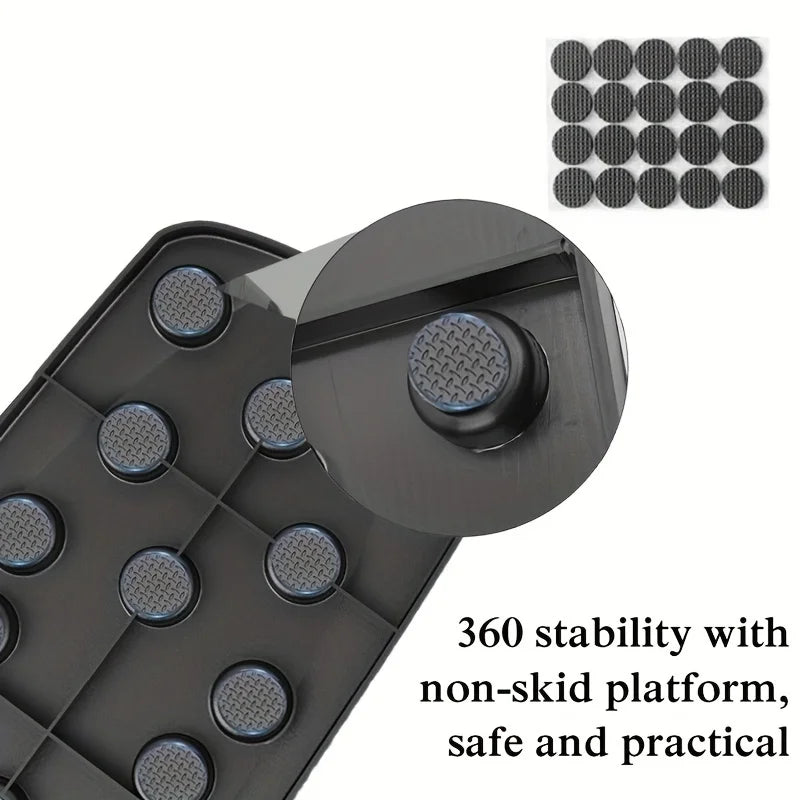
Non-slip feet, a rigid frame, and secure handle mounting can contribute to practical stability. However, a non-slip handle surface is not the same as an anti-slip board base. Both should be evaluated separately.
Portability, Storage, and Accessories
Portable push-up equipment can be useful when floor space is limited. Detachable components and compact construction may make storage easier, while an integrated design may reduce assembly steps.
Also check the complete package description. Resistance bands, storage bags, replacement grips, and other accessories should never be assumed to be included unless the seller explicitly lists them.
7 Best Push-Up Board Design Options: Detailed Reviews
1. Best Overall Documented Option: LINGPENG Multifunctional Push-Up Board
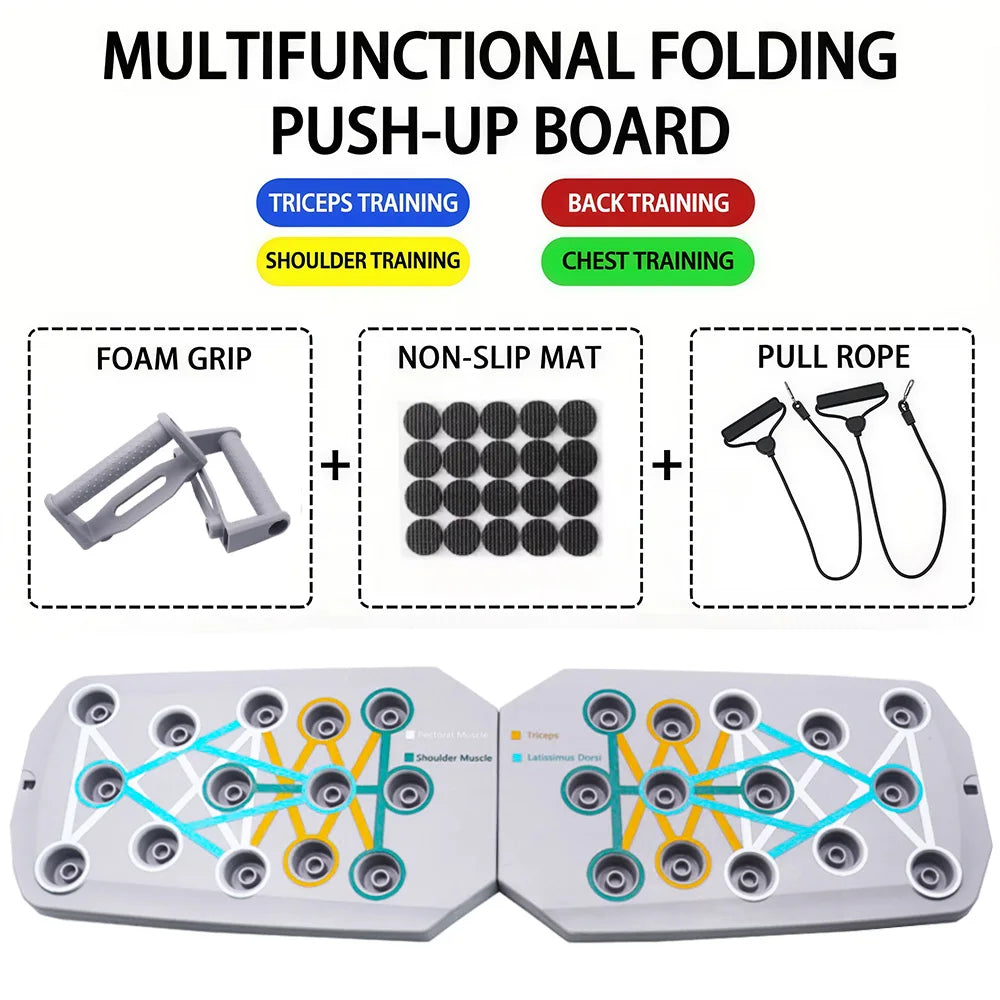
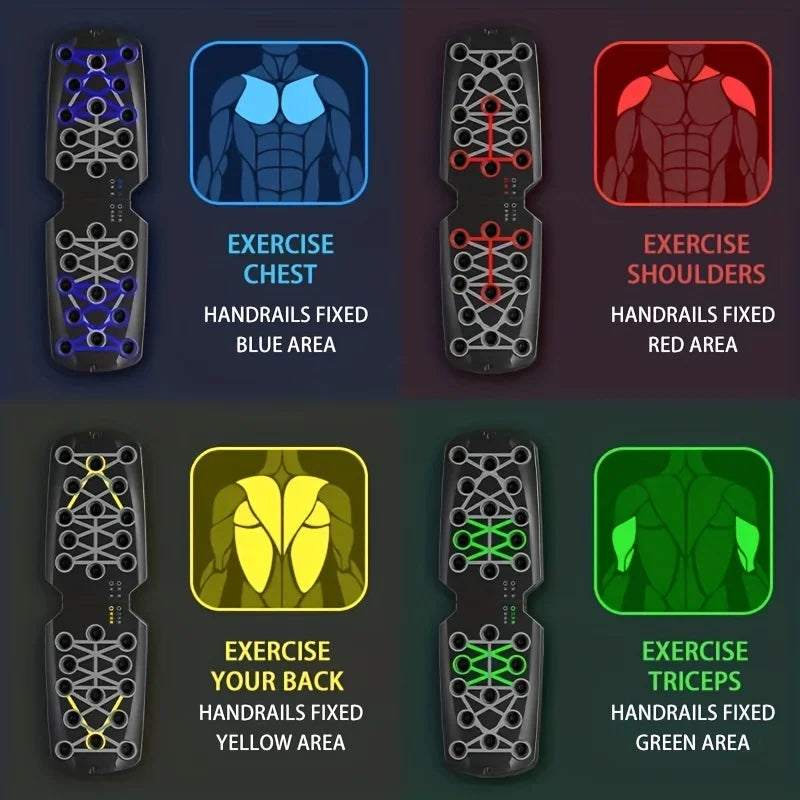
The LINGPENG multifunctional push-up board is the only individually identified product in this comparison with supplied specifications. Its primary advantage is the combination of color-coded exercise positions, multiple hand-placement angles, padded non-slip handles, and portable construction.
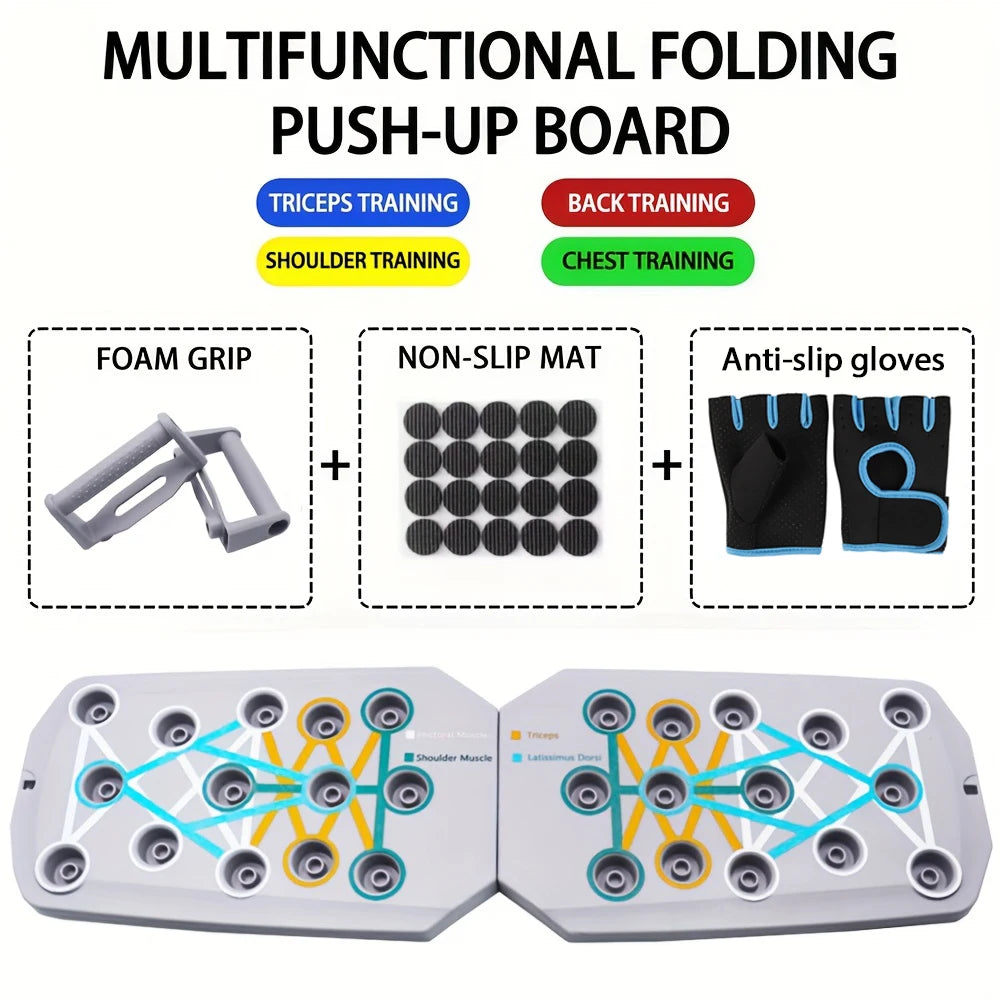
Rather than relying exclusively on traditional floor push-ups, users can change hand placements to introduce additional movement variety. The product description identifies the chest, shoulders, arms, and back as upper-body training areas supported by the system.
Documented specifications:
- Brand: LINGPENG.
- Product type: Multifunctional push-up board set.
- Sport type: Strength training.
- Handle type: Padded, non-slip handles.
- Positioning: Color-coded exercise positions.
- Design: Portable and easy to assemble.
- Material: Not specified.
- Grip diameter and padding composition: Not disclosed.
- Handle attachment mechanism: Not disclosed.
- Weight capacity: Not disclosed.
Pros:
- Multiple exercise positions provide movement variety.
- Color-coded positioning makes hand placement easier to identify.
- Padded non-slip handles are included according to the product description.
- Portable design suits home workouts and travel.
- Designed for straightforward assembly and storage.
Cons:
- Specific grip materials and padding density are not disclosed.
- Handle diameter and locking details require confirmation.
- Board material and independently verified weight capacity are unavailable.
- No independent stability or durability testing is available.
Best for: Beginners and home exercisers looking for a portable, color-coded push-up training system with padded handles and multiple exercise positions.
For a closer look at the available product details, visit the LINGPENG portable multifunctional push-up board.
2. Best Design to Investigate for Foam-Padded Handles
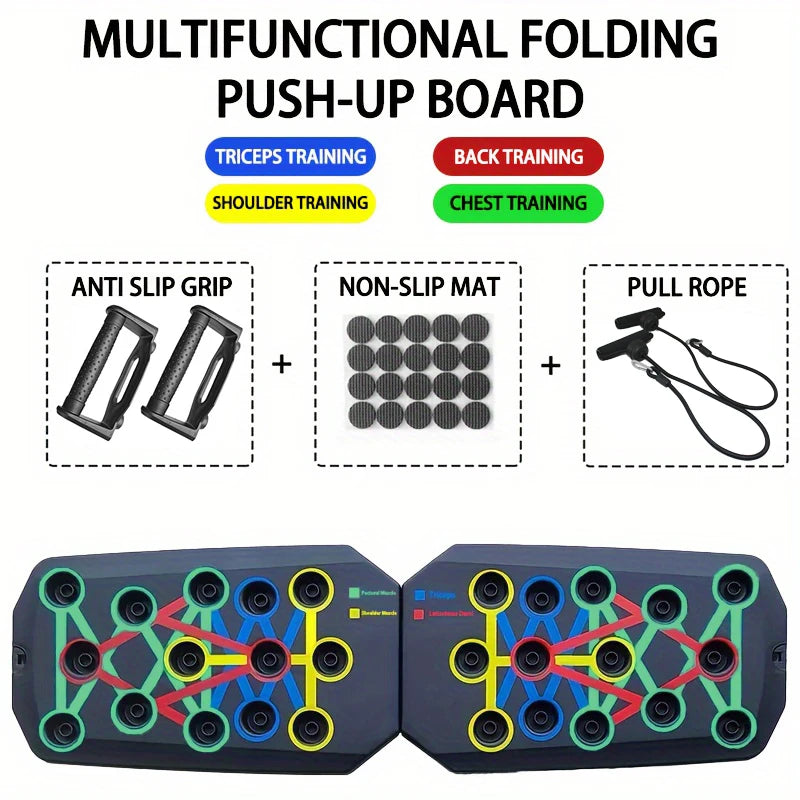
Foam-padded push-up handles are worth considering if you prefer a softer contact surface during bodyweight training. Cushioning can change how pressure feels across the palm, particularly when performing multiple sets.
However, thicker padding does not automatically mean better ergonomics. Excessively soft material may compress under pressure, while an unsuitable handle diameter can make gripping difficult.
Pros: Softer contact surface, cushioning preferences, and potentially more comfortable handling.
Cons: Foam density, sweat resistance, compression, and long-term wear vary between products.
Best for: Users who prioritize cushioning and want to compare grip thickness before purchasing.
Check the handle diameter, padding coverage, and material description rather than relying on the word ergonomic alone. For comparison, the LINGPENG board's padded handle design offers a documented alternative, although its exact cushioning material is not disclosed.
3. Best Design to Investigate for Rubber Exercise Grips
Rubber-grip push-up boards appeal to users who prefer a firmer surface with more pronounced tactile feedback. Depending on the material and surface pattern, rubber-like grips may provide useful contact traction during upper-body exercises.
Before choosing this design, verify the actual grip composition. Some product descriptions use rubber, TPR, or other synthetic materials interchangeably, even though their characteristics can differ.
Pros: Firmer grip feel, potentially straightforward cleaning, and a range of possible surface textures.
Cons: Less cushioning than many foam designs, material composition may be unclear, and grip performance depends on the actual surface.
Best for: Users who prefer firm, textured exercise handles over soft cushioning.
4. Best Design to Investigate for Detachable Handles
Detachable push-up handles are designed to make equipment easier to disassemble, transport, or store. This construction can be useful in apartments, shared living spaces, and compact home gyms.
The most important purchasing consideration is the connector system. Handles should engage fully, remain properly aligned, and show no unexpected movement when assembled according to the manufacturer's instructions.
Pros: Convenient disassembly, potentially smaller storage footprint, and modular construction.
Cons: Additional connection points require inspection, and locking compatibility varies.
Best for: People who regularly transport exercise equipment or need compact storage.
5. Best Design to Investigate for Fixed Handles
Fixed-handle push-up boards appeal to people who prefer a simpler setup. Because the handles are integrated or permanently mounted, there may be fewer removable connections to assemble before exercise.
Nevertheless, fixed construction does not automatically establish superior durability. Handle mounting points, board rigidity, material quality, and floor contact remain important.
Pros: Straightforward setup, fewer removable components, and potentially simpler maintenance.
Cons: Storage flexibility may be limited, and integrated construction still requires quality inspection.
Best for: Home exercisers who prefer a consistent setup and do not regularly disassemble their equipment.
6. Best Design to Investigate for Beginners: Ergonomic Push-Up Handles
Beginners benefit from equipment that is straightforward to understand and comfortable to handle. Ergonomic push-up board designs may include clearly marked hand positions, accessible grip dimensions, and simple assembly instructions.
However, ergonomic is not a standardized guarantee of comfort. Handle thickness, contour shape, height, and individual mobility all influence how the equipment feels during exercise.
Pros: Potentially intuitive positioning, accessible setup, and greater attention to grip dimensions.
Cons: Ergonomic claims may lack measurable specifications, and suitability differs between users.
Best for: New exercisers who want understandable hand placement and a comfortable grip.
7. Best Design to Investigate for Versatile Home Strength Training
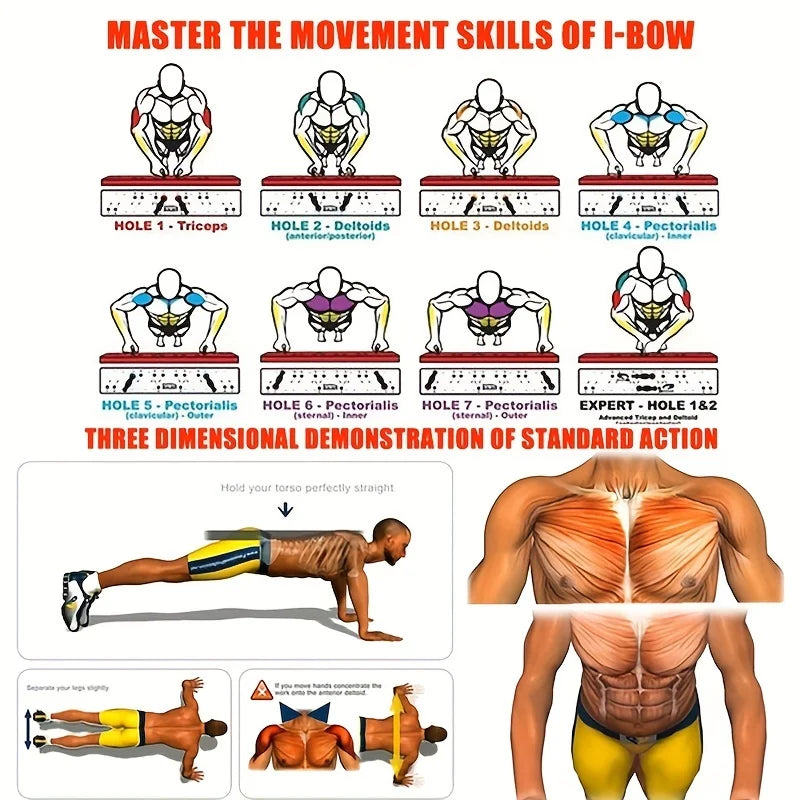
Adjustable-position push-up boards focus on exercise variety. Different hand placements and angles can change the emphasis of a push-up movement, allowing users to organize a more varied bodyweight training routine.
For regular training, consider whether the board provides understandable positioning instructions, secure handle placement, and sufficient structural support. More exercise positions are useful only when the equipment remains stable and the movements can be performed with appropriate technique.
Pros: Multiple hand placements, flexible exercise organization, and potentially more varied training sessions.
Cons: More positioning options do not automatically improve construction quality or exercise effectiveness.
Best for: Regular home exercisers who want to vary chest, shoulder, and arm-focused push-up movements.
Pros and Cons: What to Know Before Buying
Across the seven design profiles, the strongest purchasing decision depends on matching the handle construction to your preferences while verifying the board's actual specifications.
General advantages of multifunctional push-up boards:
- Multiple hand placements can add variety to traditional push-ups.
- Elevated handles offer an alternative to placing palms directly on the floor.
- Portable construction can suit compact home workout spaces.
- Color-coded positioning can simplify exercise selection.
General limitations:
- Product materials and weight capacities are not always disclosed.
- Detachable connectors may require additional inspection.
- Padding does not guarantee improved wrist health or injury prevention.
- Some boards offer more positions without providing meaningful structural advantages.
Foam-Padded vs. Standard Push-Up Board Handles: Which Is Better?
Foam-padded handles provide a softer contact surface, while standard handles generally prioritize a firmer grip and more direct tactile feedback. Neither is universally better. The right choice depends on grip dimensions, material, hand size, and personal comfort preferences.
How Foam-Padded Grips Affect Hand Comfort
Foam padding adds a cushioning layer between the hand and handle. This can change perceived pressure distribution and make the grip feel softer during repeated bodyweight movements.
However, foam density matters. Very soft material may compress significantly, while low-quality padding may deteriorate or become uneven with repeated use. Look for clearly documented material information and inspect the grip surface whenever possible.
Standard Handles: Firmness, Control, and Maintenance
Standard handles provide a more direct connection between the hand and the equipment. Depending on their construction, they may offer consistent grip dimensions and a firmer contact surface.
Some users prefer this feel because it makes hand placement easier to assess. Others may find the surface uncomfortable during longer sessions. Cleaning requirements depend on the specific material and manufacturer's instructions.
Foam vs. Rubber Handles: Key Differences
- Cushioning: Foam generally emphasizes softness, while rubber grips are often firmer.
- Texture: Both materials can have textured surfaces, depending on manufacturing.
- Moisture management: Neither material should be assumed to be sweat-proof without supporting specifications.
- Cleaning: Rubber-like surfaces may be easier to wipe, while foam may require more careful maintenance.
- Wear: Foam may compress, while rubber-like materials can deteriorate, crack, or lose surface texture.
Which Handle Type Should You Choose?
Choose foam if you prioritize a softer grip and additional cushioning. Consider rubber if you prefer firmer tactile contact and a textured surface. If neither preference is clear, compare handle diameter and surface shape before choosing based on material alone.
Detachable vs. Fixed Push-Up Handles: Stability and Convenience
The main difference between detachable and fixed push-up handles is how the components connect to the board. Detachable designs emphasize storage flexibility, while fixed designs prioritize an integrated setup. Actual stability depends on construction quality rather than attachment category alone.
Advantages of Detachable Push-Up Handles
- Components may be easier to store separately.
- Transportation can be more convenient.
- Some designs offer modular configurations.
- Replacement may be possible when compatible components are available.
Advantages of Fixed Push-Up Handles
- Fewer removable connections to assemble.
- Potentially simpler setup before workouts.
- Integrated construction can reduce the number of separate components.
How to Check Handle Locking Mechanisms and Wobbling
Before using a new board, follow these inspection steps:
- Read the assembly instructions and identify all handle connection points.
- Check that each handle is fully seated and properly locked.
- Inspect connectors for cracks, deformation, or manufacturing defects.
- Place the board on a suitable flat surface.
- Check for unexpected movement using a cautious, controlled inspection before applying full body weight.
- Stop using the equipment if a handle shifts, loosens, or makes unusual noises.
Do not attempt to modify a locking mechanism or use incompatible replacement handles.
Do Ergonomic Push-Up Handles Improve Wrist Positioning?
Elevated push-up handles allow users to grip equipment rather than place their palms flat against the floor. This can provide an alternative wrist position that some people find more comfortable. However, handle shape, height, diameter, and individual mobility determine the actual experience.
How Push-Up Handles Change Hand Position
During a traditional floor push-up, the palms remain on the ground while the wrists are extended. Elevated handles allow the hands to wrap around a gripping surface, potentially reducing the degree of wrist extension required.
This difference may be useful for individuals who prefer gripping a handle instead of placing their palms flat on the floor.
Grip Diameter and Ergonomic Contours: Why They Matter
A handle that is too thick can make it difficult to maintain a comfortable grip, while an excessively narrow design may create concentrated pressure. Ergonomic contours should accommodate the user's hand rather than simply look different.
When possible, compare actual handle dimensions with your hand size. Also consider whether the handle surface allows your fingers to wrap around it naturally without excessive gripping effort.
What Comfortable Wrist Positioning Can and Cannot Do
Comfortable hand positioning may improve the subjective exercise experience, but it does not guarantee injury prevention, eliminate joint stress, or correct poor technique. Push-up boards also do not remove the physical demands of supporting body weight.
Use controlled repetitions, maintain appropriate body alignment, and stop if an exercise causes pain. Individuals with existing wrist or joint concerns should seek appropriate professional guidance before changing their training equipment or exercise routine.
Who May Prefer Ergonomic Push-Up Handles?
- People who prefer gripping an elevated handle instead of placing palms flat on the floor.
- Users who prioritize padded contact surfaces.
- Beginners who want clearer hand-placement guidance.
- Home exercisers who prefer different grip configurations.
How to Assess Push-Up Board Stability and Handle Durability
A push-up board must support repeated bodyweight movements without unexpected shifting or structural instability. Before buying, examine the board, handle connections, grip surfaces, and available manufacturer documentation.
Check Board Structural Rigidity
Look for clearly described construction materials, consistent board thickness, secure mounting points, and a frame that does not show excessive flex. Product photographs can help identify construction details, but they cannot independently establish structural strength.
Evaluate Non-Slip Grip Technology and Floor Contact
Non-slip handles and anti-slip board feet perform different functions. Handle texture helps maintain hand contact, while rubberized feet or other floor-contact features may help reduce movement on compatible surfaces.
Check whether the product description explains both features. Always use the board on a stable, level surface and avoid slippery flooring.
Understand Weight Capacity and Manufacturer Claims
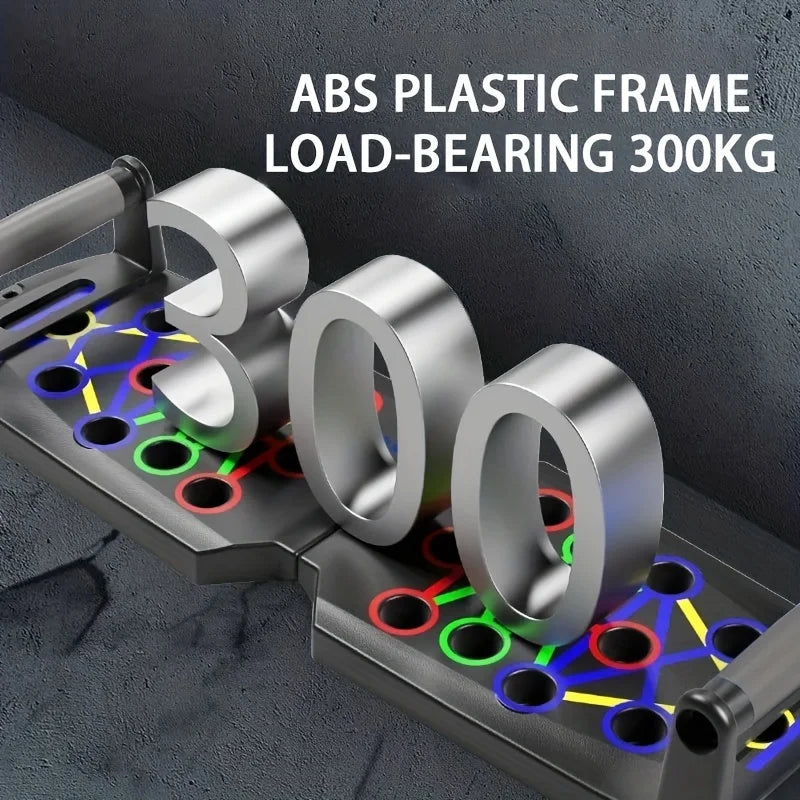
Maximum weight capacity is an important purchasing specification, but advertised figures should not automatically be treated as independently verified test results.
Also remember that dynamic exercise loading can differ from static loading. Push-up movements involve changing forces as the body moves, so a maximum load figure without a documented testing method may provide incomplete information.
Check whether the manufacturer provides a stated capacity, testing documentation, usage limitations, and warranty coverage. If these details are unavailable, treat the specification as undisclosed rather than assuming a safe operating limit.
Common Durability Warning Signs
- Loose or inconsistent handle connectors.
- Visible cracks or deformation.
- Uneven board surfaces or excessive flex.
- Compressed or peeling grip padding.
- Handles that do not remain properly aligned.
- Missing or unclear assembly instructions.
Do not use equipment with damaged structural components or insecure handles.
Common Mistakes When Buying a Push-Up Board with Handles
Choosing Padding Without Checking Grip Diameter
Thick foam does not automatically provide a comfortable grip. Handle diameter should match your hand size, and the cushioning should not make it difficult to maintain control.
Ignoring Handle Wobbling and Locking Compatibility
Detachable handles should have clearly documented attachment instructions. Avoid products with unclear connector compatibility or missing information about replacement components.
Overlooking Board Rigidity and Anti-Slip Performance
A large number of exercise positions cannot compensate for a poorly constructed board. Evaluate structural rigidity, handle mounting, and floor contact before considering the number of available movements.
Trusting Unverified Weight-Capacity and Durability Claims
Look for specific manufacturer documentation rather than relying exclusively on promotional language. Check warranty terms, material descriptions, and any available independent evidence.
Buying Without Checking Storage and Accessory Compatibility
Review the assembled dimensions, package contents, removable components, and storage requirements. Do not assume that resistance bands, carrying bags, or replacement handles are included.
Which Push-Up Board with Handles Is Best for Your Needs?
The most suitable design depends on your training experience, preferred grip feel, available storage, and expectations for exercise variety.
Best for Beginners
Beginners should prioritize clear positioning instructions, manageable grip dimensions, straightforward assembly, and a stable workout surface. A color-coded design can make exercise positioning easier to understand.
The LINGPENG multifunctional board is a documented option to investigate because its product description specifically identifies color-coded positions, multiple angles, and portable construction.
Best for Users Prioritizing Grip Cushioning
Look for padded handles with clearly documented material composition, cushioning density, and diameter. The LINGPENG board includes padded non-slip handles, although its specific padding material is not disclosed.
Best for Users Who Prefer Rubber Grips
Prioritize a listing that identifies its actual grip material and surface texture. Compare the handle diameter and cleaning instructions before choosing rubber over foam.
Best for Compact Home Workouts
Detachable components may be useful if your equipment needs to fit into a small storage area. Confirm assembled dimensions, disassembly requirements, and connector quality.
Best for Regular Bodyweight Strength Training
Regular exercisers should prioritize documented structural construction, secure handles, clear assembly instructions, and practical exercise versatility. The number of available positions should be secondary to reliable construction and appropriate technique.
For users seeking a portable system with multiple exercise positions, the LINGPENG multifunctional upper-body training board is worth comparing against these requirements.
Push-Up Board with Padded Handles: Final Buying Checklist
8 Things to Check Before You Buy
- Handle material: Confirm whether the grips use foam, rubber, or another material.
- Padding density: Look for specific information about cushioning rather than assuming thicker padding is better.
- Grip diameter: Check whether the dimensions suit your hand size.
- Ergonomic shape: Consider grip contours, handle height, and comfortable hand positioning.
- Attachment security: Verify locking mechanisms, connector fit, and assembly instructions.
- Board rigidity: Check the construction material and available structural specifications.
- Anti-slip performance: Examine both handle traction and floor-contact features.
- Weight capacity: Review the manufacturer's stated capacity and supporting documentation.
Check Product Specifications, Warranty, and Included Accessories
Before completing a purchase, verify the exact package contents, product dimensions, material descriptions, warranty coverage, and replacement-part availability. Compare the manufacturer's claims with the actual information available on the product listing.
For a portable option with documented padded handles and multiple color-coded exercise positions, review the KentDO push-up board product specifications before making your final decision.
Final Verdict: Choosing the Right Push-Up Board with Handles
The best push up board with handles is not necessarily the one with the most exercise positions or the thickest cushioning. It is the option that combines a suitable grip diameter, comfortable handle material, secure attachment, appropriate board rigidity, and practical usability.
Foam-padded handles may appeal to users who prefer additional cushioning, while rubber grips may suit those who prefer firmer tactile contact. Detachable designs can simplify storage, whereas fixed handles offer a potentially simpler setup. Ergonomic positioning may improve subjective comfort, but no handle design guarantees injury prevention.
Among the options discussed, the LINGPENG multifunctional push-up board is the only individually documented product in this comparison. Its color-coded positions, multiple angles, padded non-slip handles, and portable design make it a practical candidate for people exploring home upper-body training equipment. Its undisclosed material composition, grip dimensions, attachment mechanism, and weight capacity should still be considered before purchase.
If you want to add more variety to your home strength routine without investing in bulky gym equipment, take a closer look at the Push-Up Board Set for Full Upper Body Strength Training and compare its available specifications with your comfort and training requirements.
For more home and personal-care equipment, explore the KentDO Lifestyle collection or discover additional articles through the Beauty & Self-Care blog.
Pillar Article: Multifunctional Push Up Board Set: Features, Exercises & Buying Guide