

How to Align Neck Sleeping: Stop Doing This Common Mistake
⏱ 7 min read
Knowing how to align neck sleeping correctly can help reduce morning stiffness, improve sleep quality, and support long-term spinal health. Many people develop bad neck posture while sleeping because their head is positioned too high, too low, or twisted for hours at a time. The key is maintaining a neutral cervical spine with the right pillow height, supportive sleep posture, and proper body alignment. An orthopedic pillow for neck pain can help keep your head, neck, and shoulders in a comfortable position while a supportive back pain pillow sleep setup may further reduce strain throughout your spine.
How to align neck sleeping properly?
To align your neck properly while sleeping, keep your ears, shoulders, and hips in a straight line so your cervical spine stays in a neutral position. Your pillow should fill the space between your head and shoulders without pushing your chin toward your chest or allowing your head to tilt backward. Proper neck alignment reduces unnecessary muscle tension, distributes pressure more evenly, and helps prevent stiffness when you wake up.
- Keep your head aligned with your spine instead of tilting it upward or downward.
- Choose a medium-firm, contoured orthopedic pillow for neck pain that supports the natural curve of your neck.
- Avoid stacking multiple pillows, which can force your neck into an unhealthy angle.
- If you sleep on your back, place a small back pain pillow sleep support beneath your knees to help maintain a neutral spinal position.

Proper sleep posture starts with keeping your head, neck, and spine in neutral alignment throughout the night.
TOFU Tip: Curious why your pillow might be causing pain? Explore our Body Care and Health Devices for solutions that restore natural alignment.
Why Proper Neck Alignment Matters During Sleep
Your neck, or cervical spine, contains seven vertebrae that naturally form a gentle forward curve. During sleep, this curve should remain supported rather than flattened or exaggerated. When your head, neck, and upper back stay in neutral alignment, muscles can relax, spinal joints experience less stress, and surrounding ligaments have an opportunity to recover overnight.
How the cervical spine should rest
Proper neck alignment during sleep means your ears remain roughly in line with your shoulders, without your chin tipping toward your chest or lifting toward the ceiling. This neutral position helps distribute pressure evenly across the cervical spine instead of concentrating stress on a few joints or muscles.
Maintaining proper neck alignment may help:
- Reduce tension headaches caused by strained neck muscles
- Decrease shoulder tightness and upper back discomfort
- Promote more comfortable breathing by avoiding excessive neck flexion
- Support healthy spinal mechanics over time
How poor alignment contributes to stiffness and pain
If your pillow does not adequately support the natural curve of your neck, muscles must work throughout the night to stabilize your head. Hours spent in this unsupported position can leave soft tissues irritated, joints compressed, and muscles fatigued by morning. Although occasional stiffness is common, repeatedly sleeping with poor posture can contribute to persistent discomfort and reduced neck mobility.
Many people pay close attention to workstation ergonomics during the day but overlook their sleep posture—even though they spend six to eight hours in the same position every night.
Common Sleeping Mistakes That Throw Your Neck Out of Alignment
One of the biggest causes of bad neck posture while sleeping is using a pillow that doesn't match your body shape or sleeping position. A pillow that is too high pushes the head forward, while one that is too low allows the head to tilt backward or sideways. Both positions increase stress on the cervical spine.
Sleeping with multiple pillows
Stacking two or more pillows often lifts the head excessively, particularly for back sleepers. This rounded position can shorten muscles at the front of the neck while overstretching those at the back, increasing the likelihood of waking with soreness.
Using a pillow that's too high or too low
Your pillow should fill the space between your head and mattress without forcing your neck out of its natural curve. Side sleepers typically require a higher loft than back sleepers because the pillow must accommodate shoulder width, while stomach sleepers generally benefit from minimal pillow height if they cannot avoid the position.
Twisting your neck while sleeping
Sleeping with your head rotated for prolonged periods can strain muscles, ligaments, and facet joints. This often occurs when hugging oversized pillows or sleeping with the upper body facing one direction while the head turns another.
Sleeping on your stomach
Stomach sleeping usually requires your neck to remain rotated for hours to keep your airway open. While some people find this position comfortable, it provides the least support for maintaining neutral cervical alignment and may increase neck discomfort over time.
Signs that your sleeping posture may need adjustment include:
- Morning neck stiffness or shoulder soreness
- Frequent tension headaches after waking
- Difficulty turning your head comfortably early in the day
- Recurring numbness or tightness that improves as you move around

A supportive pillow helps maintain neutral cervical alignment and reduces unnecessary strain while you sleep.
MOFU Tip: Ready to improve your sleeping setup? Learn step-by-step how to align neck sleeping using the KentDO Ergonomic Cotton Pillow .
Choose the Right Pillow for Proper Cervical Alignment
The right pillow supports your head without forcing your neck out of its natural curve. Instead of choosing a pillow based only on softness, consider its height, firmness, and how well it matches your preferred sleeping position. A properly fitted orthopedic pillow for neck pain helps maintain consistent cervical support throughout the night.
Best pillow height for side sleepers
Side sleepers generally need a medium-to-high loft pillow that fills the gap between the mattress and the side of the head. The goal is to keep the neck level with the rest of the spine rather than allowing it to bend toward the mattress.
Best pillow height for back sleepers
Back sleepers usually benefit from a medium or low-profile contoured pillow. This supports the natural curve of the neck while preventing the head from tilting too far forward, helping maintain proper cervical alignment.
When a cervical pillow helps
A cervical or contoured pillow can be especially useful if you frequently wake with neck stiffness, spend long hours at a computer, or alternate between back and side sleeping. Its ergonomic shape provides targeted support beneath the neck while cushioning the head.
Signs your pillow needs replacing
Even high-quality pillows lose support over time. Consider replacing your pillow if you notice:
- Permanent flattening or uneven areas
- Loss of resilience after compression
- Frequent morning neck discomfort despite good sleep habits
- Visible wear, lumps, or reduced support
The KentDO Ergonomic Cotton Pillow incorporates a contoured design, supportive fill, and breathable materials to help maintain proper cervical alignment while remaining comfortable throughout the night.
Best Sleeping Positions for Healthy Neck Alignment
Different sleeping positions require different types of support. Matching your pillow to the way you sleep helps keep your head, neck, and spine aligned while reducing unnecessary pressure on muscles and joints.
| Sleeping Position | Recommended Pillow | Alignment Benefits |
|---|---|---|
| Back Sleeping | Low-to-medium contour pillow with optional knee support | Maintains a neutral cervical curve and reduces lower back stress. |
| Side Sleeping | Medium-to-high loft pillow matched to shoulder width | Keeps the neck level with the spine while reducing shoulder compression. |
| Combination Sleeping | Responsive contour pillow with moderate loft | Provides consistent support as you change positions during the night. |
| Stomach Sleeping | Very thin pillow or no pillow if comfortable | May reduce neck extension, although this position offers the least cervical support. |
If you sleep on your back, placing a small back pain pillow sleep support beneath your knees can reduce tension in the lower back and help maintain a more neutral spinal posture from head to pelvis.
Supportive Sleep Products That Complement Good Posture
A supportive pillow is only one part of a healthy sleep setup. The best results typically come from combining good sleeping posture with a pillow that maintains the natural curve of your neck, a mattress that keeps your spine supported, and consistent sleep habits. Rather than correcting posture on its own, a quality cervical pillow helps you maintain the neutral alignment your body is already trying to achieve.
When comparing ergonomic pillows, consider these features:
- Appropriate loft: Matches your sleeping position and shoulder width.
- Responsive support: Maintains its shape throughout the night without excessive sinking.
- Breathable materials: Help regulate temperature for uninterrupted sleep.
- Easy maintenance: A removable, washable cover promotes long-term hygiene.
The KentDO Ergonomic Cotton Pillow is designed with these principles in mind, offering contoured support that helps maintain neutral neck positioning while remaining comfortable for everyday use.
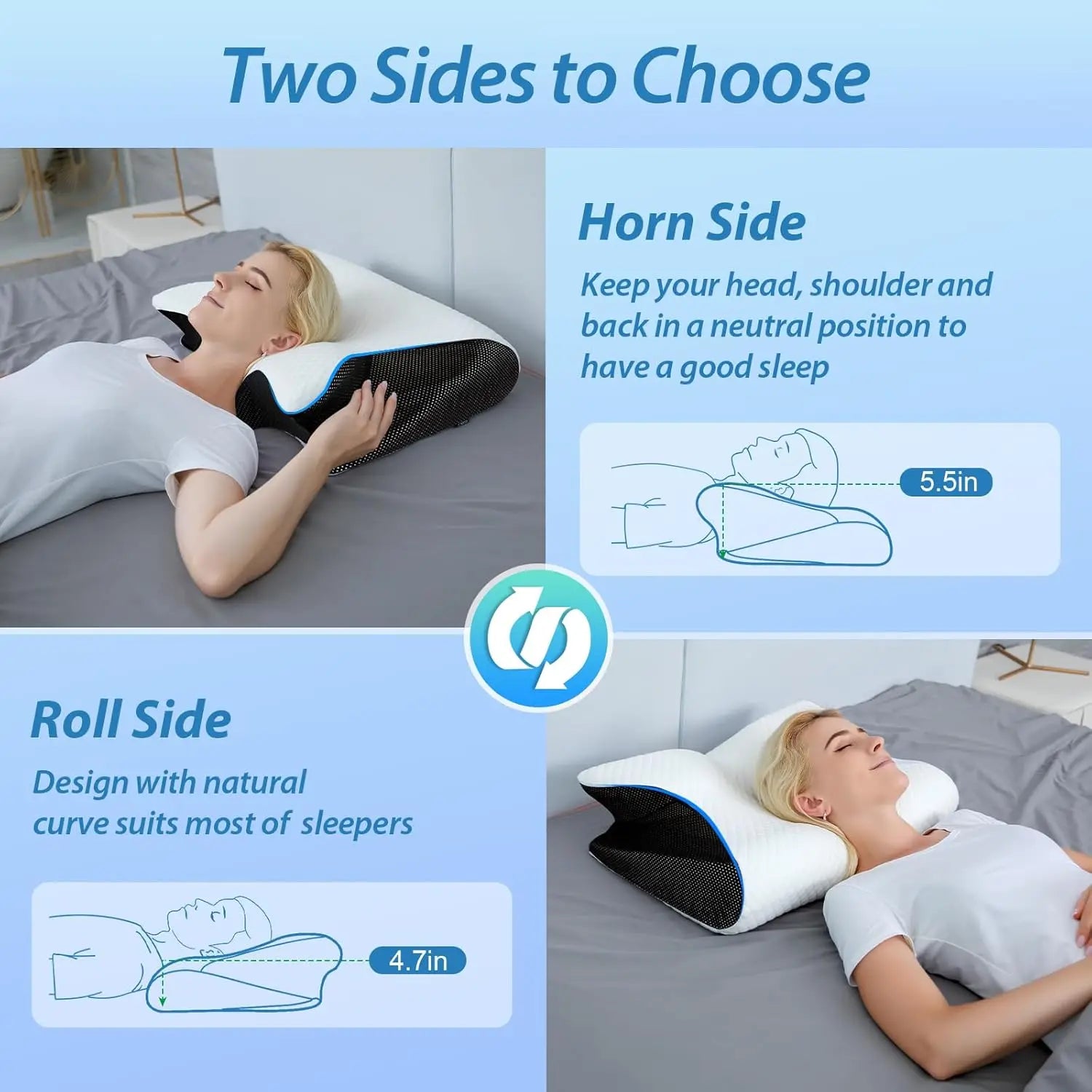
Pairing proper sleep posture with supportive bedding can improve comfort from your neck to your lower back.
BOFU Tip: If you're ready to upgrade your sleep support, Get yours now — limited stock!
Daily Habits That Support Better Neck Posture
Healthy neck alignment is reinforced by what you do throughout the day. Small ergonomic improvements and regular movement reduce accumulated muscle tension, making it easier to maintain comfortable posture while sleeping.
Improve daytime posture
- Keep your shoulders relaxed and avoid rounding your upper back.
- Position frequently used items within easy reach to reduce repetitive neck twisting.
- Stand up and change positions every 30 to 60 minutes if you work at a desk.
Reduce screen strain
- Adjust your monitor so the top of the screen is close to eye level.
- Hold your phone closer to eye height instead of bending your neck downward.
- Take brief stretching breaks after prolonged computer or mobile device use.
Sleep consistency and recovery
- Perform gentle neck and shoulder mobility exercises for a few minutes each day.
- Follow a consistent sleep schedule to support overnight muscle recovery.
- Replace worn pillows before they lose their ability to support proper alignment.
For an all-around wellness upgrade, explore Body Care and Health Devices designed to relieve daily strain and enhance sleep ergonomics.
FAQs
1. Can the wrong pillow cause neck pain?
Yes. A pillow that is too high, too low, or no longer supportive can place your cervical spine in an awkward position for several hours. This may contribute to bad neck posture while sleeping , leading to muscle tension, morning stiffness, and shoulder discomfort.
2. What's the best pillow height for side and back sleepers?
Side sleepers generally need a medium-to-high loft pillow that fills the space between the mattress and shoulder, while back sleepers usually benefit from a lower contoured pillow that supports the natural curve of the neck. The ideal height keeps your head level with your spine rather than tilted forward or sideways.
3. How long does it take to correct bad neck posture?
Many people notice improvements within two to three weeks after consistently maintaining proper sleep posture, replacing an unsupportive pillow if needed, and practicing good daytime ergonomics. Recovery time varies depending on the cause and severity of the discomfort.
4. Can sleeping posture cause headaches?
Yes. Sleeping with poor neck alignment can strain muscles around the neck and shoulders, which may contribute to tension-type headaches in some individuals. Improving cervical support and maintaining neutral alignment often helps reduce this type of discomfort.
5. Should I use a cervical pillow every night?
If a cervical pillow fits your body and sleeping position correctly, nightly use can help maintain consistent cervical pillow alignment . The KentDO Ergonomic Cotton Pillow is designed to support the natural curve of the neck while providing comfortable, even support throughout the night.
6. Why do I wake up with neck stiffness every morning?
Morning stiffness may result from poor sleeping posture, an unsuitable pillow, muscle overuse, or an aging mattress that no longer supports the spine properly. If neck pain persists for several weeks, worsens over time, or is accompanied by numbness, weakness, fever, or pain after an injury, seek evaluation from a qualified healthcare professional.
Pillar Article: Ergonomic Sleep Position Guide: The Science Behind Pain-Free Rest
Other Related Articles:
Explore More:













