
⏱ 7 min read
What to Look for in an Ergonomic Pillow: Complete Buying Guide for Better Neck Support and Sleep Alignment
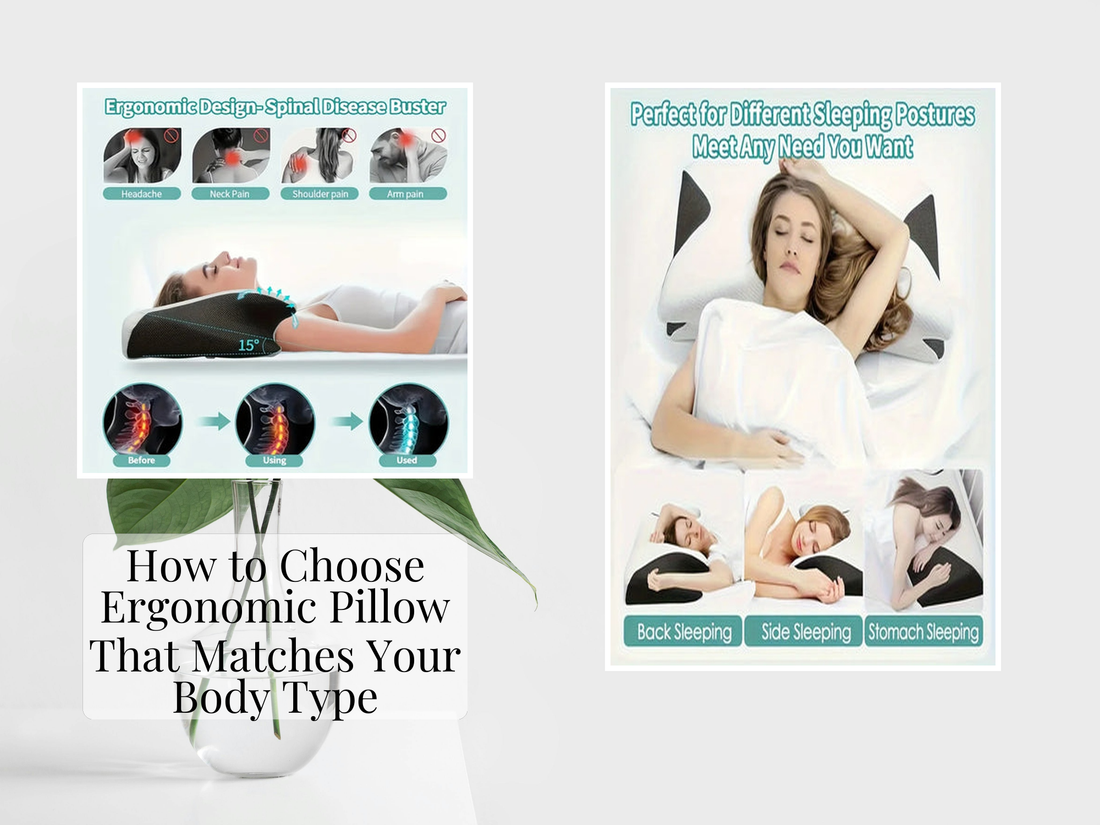
How to choose ergonomic pillow that matches your body type?
The best way to choose an ergonomic pillow is to match its height, firmness, contour, and support level to your sleeping position, body type, and shoulder width. A well-designed comfortable neck support pillow keeps your neck aligned, reduces muscle tension, and promotes healthy spinal alignment for deeper, pain-free sleep.
- Back sleepers: Choose medium-firm, medium-loft contour pillows.
- Side sleepers: Pick firm, high-loft pillows for shoulder support.
- Stomach sleepers: Use thin, soft pillows to avoid neck strain.
- Combination sleepers: Consider adjustable ergonomic pillows.
What to Look for in an Ergonomic Pillow
Choosing the right ergonomic pillow is essential for maintaining healthy spinal alignment during sleep. Unlike traditional pillows, ergonomic pillows are specifically designed to support the natural curve of the neck while keeping the head, shoulders, and spine properly aligned.
When evaluating an ergonomic pillow, focus on these key characteristics:
Proper Neck and Spinal Alignment
The primary purpose of an ergonomic pillow is to maintain a neutral cervical spine position. Proper support prevents the head from tilting excessively upward or downward and reduces stress on neck muscles and joints.
Pillow Loft and Height
Pillow loft refers to height. The ideal loft keeps your head level with your spine. Excessive loft may force the neck forward, while insufficient loft can cause muscular strain and poor sleep posture.
Shape and Contour Design
Contoured ergonomic pillows cradle the head while supporting the cervical curve. Proper contouring helps distribute pressure evenly and promotes consistent alignment throughout the night.
Materials and Pressure Relief
The internal pillow material affects support, durability, responsiveness, and pressure distribution. Memory foam and latex remain among the most popular ergonomic pillow materials because they maintain shape while adapting to body contours.
Firmness and Support Level
Firmness determines how effectively a pillow maintains spinal alignment during sleep. A pillow that is too soft may collapse, while an overly firm pillow can create uncomfortable pressure points.
- Soft: Better pressure relief but reduced support
- Medium: Balanced comfort and alignment
- Firm: Enhanced support for side sleepers and larger body types
Breathability and Temperature Control
Breathable fabrics, ventilated foams, and moisture-wicking materials help regulate temperature and minimize heat retention during sleep.
Adjustability and Durability
Adjustable ergonomic pillows allow users to customize loft and firmness for changing sleep needs and body positions.
Safety Certifications and Material Standards
Independent certifications help verify manufacturing quality and material safety.
- CertiPUR-US certification for foam safety
- OEKO-TEX certification for textiles
- GREENGUARD certification for low-emission materials
- Hypoallergenic and dust mite resistant construction
Wondering how to choose ergonomic pillow options that truly fit your body? The right comfortable neck support pillow can transform your sleep by improving posture, reducing stiffness, and promoting healthier spinal alignment.
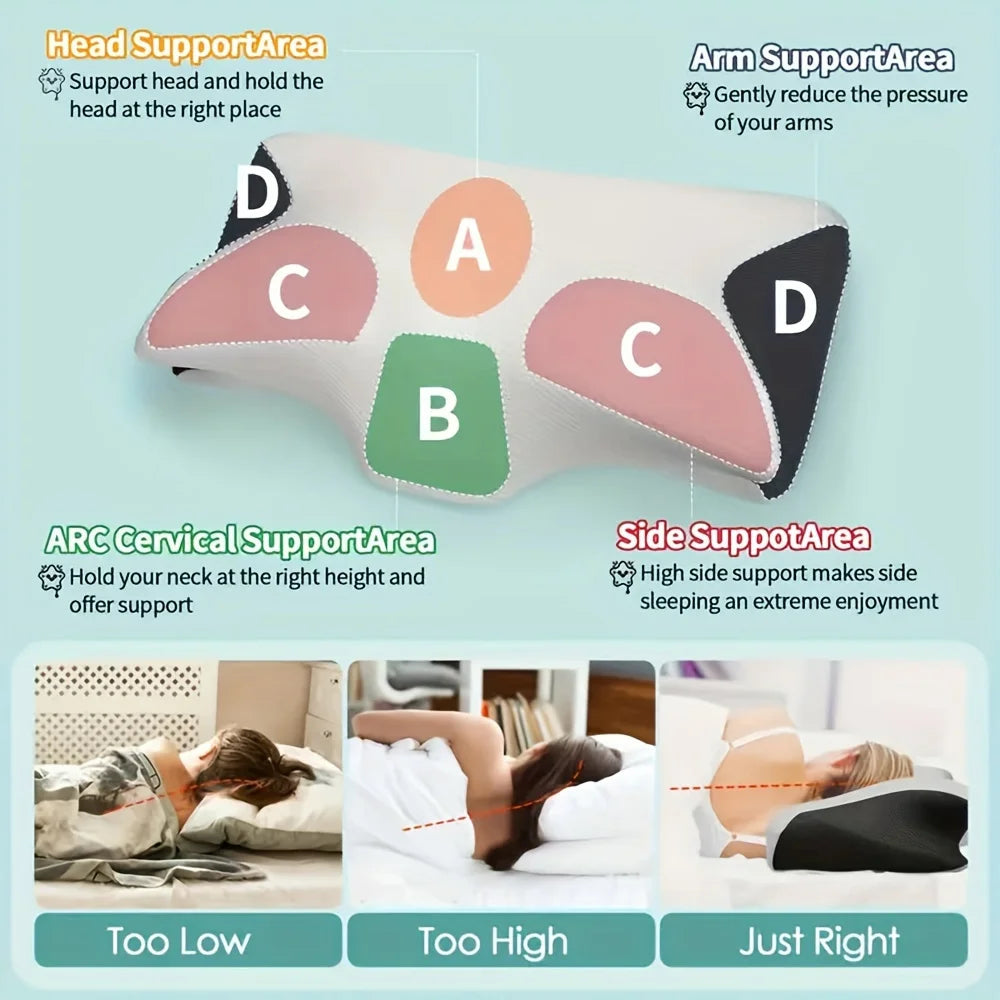
Discover how to choose ergonomic pillow designs that align the neck and spine for deeper, pain-free sleep.
What Is an Ergonomic Pillow and How Does It Work?
An ergonomic pillow is designed to maintain proper alignment of the head, neck, and spine while sleeping. Unlike traditional pillows that primarily focus on softness, ergonomic pillows are engineered to support the natural curvature of the cervical spine and reduce pressure on muscles, joints, and connective tissues.
What Makes a Pillow Ergonomically Correct?
An ergonomically correct pillow supports the natural position of your neck without forcing it to bend upward, downward, or sideways.
- Proper cervical spine support
- Appropriate loft for body size and sleep position
- Even pressure distribution
- Stable support throughout the night
- Materials that resist excessive compression
How Ergonomic Pillows Support Spinal Alignment
When pillow height, firmness, and shape match your body mechanics, your spine remains in a neutral position throughout sleep. Proper alignment reduces muscular strain, minimizes pressure points, and may help reduce morning stiffness, headaches, and shoulder discomfort.
Modern designs like the KentDO Ergonomic Cotton Pillow provide balanced support across multiple sleeping positions.
Signs You May Need an Ergonomic Pillow
Common Symptoms of Poor Pillow Support
Many people experience sleep-related discomfort without realizing their pillow may contribute to the problem.
- Frequent neck pain upon waking
- Morning headaches
- Shoulder stiffness
- Upper back tension
- Numbness in the arms
- Difficulty finding a comfortable sleep position
- Frequent nighttime repositioning
Who Benefits Most From Ergonomic Pillows?
Ergonomic pillows may be especially beneficial for side sleepers, back sleepers, office workers, athletes, older adults, and individuals experiencing chronic neck discomfort or poor cervical support during sleep.
How Body Type Affects Pillow Selection
Body proportions significantly influence how an ergonomic pillow performs. The ideal pillow for one person may provide inadequate support for another.
Shoulder Width and Pillow Height
Individuals with broader shoulders generally require higher pillow loft, especially when sleeping on their side. Narrower shoulders typically benefit from lower-profile pillows.
Body Weight and Pillow Compression
Heavier sleepers compress pillows more than lighter sleepers, making firmer materials like dense memory foam and latex beneficial for maintaining consistent support.
Neck Length and Cervical Support Needs
Individuals with longer necks often require taller cervical support zones, while shorter necks typically benefit from lower contour profiles.
Mattress Firmness and Pillow Performance
Mattress firmness affects how deeply your body sinks into bed, influencing effective pillow height.
- Soft mattress: Lower pillow loft
- Medium mattress: Standard pillow loft
- Firm mattress: Higher pillow loft
| Body Type | Recommended Pillow Type | Benefits |
|---|---|---|
| Petite / Narrow Shoulders | Low contour, medium-firm | Prevents neck overextension |
| Average Build | Medium contour, adjustable height | Balanced comfort and support |
| Broad Shoulders / Heavier Frame | High contour, firm support | Maintains proper shoulder alignment |
How to Choose an Ergonomic Pillow Based on Your Sleeping Position
Your sleeping position strongly influences which ergonomic pillow design will provide optimal support.
Best Ergonomic Pillow Features for Side Sleepers
Side sleepers require the greatest support because the pillow must bridge the distance between the shoulder and head.
- Medium-to-high loft
- Medium-firm to firm support
- Contour or cervical shape
- Low-compression materials
Best Ergonomic Pillow Features for Back Sleepers
Back sleepers benefit from moderate loft and support that preserves the natural cervical curve.
- Medium loft
- Cervical contour support
- Pressure-relieving materials
- Stable center support
Best Ergonomic Pillow Features for Stomach Sleepers
Stomach sleepers generally require the lowest pillow height to minimize neck extension.
- Low loft
- Soft to medium support
- Compressible materials
- Minimal contouring
Recommendations for Combination Sleepers
Combination sleepers benefit most from adjustable ergonomic pillows that allow modifications to loft and firmness.
| Sleep Position | Loft | Firmness | Best Design |
|---|---|---|---|
| Side | Medium-High | Firm | Contour/Cervical |
| Back | Medium | Medium | Cervical Support |
| Stomach | Low | Soft | Flat Profile |
| Combination | Adjustable | Medium | Adjustable Fill |

A comfortable neck support pillow promotes proper alignment and deeper sleep.
Ergonomic Pillow Shapes Explained
Ergonomic pillows come in several designs to accommodate different sleeping positions and anatomical needs.
Contour Cervical Pillows
Contour pillows feature elevated neck support zones and a recessed center for the head, helping preserve cervical curvature.
Butterfly Ergonomic Pillows
Butterfly pillows incorporate side wings that provide shoulder clearance and enhanced support for side sleepers.
Traditional Ergonomic Foam Pillows
Traditional-shaped ergonomic pillows use supportive foam materials while preserving a familiar pillow profile.
Adjustable Ergonomic Pillows
Adjustable pillows allow users to add or remove fill material to customize support and firmness.
Orthopedic Cervical Roll Pillows
Cervical roll pillows are designed to support the natural curve of the neck and are frequently recommended for therapeutic support.
Best Ergonomic Pillow Materials Compared
The internal material determines how effectively a pillow maintains support and adapts to body contours.
Memory Foam
Memory foam conforms closely to the head and neck while evenly distributing pressure.
Latex
Natural latex offers responsive support, durability, and better airflow than many traditional foams.
Down and Down Alternatives
Down and synthetic alternatives prioritize softness but generally provide less structural support.
Hybrid and Adjustable Fill Materials
Hybrid pillows combine multiple materials to balance support, pressure relief, cooling, and customization.
- Memory foam plus fiberfill hybrids
- Latex and microfiber combinations
- Adjustable shredded foam systems
- Layered ergonomic support designs
| Material | Support | Cooling | Durability |
|---|---|---|---|
| Memory Foam | Excellent | Moderate | High |
| Latex | Excellent | Excellent | Very High |
| Down Alternative | Moderate | Good | Moderate |
| Hybrid Fill | Very Good | Good | High |
The KentDO Ergonomic Cotton Pillow uses breathable cotton materials designed to balance comfort and support.
Ergonomic Pillow Loft Guide: How High Should Your Pillow Be?
Pillow loft is one of the most important factors affecting neck alignment and sleep quality.
Loft Guide for Side Sleepers
Side sleepers usually require medium-to-high loft pillows that fill the shoulder-to-head gap.
Loft Guide for Back Sleepers
Back sleepers generally benefit from medium loft pillows that maintain natural cervical curvature.
Loft Guide for Stomach Sleepers
Stomach sleepers typically require low loft pillows to minimize neck extension.
How to Measure Your Ideal Pillow Height at Home
A practical approach involves measuring the distance from the shoulder edge to the base of the neck.
- Stand naturally against a wall.
- Measure shoulder-to-neck distance.
- Adjust for mattress softness.
- Select a pillow with a similar compressed height.
How to Test Whether a Pillow Fits You Properly
The Neutral Spine Alignment Test
When lying in your normal sleep position, your head, neck, and spine should remain aligned without noticeable bending.
Signs Your Pillow Is Too High or Too Low
- Chin tucked downward: pillow too high
- Head falling backward: pillow too low
- Morning stiffness: inadequate support
- Frequent repositioning: poor fit
Common Mistakes People Make When Buying Ergonomic Pillows
Choosing Based Only on Softness
Comfort alone does not determine whether a pillow supports healthy spinal alignment.
Ignoring Sleep Position and Body Size
Body mechanics significantly affect pillow performance.
Buying the Same Pillow Someone Else Uses
Pillow ergonomics are highly individualized and should be tailored to personal anatomy.
How to Sleep on an Ergonomic Pillow Correctly
Adjustment Period Expectations
Most people require one to three weeks to adapt fully to an ergonomic pillow.
Positioning Tips for Side and Back Sleepers
- Position your neck within the support contour.
- Keep shoulders mostly off the pillow.
- Avoid stacking multiple pillows.
- Maintain neutral spinal alignment.
How Long Do Ergonomic Pillows Last?
Replacement Timeline by Material Type
- Memory foam: 2–4 years
- Latex: 3–5 years
- Fiberfill: 1–2 years
- Down alternative: 1–3 years
Maintenance and Cleaning Tips
- Use a pillow protector.
- Follow manufacturer cleaning instructions.
- Rotate the pillow regularly.
- Replace when support noticeably decreases.
Expert Tips for Choosing the Perfect Ergonomic Pillow
- Choose a pillow height that keeps your ears aligned with your shoulders.
- Consider adjustable pillows if you change sleeping positions frequently.
- Look for removable, washable covers.
- Replace pillows every 18–36 months when support decreases.
- Test a pillow for at least several nights before evaluating comfort.
For better sleep posture and recovery tips, explore more insights in our Body & Face Blog .
Spotlight: KentDO Ergonomic Cotton Pillow
Among the best ergonomic pillow for neck pain options, the KentDO offers supportive contouring, breathable materials, and ergonomic neck alignment features.
| Pros | Cons |
|---|---|
| ✅ Supports proper neck alignment | ❌ May feel firm for soft-pillow users |
| ✅ Breathable cotton construction | ❌ Adjustment period may be required |
| ✅ Helps reduce morning stiffness | ❌ Less suitable for stomach sleepers |
Why users love it: "After a week of use, my neck pain disappeared. The contour fits perfectly." – Maria K., Verified Buyer
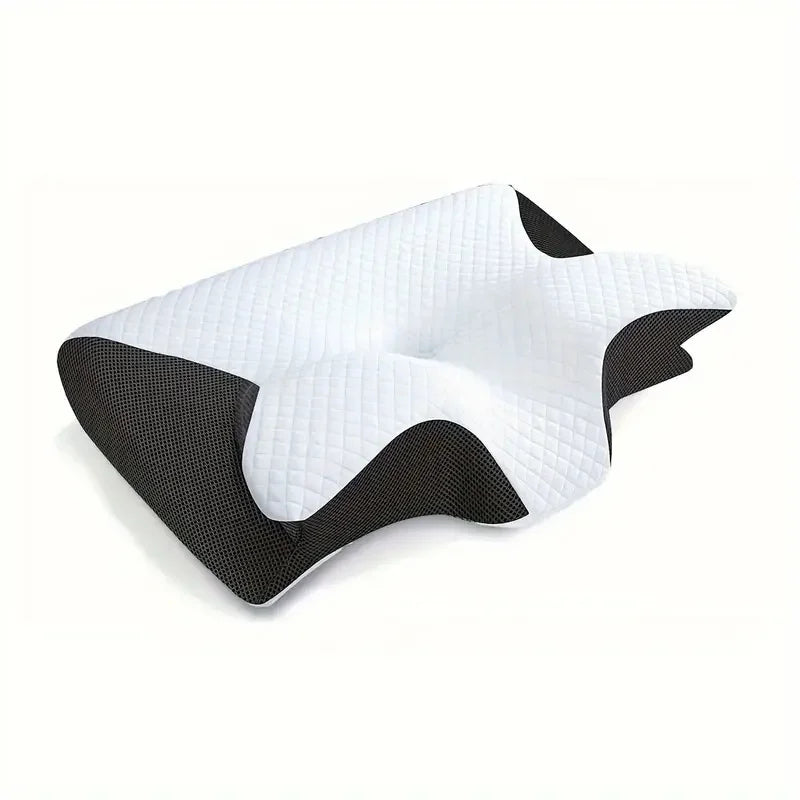
See the KentDO Ergonomic Cotton Pillow supporting natural neck and spinal alignment.
Frequently Asked Questions About Ergonomic Pillows
How do I know if my pillow is ergonomic?
An ergonomic pillow should maintain the natural curve of your neck while keeping your head aligned with your spine. If you wake up with reduced stiffness and maintain comfortable sleeping posture throughout the night, your pillow likely provides effective support.
How long does it take to adjust to an ergonomic pillow?
Most people adapt to ergonomic pillows within 5–21 days as muscles adjust to improved spinal alignment and support.
Can ergonomic pillows help with chronic neck pain?
Yes. Proper ergonomic pillows can reduce pressure on cervical structures, improve sleep posture, and help minimize chronic neck discomfort.
What's the best ergonomic pillow for neck pain?
The KentDO Ergonomic Cotton Pillow is designed to provide cervical support, spinal alignment, and breathable comfort.
What type of pillow is best for side and back sleepers?
Side sleepers usually benefit from medium-to-high loft ergonomic pillows, while back sleepers typically require medium loft pillows with cervical support contours.
How should a pillow fit your neck and shoulders?
A properly fitted pillow fills the space between your head and mattress while maintaining a neutral spinal position and supporting the natural curve of the neck.
When should you replace an ergonomic pillow?
Most ergonomic pillows should be replaced every two to five years depending on material type, visible wear, and loss of support.
Tags: how to choose ergonomic pillow, comfortable neck support pillow, best ergonomic pillow for neck pain, aligning neck, sleep posture, spinal alignment, neck support, ergonomic sleep tips, pain relief pillow, healthy sleep habits
Pillar Article: Best Sleeping Posture Tips for Every Type of Sleeper
Other Related Articles:
Explore More:













