

tens machine muscle growth: can TENS build muscle or is EMS better?
⏱ 8 min read — If your workouts feel harder but your results aren’t showing, recovery and muscle activation may be the missing link. Electrical stimulation devices like TENS and EMS are often mentioned in this context, but they work in very different ways. Understanding the difference is key if your goal is strength, recovery, or muscle development.
Does tens machine muscle growth really work?
Not exactly. A TENS (Transcutaneous Electrical Nerve Stimulation) machine is designed primarily to relieve pain by stimulating sensory nerves, not to build muscle. While TENS may cause small muscle twitches at certain settings, these contractions are generally not strong enough to trigger significant muscle hypertrophy.
Many people confuse TENS with EMS (Electrical Muscle Stimulation). EMS devices are designed to create stronger muscle contractions that can improve muscle activation, support rehabilitation, and complement strength training. Even then, EMS works best alongside regular exercise rather than replacing it.
What TENS actually does
TENS primarily interrupts pain signals traveling to the brain while encouraging the release of endorphins. This makes it useful for managing soreness, chronic pain, and recovery between workouts.
Learn more about how TENS therapy works for pain relief
Why muscle contractions are not the same as muscle growth
Visible muscle contractions alone do not create hypertrophy. Muscle growth depends on mechanical tension, progressive overload, adequate protein intake, recovery, and consistent resistance training. Since TENS focuses on pain modulation rather than forceful contractions, it should not be viewed as a muscle-building tool.
Does a TENS machine build muscle?
For healthy adults, the answer is generally no. A TENS machine is not intended to increase muscle size or strength. Its primary function is pain management rather than muscle conditioning.
Why TENS is designed for pain relief
TENS uses low-intensity electrical impulses that stimulate sensory nerves instead of motor nerves, meaning it does not create the sustained contractions required for hypertrophy or strength gains.
Can a TENS machine help muscle growth indirectly?
Yes, indirectly. By reducing pain and muscle discomfort, TENS may help some individuals return to regular training sooner. More consistent training can support long-term muscle growth, but the device itself does not directly build muscle.
When TENS may support better training consistency
- Reducing post-workout discomfort
- Managing chronic aches that interfere with exercise
- Improving comfort during rehabilitation
- Supporting recovery days between training sessions
How electrical muscle stimulation affects muscle growth
Electrical Muscle Stimulation (EMS) activates motor nerves to produce muscle contractions. Unlike TENS, EMS is designed to target muscle performance and neuromuscular activation.
Read more about how EMS works in detail
EMS vs voluntary contractions
During resistance training, muscles are activated voluntarily by the brain. EMS bypasses this pathway by directly stimulating motor nerves, creating involuntary contractions that may complement traditional exercise.
Muscle fiber recruitment
EMS can recruit muscle fibers differently from voluntary exercise, making it useful in rehabilitation or when movement is limited. However, long-term muscle development still depends on progressive resistance training.
What current research suggests
Studies suggest EMS may help improve muscle activation, support strength maintenance during inactivity, and provide modest strength improvements when combined with exercise. It is most effective as a supplementary tool rather than a replacement for training.
EMS vs TENS muscle growth: what's the difference?
Although both devices use electrical stimulation through skin electrodes, their purpose and effects are fundamentally different.
TENS for pain management
TENS targets sensory nerves to reduce pain signals and improve comfort during recovery.
EMS for muscle activation
EMS stimulates motor nerves, producing stronger contractions that may support rehabilitation and muscle activation.
See full EMS vs TENS comparison guide
Which is better for strength training?
EMS is more suitable because it creates contractions that can supplement voluntary exercise. TENS does not produce sufficient muscular workload for strength development.
Which is better for recovery?
Both can support recovery in different ways. TENS helps reduce discomfort, while EMS may improve muscle activation and circulation depending on how it is used.
How EMS supports muscle activation and recovery
EMS is widely used in sports performance and rehabilitation because it complements traditional training rather than replacing it.
Improved neuromuscular activation
EMS encourages muscle contractions that may improve awareness and activation patterns, especially during rehabilitation or retraining phases.
Faster muscle recovery
Gentle stimulation may promote blood flow and help reduce feelings of stiffness after exercise.
Reduced soreness
Some users report decreased post-workout discomfort, which may help maintain consistent training schedules.
Better training frequency
When soreness is better managed, athletes can train more consistently—one of the most important factors for long-term muscle development.
Electrical stimulation guide for recovery and muscle activation
How to use EMS safely for muscle recovery at home
Correct usage improves comfort and helps users get more consistent results from EMS sessions.
Session duration
Most sessions last 10–20 minutes per muscle group unless otherwise recommended by a professional or device manual.
Frequency
EMS can be used several times per week depending on training load, recovery needs, and individual tolerance.
Electrode placement
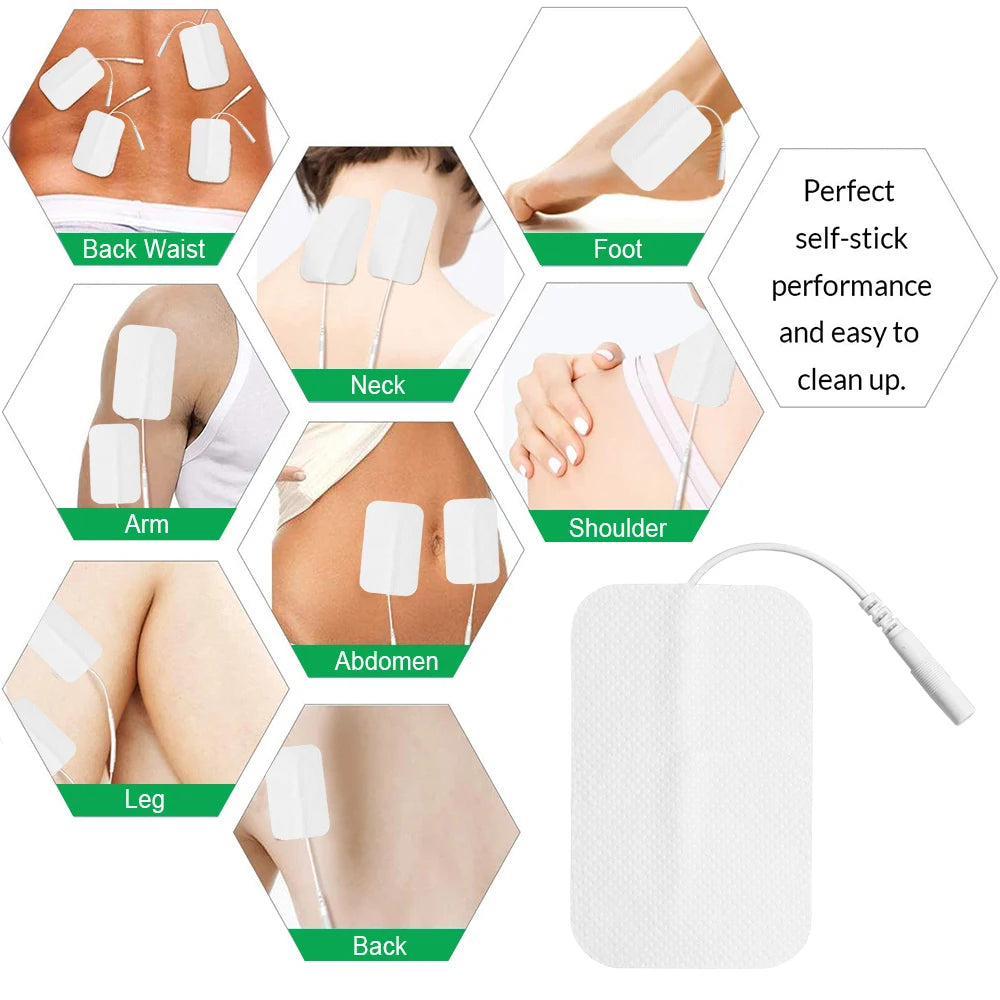
Place pads over the target muscle following manufacturer instructions. Avoid placing electrodes on the neck, broken skin, or areas with reduced sensation.
Common mistakes
- Using worn-out electrode pads
- Setting intensity too low or too high
- Skipping skin preparation before use
- Expecting EMS to replace resistance training
View electrode placement and usage guide
Choosing quality electrode pads for consistent stimulation
Electrode pads play a key role in ensuring stable and comfortable electrical stimulation. Poor-quality or worn pads can reduce effectiveness.
Why pad quality matters
High-quality adhesive pads improve skin contact, maintain even current distribution, and deliver more consistent stimulation.
Signs pads should be replaced
- Weak adhesion
- Uneven or inconsistent stimulation
- Visible wear or dryness
Storage tips
Always return pads to their protective film after use and store them in a sealed bag away from heat and sunlight to extend lifespan.
Explore high-quality reusable pads and premium replacement pads designed for consistent performance.

Proper electrode care improves stimulation consistency and comfort
Limitations of electrical muscle stimulation for muscle growth
Electrical stimulation can support training and recovery, but it is not a shortcut to muscle growth.
EMS cannot replace progressive overload
Muscle hypertrophy requires gradually increasing resistance over time. EMS alone cannot replicate the mechanical load of structured strength training.
Learn more about progressive overload and hypertrophy principles
Nutrition still drives hypertrophy
Protein intake, calorie balance, sleep, and recovery remain essential for muscle development.
Best situations for EMS
- Rehabilitation and injury recovery
- Supporting muscle activation
- Assisting recovery between workouts
- Supplementing structured strength programs
Who benefits most from EMS and TENS?
The best choice depends on your goal—pain relief, recovery, or muscle activation.
Athletes
EMS may support training consistency and recovery when combined with structured strength programs.
Rehabilitation patients
EMS is often used in clinical settings to help maintain muscle activation during reduced mobility.
Office workers
TENS may help relieve discomfort caused by prolonged sitting or posture strain.
Older adults
Under professional guidance, EMS may help support muscle activation, while TENS may assist in managing chronic pain.
Frequently Asked Questions
Does TENS build muscle?
No. TENS is designed for pain relief, not muscle hypertrophy.
Can a TENS machine help muscle growth?
Only indirectly by reducing pain that may support more consistent training.
Does EMS build muscle?
EMS can support muscle activation and rehabilitation but is most effective when combined with resistance training.
EMS vs TENS muscle growth: which is better?
EMS is better for muscle activation, while TENS is designed for pain relief.
Can EMS replace weight training?
No. Progressive resistance training remains essential for muscle growth.
Is EMS safe every day?
Usage depends on the device and individual condition. Follow manufacturer instructions and consult a professional if needed.
Does EMS help muscle recovery?
Yes, many users report improved recovery and reduced soreness when used appropriately. Learn more about EMS for recovery
How long before EMS results appear?
Recovery benefits may appear within days, while strength-related improvements typically require several weeks of consistent use with training.
Related Articles:
- electronic muscle pads: key features that improve muscle activation
- muscle stim pads: how advanced stimulation boosts recovery speed
Pillar Articles:













