
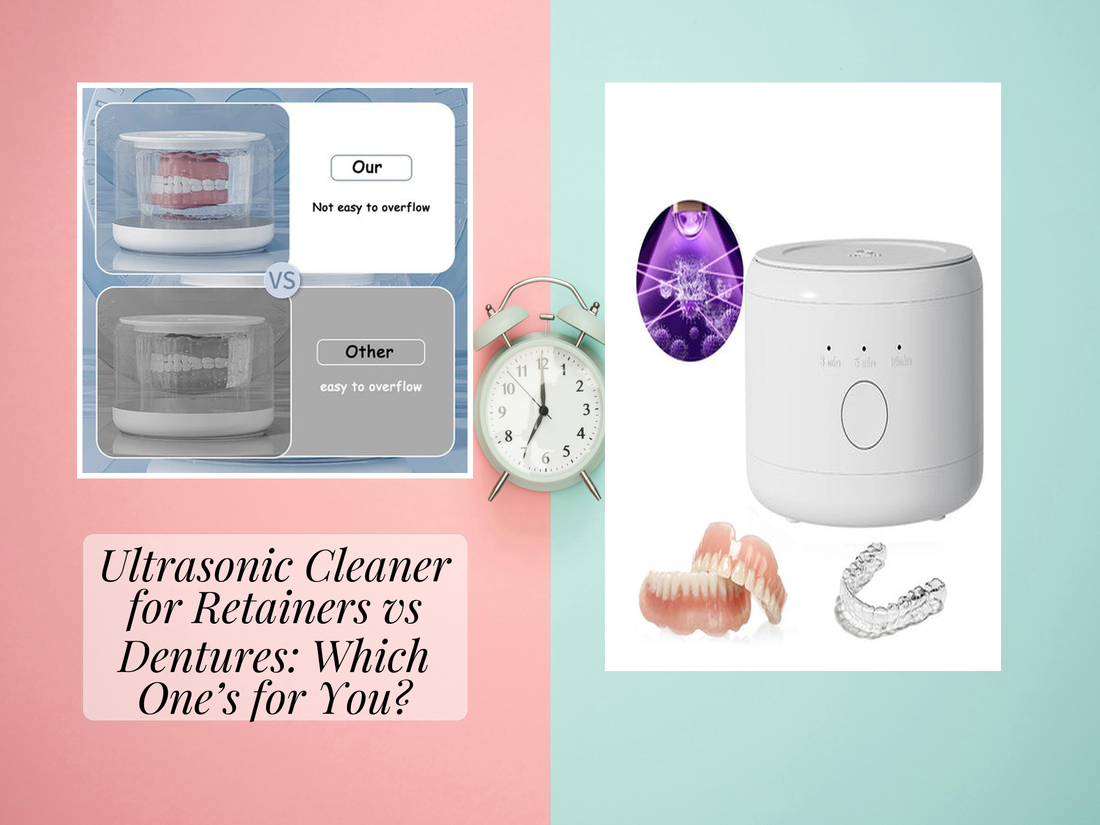
Retainer Cleaner vs Denture Cleaner: Which One Is Safer and More Effective?
Choosing the right cleaning method for your dental appliance isn’t just about convenience—it’s about protecting the materials used in your retainer, aligner, or denture. While both products help remove plaque, odor, and bacteria, understanding the differences between retainer cleaner vs denture cleaner can help prevent discoloration, warping, and premature wear. This guide explains the key differences, safety considerations, cleaning methods, and whether ultrasonic cleaning is the best option for your appliance.
⏱ 6 min read
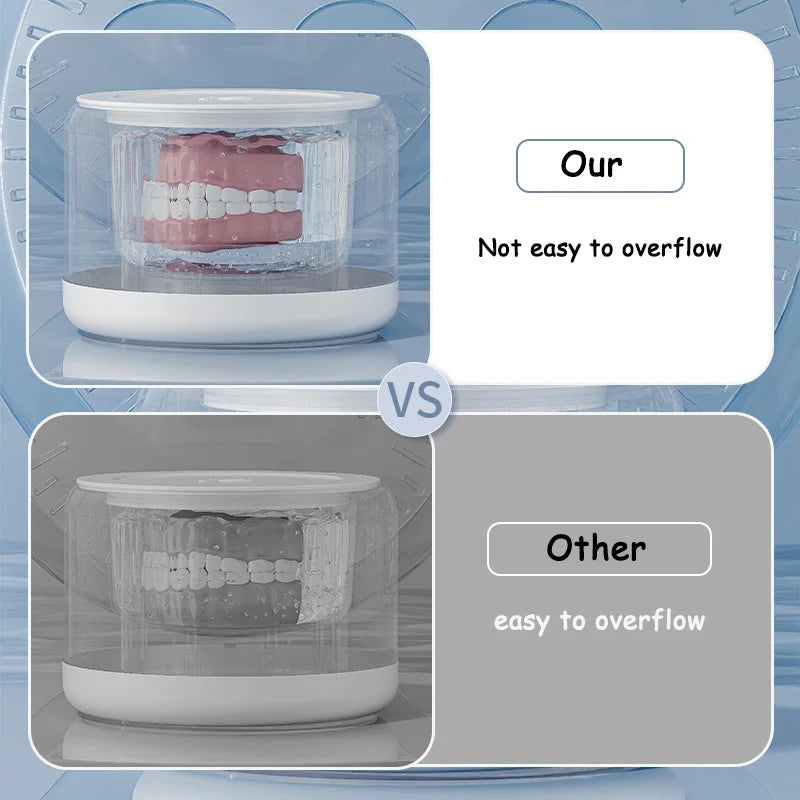
See it in action: ultrasonic cleaner for retainers that keeps your gear fresh & clear.
Retainer Cleaner vs Denture Cleaner: Quick Comparison Table
Retainer cleaners and denture cleaners both remove buildup, odor, and bacteria from dental appliances, but they are designed for different materials and cleaning needs.
Retainer Cleaner vs Denture Cleaner at a Glance
| Feature | Retainer Cleaner | Denture Cleaner |
|---|---|---|
| Designed For | Clear retainers, orthodontic appliances, aligners | Full or partial dentures |
| Formula | Usually gentler for plastic orthodontic materials | Often stronger for denture stains and food buildup |
| Material Safety | Made for retainer materials | Depends on retainer type and ingredients |
| Cleaning Frequency | Often used regularly | Usually used periodically for dentures |
| Best Choice | Retainers and orthodontic appliances | Dentures and removable dental prosthetics |
Although both products serve a similar purpose, retainer cleaners are generally formulated to preserve delicate orthodontic materials, while denture cleaners prioritize stain removal and cleaning power for thicker acrylic appliances.
What Is the Difference Between Denture Cleaner and Retainer Cleaner?
The main difference between denture cleaner and retainer cleaner is their intended purpose. Denture cleaners are formulated for denture materials, while retainer cleaners are designed to safely clean orthodontic plastics without affecting their shape or clarity.
Cleaning Ingredients and Formulation Differences
Denture cleaners often focus on removing heavier stains, discoloration, and food residue. Retainer cleaners usually use gentler formulas because many retainers are made from transparent plastic that can become cloudy or damaged by harsh chemicals.
Designed Materials and Appliance Compatibility
Retainers, dentures, and aligners use different materials. A cleaner that works well for dentures may not always be suitable for clear plastic retainers, orthodontic appliances, or aligner trays.
Cleaning Strength and Usage Frequency
Retainer cleaners are commonly designed for frequent use, while denture cleaners are typically optimized for removable dentures that require different cleaning needs. Using a stronger cleaner too often may shorten the lifespan of some orthodontic appliances.
Can You Use Denture Cleaner on Retainers?
You can sometimes use denture cleaner on retainers, but it depends on the retainer material and the ingredients in the cleaner. Not every denture cleaning product is safe for orthodontic appliances.
When Denture Cleaner May Be Acceptable for Retainers
A mild denture cleaner may be acceptable for some removable retainers when recommended by a dentist or orthodontist. Always follow the product instructions and avoid prolonged soaking.
- Occasional deep cleaning sessions
- Removing stubborn odors or visible buildup
- Durable retainers approved for denture-cleaner use
When Denture Cleaner Can Damage Retainers
- Strong formulas may discolor clear plastic retainers.
- Frequent use may affect the surface texture of some materials.
- Harsh ingredients may reduce clarity over time.
- Long soaking periods may increase the risk of material degradation.
For daily maintenance, retainer-specific products are generally the safer choice.
Are Denture Cleaners Safe for Retainers?
The safety of denture cleaners for retainers depends on the retainer type and cleaner formulation.
Clear Plastic Retainers (Essix)
Clear retainers are more sensitive to chemicals and heat. Gentle retainer-specific cleaners are usually preferred to maintain transparency, prevent cloudiness, and preserve fit.
Hawley Retainers
Hawley retainers contain acrylic and metal components, so cleaners should be compatible with both materials. Mild denture cleaners may occasionally be suitable, but routine use should follow professional guidance.
Permanent Retainers
Bonded retainers cannot be removed for soaking. Cleaning usually requires brushing techniques, floss threaders, interdental brushes, and regular dental checkups.
Retainer Cleaner Tablets vs Ultrasonic Cleaning
Both tablets and ultrasonic cleaners can help remove buildup, but they work differently.
How Ultrasonic Retainer Cleaners Work
Ultrasonic cleaners use high-frequency sound waves to create microscopic bubbles through cavitation. These bubbles collapse and loosen debris from hard-to-reach areas that traditional brushing may miss.
For a deeper understanding of cleaning technology, explore our internal guides on ultrasonic cleaner buying considerations and how ultrasonic cleaning systems work.
How Retainer Cleaning Tablets Work
Cleaning tablets dissolve in water and use chemical ingredients to break down odor, bacteria, plaque, and residue. They are convenient, affordable, and widely available.
Ultrasonic Cleaner vs Tablets: Key Differences
- Ultrasonic cleaners provide deeper physical cleaning.
- Tablets are usually more affordable and portable.
- Ultrasonic devices reach crevices without scrubbing.
- Many users combine both methods for maintenance and deep cleaning.
Do Ultrasonic Retainer Cleaners Work?
Ultrasonic retainer cleaners can help remove buildup, bacteria, and residue that may remain after normal rinsing. They are especially useful for cleaning areas that are difficult to reach by brushing.
Benefits of Ultrasonic Cleaning for Retainers
- Helps remove trapped debris.
- Requires minimal manual scrubbing.
- Can improve freshness and appliance hygiene.
- Reaches grooves, wire bends, and hard-to-access surfaces.
Limitations of Ultrasonic Cleaning
- Does not replace proper cleaning habits.
- Cannot repair damaged retainers.
- Requires compatibility with the appliance material.
- Works best when combined with regular hygiene practices.
Are Ultrasonic Retainer Cleaners Worth It?
For many users, yes. Ultrasonic cleaning offers a convenient way to improve appliance hygiene while reducing the need for aggressive scrubbing.
- Helps reduce odor-causing buildup.
- Supports clearer-looking transparent retainers.
- Saves time with short cleaning cycles.
- Provides consistent cleaning results.
- Suitable for retainers, aligners, mouth guards, and some dentures.

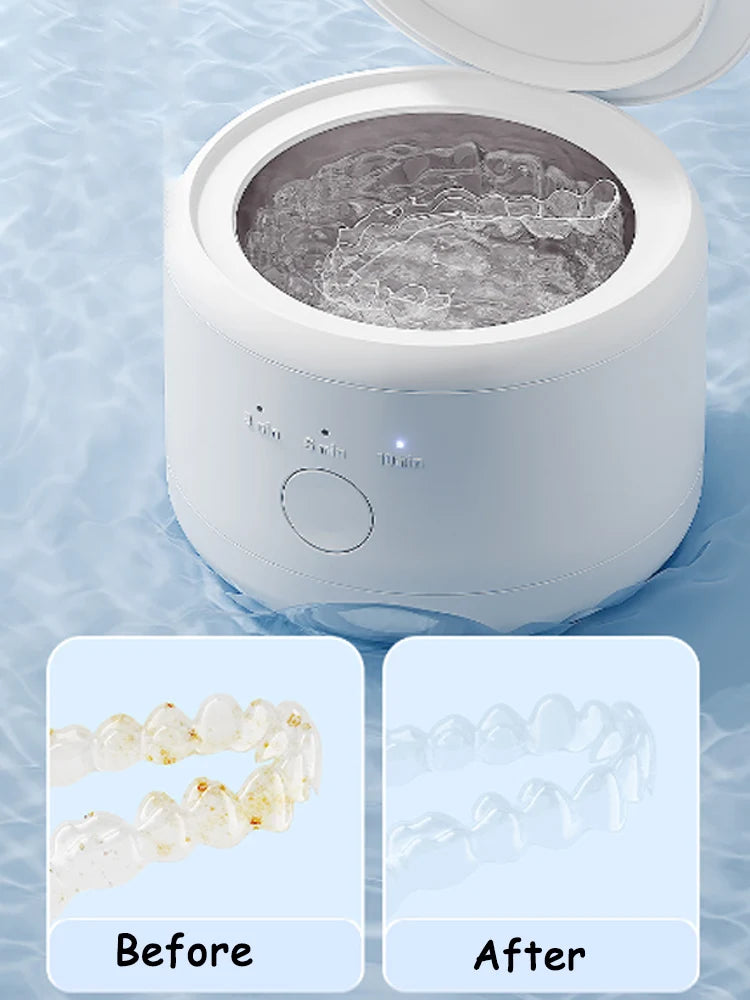
Powerful, safe, and portable: ultrasonic cleaner retainers love.
Best Cleaning Method for Different Retainer Types
Not all retainers are made from the same materials, which means cleaning methods should vary depending on the appliance.
Essix Clear Retainers
- Use mild retainer cleaner tablets.
- Avoid strong denture cleaners when possible.
- Ultrasonic cleaning can safely remove buildup.
Hawley Retainers
- Contain acrylic and metal wire components.
- Ultrasonic cleaning is effective around wire areas.
- Occasional denture tablet soaking may help remove stains.
Bonded Permanent Retainers
- Cannot be removed for soaking.
- Require floss threaders and specialized brushes.
- Ultrasonic devices are not applicable.
For additional guidance, explore our internal resources on clear retainer care and orthodontic appliance maintenance.
How to Clean Retainers Correctly
Daily Cleaning Routine
- Rinse retainers with lukewarm water after removal.
- Remove visible buildup gently with a soft brush.
- Avoid hot water, which may warp some materials.
- Store the appliance in a clean, ventilated container.
Deep Cleaning Schedule
Deep cleaning frequency depends on usage, buildup, and appliance type. Follow dentist recommendations and product instructions. Many users perform a deeper clean weekly using retainer tablets, ultrasonic cleaning, or a combination of both.
Helpful companion topics include retainer storage best practices and signs that indicate a retainer may need replacement.
Top Benefits of Using Ultrasonic Retainer Cleaners
- Efficiency: Deep cleaning in minutes.
- Hygiene: Helps remove plaque and bacteria.
- Longevity: Supports better appliance maintenance.
- Convenience: Easy daily operation.
- Consistency: Encourages regular cleaning habits.
What Happens If You Use the Wrong Cleaner?
Using the wrong cleaner on a retainer or denture can lead to several problems over time.
- Material damage: Harsh cleaners may weaken or warp plastic retainers.
- Discoloration: Strong chemicals can cause yellowing or cloudiness.
- Surface roughness: Damaged surfaces may trap more bacteria.
- Reduced appliance lifespan: Frequent exposure to unsuitable cleaners may shorten durability.
For long-term appliance care, it is best to follow cleaning methods recommended by orthodontists and dental professionals.
Dentist-Recommended Retainer Cleaning Routine
Dental professionals typically recommend a simple routine to keep retainers hygienic and odor-free.
- Rinse the retainer with lukewarm water after removing it.
- Use a soft toothbrush to gently remove plaque buildup.
- Soak the retainer in a retainer cleaning solution when needed.
- Use an ultrasonic cleaner periodically for deeper cleaning.
- Allow the retainer to dry before storing it in its protective case.
This routine helps maintain hygiene while protecting retainer materials from unnecessary wear.
Final Verdict: Retainer Cleaner or Denture Cleaner?
For most orthodontic appliances, a retainer cleaner is the safer choice because it is specifically designed for retainer materials. Denture cleaners may work in some situations, but they are not automatically interchangeable.
If you want deeper cleaning, an ultrasonic retainer cleaner can be a useful option when used correctly and with a compatible appliance.
| Feature | KentDO Cleaner | Generic Denture Cleaner |
|---|---|---|
| Target Use | Retainers, aligners | Dentures |
| Cycle Time | 3 mins | 5–8 mins |
| Portability | High | Medium |
| User Preference | Designed for orthodontic appliances | Designed for denture care |
Ultrasonic retainer cleaners that fit your routine, not just your device.
FAQ: Retainer Cleaner vs Denture Cleaner
Is retainer cleaner the same as denture cleaner?
No. While both are designed to clean dental appliances, retainer cleaners are generally formulated for orthodontic plastics, whereas denture cleaners are designed primarily for denture materials.
Can you use denture cleaner for retainers?
Sometimes. Occasional use may be acceptable for certain retainers, but frequent use can be too harsh for some clear plastic materials.
Are denture cleaners safe for retainers?
Safety depends on the retainer material and cleaner formulation. Retainer-specific products are usually the safest option for routine cleaning.
Do ultrasonic retainer cleaners work?
Yes. Ultrasonic cleaners use sound-wave cavitation to help remove plaque, debris, and bacteria from hard-to-reach areas.
Are ultrasonic retainer cleaners worth it?
Many users find them worthwhile because they provide convenient, consistent cleaning with minimal effort.
How often should retainers be cleaned?
Most orthodontists recommend daily cleaning and periodic deep cleaning. Consistent maintenance helps reduce odor, buildup, and staining.
Related Articles:
- Ultrasonic Cleaning Dentures for Seniors: Safer Than Brushing?
- Ultrasonic Cleaning Retainers for Kids, Teens & Adults: What Changes?
Pillar Articles:













