

Air Massager for Legs vs Heat Models: Which Is Better?
An air massager for legs is designed to support circulation and reduce fatigue through rhythmic compression. Heat-based models focus more on surface-level comfort, while air compression devices target deeper recovery through sequential pressure cycles. Choosing between them depends on whether your priority is relaxation, circulation support, or long-term muscle recovery.
⏱ 5 min read
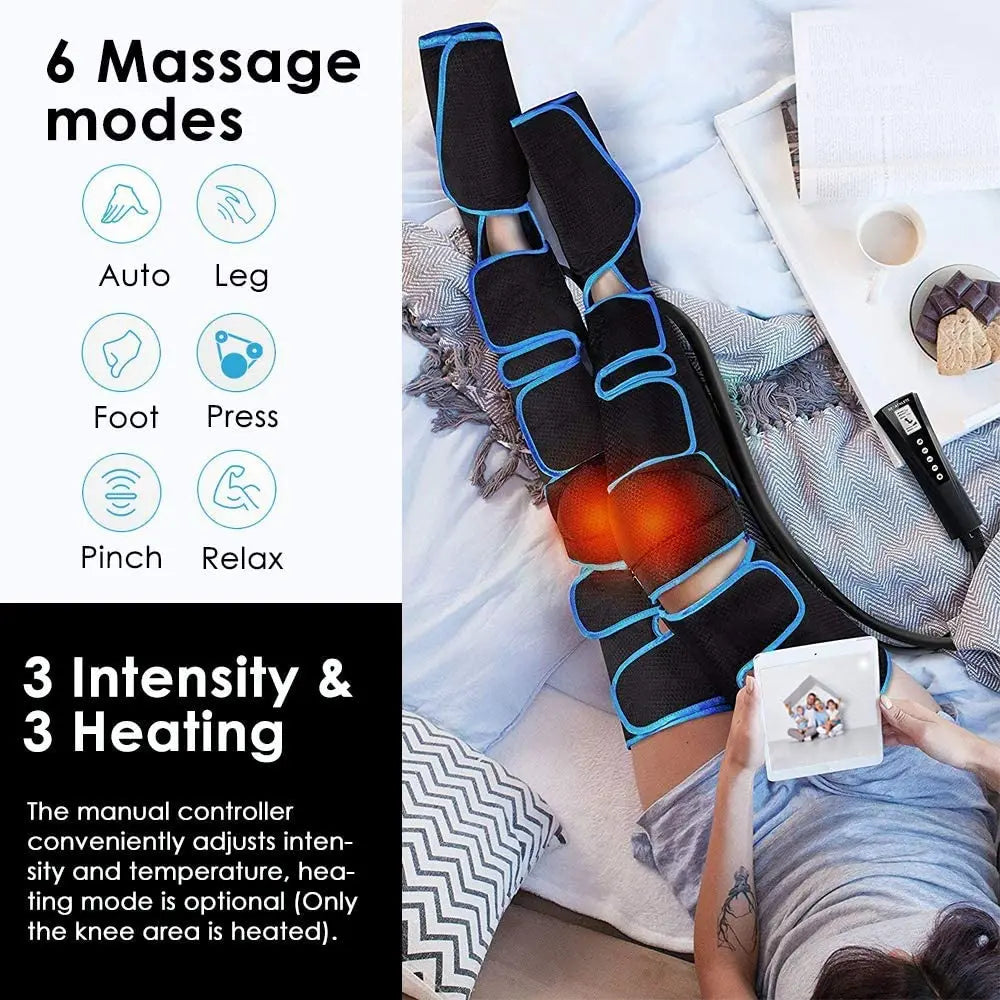
Air compression leg massager for daily relaxation and recovery support
Does an Air Massager for Legs Really Work?
An air massager for legs works by inflating and deflating multiple air chambers around the calves and feet in a controlled sequence. This rhythmic compression gently squeezes the muscles, encouraging healthy circulation, reducing muscle fatigue, and promoting relaxation after long periods of sitting, standing, or exercise.
How Sequential Air Compression Works
Unlike vibration-only devices, an air compression leg massager applies pressure in waves that move upward through the legs. This sequential motion helps create a more natural massage experience while avoiding constant pressure on a single area.
What Clinical Research Suggests
Research on intermittent pneumatic compression indicates that sequential compression may support circulation, reduce temporary swelling, and assist post-exercise recovery when used appropriately. While home devices are not medical treatments, many users report improved comfort and reduced leg fatigue.
Who Benefits Most
- Office workers who sit for extended periods
- People who stand throughout the workday
- Athletes seeking recovery support
- Frequent travelers
- Older adults looking for gentle daily relaxation
Air Compression Leg Massager Benefits Explained
The benefits of an air massager for legs come from controlled compression rather than surface-level heat or vibration. Modern devices include adjustable pressure levels and multiple massage modes for personalized recovery.
Improved Circulation Support
Gentle compression encourages healthy blood flow and may help reduce feelings of heaviness after long periods of inactivity.
Muscle Recovery After Exercise
Athletes often use compression after walking, running, or training sessions to reduce post-exercise muscle fatigue and support recovery.
Reduced Leg Fatigue from Standing or Sitting
People with desk jobs or long standing hours often experience noticeable relief after short daily sessions.
Daily Relaxation at Home
A leg air massager for home use provides convenient relaxation without appointments, making it easy to integrate into a nightly routine.
Leg Massager With Heat vs Without Heat: Which Should You Choose?
Choosing between a leg massager with heat vs without heat depends on whether you prioritize comfort or functional recovery. Compression targets circulation, while heat enhances relaxation.
Heat Models: Comfort First
Heat helps relax muscles and provides soothing warmth, especially in colder environments or before sleep. However, it does not actively stimulate circulation the way compression does.
Air Compression Models: Results First
An air compression leg massager uses alternating pressure cycles to help reduce fatigue and support circulation more effectively than heat alone.
Compression Leg Massager With Heat: Best of Both Worlds
Some advanced devices combine sequential compression with optional heat, allowing users to switch between recovery-focused massage and soothing warmth for a more complete experience.
Air Compression vs Vibration vs EMS vs Heat
Different massage technologies offer different effects. Understanding these differences helps you choose the right solution for your needs.
Air Compression
Uses inflatable chambers to apply sequential pressure that supports circulation and recovery.
Vibration
Creates rapid oscillations that provide surface-level relaxation but less deep compression.
EMS
Electrical muscle stimulation activates muscles through electrical impulses and is typically used for training or rehabilitation support.
Heat Therapy
Heat improves comfort and relaxation but works best when combined with other recovery technologies.
Which Technology Fits Different Needs
- Recovery after exercise — Air compression
- General relaxation — Heat or vibration
- Muscle activation — EMS
- Daily leg fatigue — Air compression with optional heat
Air Pressure Leg Massager Buying Guide
Before choosing the best air massager for legs, consider features that impact comfort, usability, and long-term value.
Compression Levels
Multiple intensity settings allow beginners and advanced users to customize pressure.
Massage Programs
Different modes simulate varied compression sequences for relaxation or recovery.
Fit and Adjustable Wraps
Adjustable sleeves ensure proper fit for different leg sizes.
Rechargeable vs Corded
A rechargeable leg massager offers portability, while corded models provide continuous use without battery limits.
Heat Function
Optional heat improves comfort but should remain independently adjustable.
Noise Level
Quiet operation is important for evening use or shared living spaces.
Portability
Foldable and lightweight designs are easier to store and travel with.
Warranty
A longer warranty often indicates higher product reliability and manufacturer confidence.
Best Air Massager for Legs: Which Type Fits Your Lifestyle?
Office Workers
Choose quiet, adjustable compression to relieve long sitting hours.
Athletes
Look for stronger pressure settings and multiple recovery modes.
Seniors
Prioritize gentle compression and simple controls for ease of use.
Frequent Travelers
A rechargeable leg massager is ideal for portable recovery on the go.
Parents
Quick 15–20 minute sessions fit easily into busy daily routines.
Home Recovery Users
Combination models with compression and optional heat provide the most flexibility.
How to Use a Leg Air Massager for Home Use
Before Your Session
Sit comfortably and wrap the sleeves evenly around both legs. Start with a low pressure setting.
Recommended Duration
Most users benefit from 15–30 minute sessions depending on comfort level.
Cleaning and Maintenance
Wipe surfaces with a soft cloth after use and avoid moisture near electronic components.
Storage Tips
Store loosely folded in a cool, dry place to preserve air chambers and tubing.
Safety, Precautions, and When to Avoid Air Compression
Air compression is generally safe for healthy adults, but certain conditions require caution.
Who Should Consult a Doctor
- Individuals with severe circulatory conditions
- People with deep vein thrombosis (DVT)
- Those with open wounds or infections on the legs
- Anyone advised against compression therapy by a healthcare provider
Common Safety Tips
- Start with low pressure
- Stop if discomfort occurs
- Avoid sleeping while using the device
- Follow manufacturer instructions
Daily Use Guidelines
One to two sessions per day is typically safe for most users when following recommended settings.
Final Verdict: Is an Air Massager for Legs Worth Buying?
An air compression leg massager is a strong option for users seeking improved circulation, reduced fatigue, and consistent home recovery. While heat-only devices provide comfort, compression delivers more functional and long-term benefits.
For best results, choose a model with adjustable pressure levels, optional heat, multiple programs, and rechargeable portability when needed.
Frequently Asked Questions
Is an air massager for legs safe for daily use?
Yes, most devices are designed for daily use with adjustable intensity settings.
Does heat improve results?
Heat improves comfort but does not replace the circulation benefits of compression.
How long should I use a leg massager?
15–30 minutes per session is typically recommended.
Can I use it if I sit all day?
Yes, it can help reduce stiffness and improve circulation after long sitting periods.
Can an air compression leg massager replace massage therapy?
It can complement massage therapy, but it does not fully replace professional treatment.
Is a rechargeable leg massager powerful enough?
Yes, many rechargeable models offer strong, adjustable compression suitable for daily use.
Should seniors use air compression daily?
Generally yes, but they should start with low intensity and consult a doctor if they have health concerns.
Can I use compression after workouts?
Yes, many users use compression after exercise to support recovery and reduce muscle fatigue.
Pillar Article: Best Air Compression Leg Massagers Compared for 2026
Other Related Articles:
- Leg Compression Machine vs Electric Compressors Guide
- Air Compression Leg Massager Benefits Worth the Hype
- Do Compression Leg Sleeves Work vs Massagers
- Full Leg Compression Massager vs Portable: Which Wins
Explore More:













