

Do back stretches with a foam roller really relieve pain?
Yes. A back stretch with a foam roller can help relieve muscle tightness, improve mobility, and temporarily reduce back discomfort when performed with proper technique. Unlike traditional static stretching, foam rolling combines gentle movement with self-myofascial release, applying controlled pressure to tight muscles and connective tissue while encouraging healthy spinal movement. This combination can improve circulation, reduce stiffness, and support recovery after long periods of sitting or exercise.
While a foam roller back stretch is not a cure for chronic back pain or structural spinal conditions, many people notice improved flexibility and easier movement within just a few minutes. Consistent practice, paired with good posture and regular mobility work, delivers the best long-term results.
⏱ 7 min read
Back Stretches with a Foam Roller: Best Moves Compared
Whether you're dealing with stiffness after a long workday, recovering from exercise, or trying to improve posture, back stretches with a foam roller provide an accessible way to restore mobility at home. The right techniques can release muscle tension, improve thoracic spine movement, and promote gentle foam roller spine decompression without requiring expensive equipment. This guide explains how foam rolling works, which exercises are most effective, and how to perform them safely.
Discover the best options for your recovery routine

Foam roller exercises upper back for posture correction — See it in action
Why Back Stretches with a Foam Roller Work So Fast
How foam rolling works
Back stretches with a foam roller combine active stretching with self-myofascial release. As your body moves over the roller, gentle pressure helps relax tight muscles and fascia while controlled spinal extension improves mobility. This differs from traditional stretching because it addresses both soft tissue quality and movement at the same time.
A properly performed back stretch with foam roller may help:
- Reduce muscle tension and trigger-point sensitivity.
- Increase blood flow to working tissues.
- Improve thoracic spine mobility.
- Support better posture and movement mechanics.
- Create a gentle sensation of spine decompression by encouraging extension rather than compressive loading.
What the evidence says
Research suggests foam rolling is most effective for producing short-term improvements in flexibility, range of motion, and post-exercise recovery without reducing muscle performance. Although relief may be temporary, regular sessions combined with strengthening and mobility exercises can help maintain better movement quality over time.
It's important to keep expectations realistic. Foam rolling does not permanently change spinal alignment or replace medical treatment for persistent pain, but it can be an effective part of a well-rounded self-care routine.
Who benefits most
A foam roller back stretch is particularly useful for:
- Office workers who spend long hours sitting.
- People with mild upper back stiffness or rounded shoulders.
- Recreational athletes recovering after training.
- Anyone looking to improve mobility before or after exercise.
Which style suits you best? Read on! Some techniques emphasize improving mobility, while others focus on releasing tight muscles and promoting gentle foam roller spine decompression for greater comfort during everyday movement.
Many users experience noticeable improvements in movement and reduced stiffness after a 5–10 minute session, especially when foam rolling becomes part of a consistent weekly routine.
How Foam Roller Exercises Upper Back Improve Posture
Foam roller exercises for the upper back are among the safest and most effective ways to improve posture because they restore mobility to the thoracic spine rather than placing excessive stress on the lower back. Better thoracic movement allows the shoulders to sit naturally, encourages a more open chest, and makes maintaining an upright posture easier throughout the day.
Top Upper Back Moves Compared
| Exercise | Best For | Difficulty | Results Speed |
|---|---|---|---|
| Thoracic Extension | Posture correction | Easy | Fast |
| Upper Back Roll | Muscle tension | Easy | Moderate |
| Arm Reach Stretch | Mobility + flexibility | Medium | Fast |
Thoracic extension
Position the foam roller across the upper back, support your head with your hands, and gently extend over the roller while exhaling. Hold for 2–3 seconds before returning to neutral. Repeat 6–10 times without forcing the movement.
Thoracic rotation
After extending the spine, rotate gently from side to side while keeping your hips stable. This improves rotational mobility and helps reduce stiffness from prolonged sitting.
Lat stretch
Lie on one side with the roller under the muscles along the side of the upper back. Slowly roll from the armpit toward the mid-back while breathing steadily. Repeat on both sides for 30–60 seconds.
Chest opener over foam roller
Lie lengthwise on the roller so it supports your head and spine. Allow your arms to relax outward with palms facing up. Stay in this position for 30–60 seconds while taking slow diaphragmatic breaths to encourage chest opening and shoulder relaxation.
Benefits
- Improves thoracic mobility.
- Reduces rounded shoulders caused by prolonged sitting.
- Supports healthier posture and breathing mechanics.
- Helps decrease upper back muscle tension.
- Complements strength training and daily mobility work.
Common form mistakes
- Rolling too quickly instead of moving with control.
- Holding your breath during stretches.
- Arching excessively through the lower back instead of the upper back.
- Applying unnecessary pressure directly over the neck.
Many people notice improved posture and easier shoulder movement after performing these upper back foam roller stretches consistently for one to two weeks as part of a daily mobility routine.
Lower Back Foam Roller Stretches: Safe Techniques
A foam roller lower back stretch can help reduce surrounding muscle tightness, but the goal is not to roll directly over the lumbar spine. Because the lower back contains sensitive joints and relatively little muscular protection, most effective techniques focus on the hips, glutes, and muscles that support the lumbar region rather than applying heavy pressure to the spine itself.
Supported lower back stretch
Lie on your back with your knees bent and feet flat on the floor. Position the foam roller beneath the pelvis rather than directly beneath the lumbar vertebrae. Gently perform small pelvic tilts while maintaining slow, controlled breathing for 30–60 seconds. This creates a comfortable back stretch foam roller exercise without excessive spinal pressure.
Glute and hip release
Sit on the roller with one ankle crossed over the opposite knee. Lean slightly toward the crossed leg and slowly roll across the gluteal muscles for 30–60 seconds per side. Tight hips often contribute to lower back stiffness, making this one of the most valuable foam roller stretches for lower back comfort.
QL and surrounding muscles
Instead of rolling directly on the spine, shift slightly to one side to target the quadratus lumborum (QL) and nearby muscles. Use gentle pressure, small movements, and controlled breathing. If discomfort increases, reduce pressure or stop the exercise.
When to avoid direct lumbar rolling
Avoid placing your full body weight directly on the lumbar spine. People with acute injuries, osteoporosis, recent spinal surgery, fractures, severe disc-related symptoms, or unexplained back pain should consult a healthcare professional before attempting foam rolling.
Why these techniques work
- Reduce tension in muscles supporting the lower back.
- Encourage gentle spinal movement without excessive compression.
- Improve hip mobility, which can reduce stress on the lumbar region.
- Promote better core awareness during movement.
- Help decrease stiffness after prolonged sitting.
Progress gradually by using light pressure and slow movements. Mild discomfort over tight muscles is common, but sharp, radiating, or worsening pain is a signal to stop immediately.
Learn step-by-step how to decompress spine safely at home
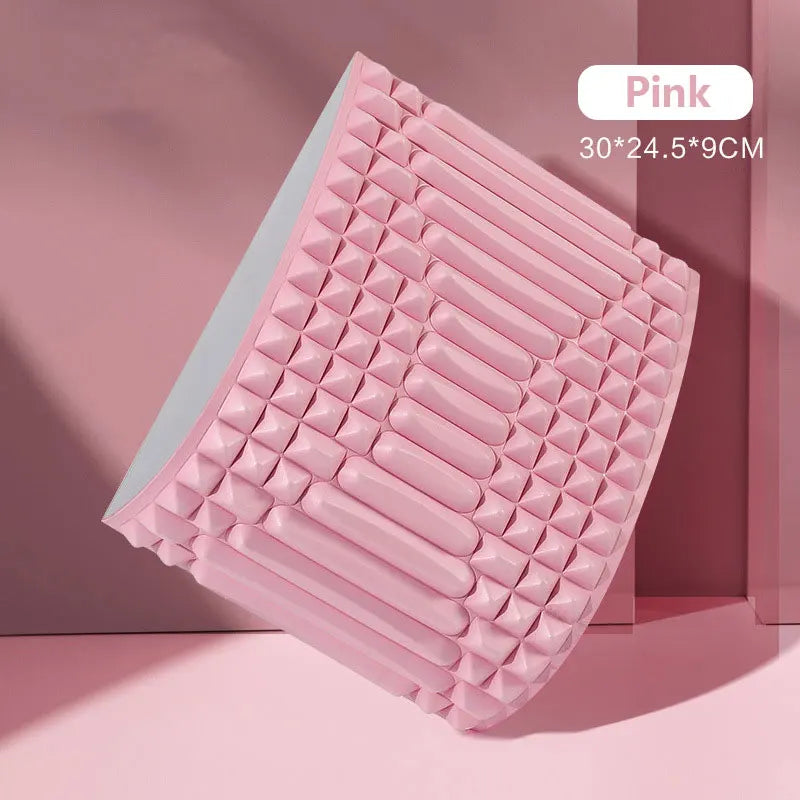
For people who prefer passive stretching instead of active foam rolling, a back stretcher pillow can be used on recovery days to provide gentle spinal extension with minimal effort.
You can also explore more recovery tools in the Body Care and Health Devices collection.
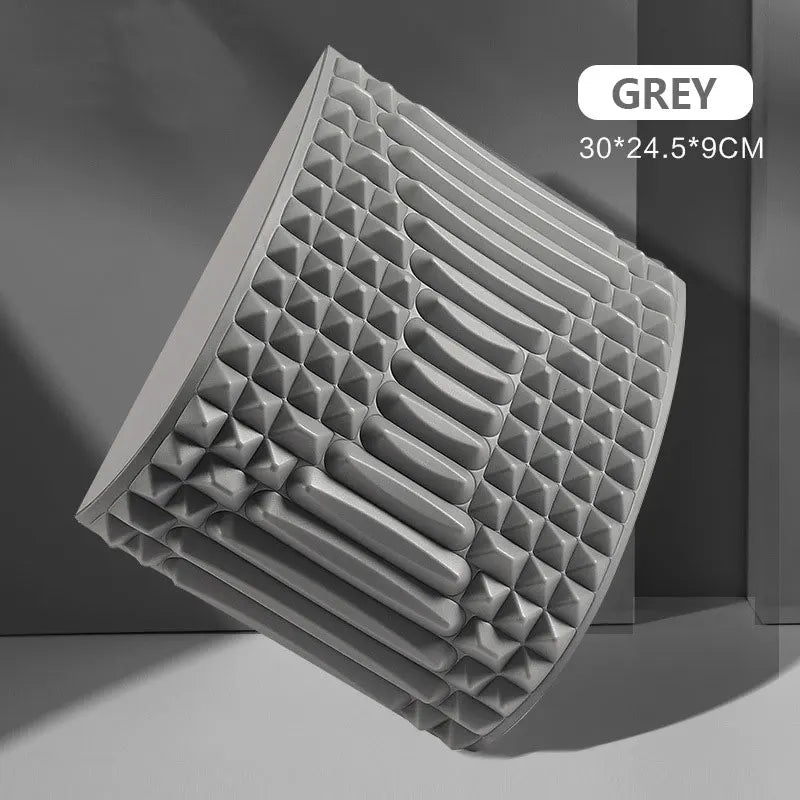
Foam roller stretches lower back for deep relief — See it in action
Step-by-Step Foam Rolling Routine for Spine Decompression
Warm-up
Before beginning foam roller spine decompression exercises, spend 1–2 minutes preparing your body with gentle movement. Walk in place, perform slow cat-cow movements, or complete several deep diaphragmatic breaths to increase circulation and reduce muscle guarding.
5–10 minute routine
- Thoracic extension: Perform 6–8 slow repetitions over 1–2 minutes while exhaling as you extend over the roller.
- Upper back rolling: Roll from the middle of the shoulder blades to the upper thoracic spine for approximately 2 minutes using slow, controlled movements.
- Glute and hip release: Spend 30–60 seconds on each side to improve hip mobility and reduce stress on the lower back.
- Supported lower back stretch: Perform gentle pelvic tilts for 1–2 minutes without placing direct pressure on the lumbar spine.
- Relaxation breathing: Lie comfortably with the roller supporting the upper back or positioned lengthwise beneath the spine. Take 5–10 slow breaths while allowing the chest and shoulders to relax.
Move slowly throughout the routine. Exhale during each stretch, avoid holding your breath, and pause briefly whenever you find a particularly tight area instead of rolling rapidly over it.
Progressions
- Beginners: Perform the routine 3–4 times per week using light pressure and shorter hold times.
- Intermediate: Increase each exercise to 45–60 seconds while maintaining smooth, controlled breathing.
- Advanced: Combine thoracic mobility, hip mobility, and gentle back stretch foam roller exercises into a daily 10-minute mobility routine.
When practiced consistently, this sequence can improve movement quality, reduce muscular stiffness, and support healthy foam roller spine decompression as part of a broader flexibility and recovery program.
Common Mistakes and Safety Precautions
Mistakes
- Rolling too quickly instead of allowing muscles time to relax.
- Applying excessive pressure that causes sharp or lingering pain.
- Rolling directly over the lower spine rather than the surrounding muscles.
- Holding your breath instead of using slow, controlled breathing.
- Skipping recovery sessions and expecting immediate long-term results.
- Using poor body positioning that shifts pressure away from the target muscles.
Consistency matters more than intensity. A gentle 5–10 minute routine performed several times each week is generally more effective than occasional aggressive foam rolling sessions.
Contraindications
Foam rolling is appropriate for many healthy adults, but it may not be suitable if you have:
- Recent fractures or spinal surgery.
- Severe osteoporosis.
- Acute inflammation or infection.
- Unexplained numbness, weakness, or radiating leg pain.
- A medical condition for which your healthcare provider has advised against self-myofascial release.
When to stop
Stop the exercise immediately if you experience sharp pain, dizziness, numbness, tingling, or symptoms that worsen during or after the session. Mild pressure over tight muscles is normal, but a foam roller back stretch should never produce severe pain.
Practice safe foam rolling techniques for effective back mobility — See it in action
Get yours now — limited stock!
Frequently Asked Questions
How often should I do back stretches with a foam roller?
Most people benefit from performing a back stretch with a foam roller 3–7 days per week for 5–10 minutes. Daily sessions are appropriate when pressure remains gentle and your muscles recover well between workouts.
Is foam rolling safe for lower back pain?
Yes, when performed correctly. Focus on the glutes, hips, upper back, and muscles surrounding the lumbar spine instead of rolling directly over the lower back. If your pain is severe, persistent, or accompanied by numbness or weakness, seek medical advice before continuing.
Can foam rolling improve posture?
Foam rolling can improve posture by increasing thoracic mobility and reducing muscle tightness that contributes to rounded shoulders. Long-term posture improvements are greatest when foam rolling is combined with strengthening exercises and good ergonomic habits.
Should foam rolling hurt?
You may feel moderate pressure or mild discomfort over tight muscles, but the sensation should remain tolerable. Sharp pain, burning, or numbness indicates excessive pressure or incorrect technique.
How long should I hold each stretch?
For most foam roller stretches for lower back support and upper back mobility, spend about 30–60 seconds on each area or perform 6–10 slow repetitions. Breathe steadily throughout each movement rather than rushing through the exercise.
Who should avoid foam rolling?
People with recent fractures, spinal surgery, severe osteoporosis, acute injuries, or certain neurological symptoms should consult a healthcare professional before using a foam roller.
What is the best back stretch with a foam roller?
Thoracic extension is one of the most effective exercises because it improves upper back mobility, encourages better posture, and complements other foam rolling techniques without placing unnecessary stress on the lumbar spine.
Can I stretch my lower back with a foam roller every day?
Yes, provided you avoid direct lumbar rolling and use gentle techniques that target the hips, glutes, and supporting muscles. Daily mobility sessions are often more beneficial than infrequent, high-intensity workouts.
Should I roll directly on my lower spine?
No. Most experts recommend avoiding direct pressure on the lumbar vertebrae. Instead, release the surrounding muscles that influence lower back movement and comfort.
How long should a foam roller back stretch last?
A complete routine typically takes between 5 and 10 minutes. Quality of movement and consistent practice are more important than spending long periods on the roller.
Can foam rolling decompress the spine?
Foam rolling does not literally separate the vertebrae, but it can create a gentle feeling of spinal decompression by reducing muscle tension, improving thoracic extension, and allowing the spine to move more freely.
Is foam rolling better before or after a workout?
Both options can be beneficial. Before exercise, foam rolling helps prepare the body for movement and improve mobility. After exercise, it supports recovery by reducing muscle tightness and promoting relaxation.
Pillar Article: Adjustable Back Stretcher: 7 Best Options Compared for Home Relief
Other Related Articles:
- Back Stretcher Bench vs Portable Devices: Which Wins?
- Pillow Back Massager vs Traditional Massagers: Key Differences
- Massage Back Pillow vs Manual Massage: What Relieves Pain Better?
- Roller Stretches for Lower Back: Which Method Works Best?
Explore More:













