

Glasses with Headphones Review: Do They Really Work or Just Hype?
Glasses with headphones are changing how people experience wearable technology by combining vision and audio in one everyday device. From bluetooth glasses prescription options for daily wear to hands free sunglasses for workouts, commuting, and travel, these smart eyewear products promise a convenient alternative to traditional earbuds. But do glasses with headphones actually deliver useful sound quality, comfort, and reliability, or are they simply a tech novelty?
⏱ 7 min read
Do Glasses with Headphones Really Work?
Glasses with headphones do work, but their performance depends heavily on the audio technology, frame design, and where you use them. Unlike traditional earbuds that sit inside the ear canal, these devices use open-ear speakers built into the temples of the frame. This allows users to listen to music, answer calls, and use voice assistants while staying aware of their surroundings.
For everyday activities such as commuting, walking, office work, and outdoor exercise, music glasses can be a practical solution. They provide enough audio clarity for podcasts, phone calls, and background music without creating the pressure or isolation some users experience with earbuds.
However, they are not designed to replace premium headphones for critical listening. Open-ear audio usually produces less bass impact and may struggle in crowded environments with traffic noise, wind, or loud conversations.
| Feature | Benefit | Limitation |
|---|---|---|
| Bluetooth Connectivity | Wireless music, calls, and voice assistant access | Older devices may experience connection delays |
| Open-Ear Audio | Keeps ears uncovered for environmental awareness | Sound leakage may occur in quiet spaces |
| Prescription Compatibility | Combines vision correction with audio features | Usually costs more than standard eyewear |
| Built-In Speakers | No need to carry separate earbuds | Audio quality depends on speaker placement |
What Are Glasses with Headphones?
Glasses with headphones are wearable audio devices that combine traditional eyewear with built-in speakers, microphones, and Bluetooth technology. Instead of placing headphones over or inside the ears, these frames deliver sound through small speakers positioned near the temples.
Common designs include:
- Wireless headphones glasses: Bluetooth-enabled frames that stream music and calls from smartphones.
- Prescription glasses with headphones: Smart frames fitted with corrective lenses for everyday vision needs.
- Music glasses: Audio-focused eyewear designed for hands-free listening.
- Headphones and sunglasses: Outdoor-focused frames combining UV protection with wireless audio.
How Bone Conduction and Open-Ear Speakers Differ
Most modern audio glasses use either directional open-ear speakers or bone conduction technology. Open-ear speakers project sound toward the ears without blocking the ear canal, while bone conduction sends vibrations through the frame to create sound perception through the bones near the ear.
Open-ear speakers are generally preferred for music glasses because they provide more natural audio quality. Bone conduction designs are often valued for maximum awareness during outdoor activities.
Audio Glasses vs Smart Glasses
Audio glasses focus mainly on music, calls, and voice features. Smart glasses with headphones may include additional technology such as cameras, augmented reality features, or advanced digital assistants.
For most users, audio-focused eyewear offers a simpler experience with longer battery life and fewer distractions.
How Do Bluetooth Glasses Work?
A bluetooth eyewear review usually focuses on four main areas: connectivity, sound delivery, microphone performance, and battery life. Bluetooth glasses connect wirelessly to smartphones, allowing users to play music, make calls, and access voice assistants without handling their phone.
Bluetooth Pairing
Most models pair like standard wireless headphones. Users activate pairing mode, select the glasses from their phone’s Bluetooth menu, and can then control audio through buttons, touch controls, or connected apps.
Controls and Microphones
Built-in microphones allow hands-free calling and voice commands. Higher-quality models may include noise reduction technology to improve conversations, although wind and crowded environments can still affect performance.
- Audio Transmission: Directional speakers deliver sound while keeping ears open.
- Call Support: Integrated microphones support phone conversations.
- Controls: Touch surfaces or buttons manage volume, playback, and assistants.
- Compatibility: Most models work with iPhone and Android devices.
Battery Charging
Battery life varies by model, but most wireless headphones glasses provide around 5–8 hours of listening time. Charging is usually completed through USB-C ports or magnetic charging docks.
Latency can also vary. Premium models typically provide smoother audio synchronization, while budget options may experience small delays when watching videos.
Best Glasses with Headphones in 2026
Best Overall: Ray-Ban Meta Smart Glasses
Ray-Ban Meta Smart Glasses offer one of the strongest combinations of design, audio performance, and smart features. They are ideal for users who want premium-looking eyewear with reliable calls and music playback.
Best for:
Everyday users who want stylish smart eyewear.
Pros:
Premium design, strong microphones, excellent integration.
Cons:
Higher price and fewer prescription options depending on region.
Best Premium: Bose Frames
Bose Frames remain known for strong open-ear sound quality. They are a good choice for users who prioritize audio performance over advanced smart features.
Best for:
Music listeners and casual outdoor use.
Pros:
Clear sound and comfortable fit.
Cons:
Limited smart features.
Best Budget: KentDO Smart Bluetooth Sunglasses
KentDO Smart Bluetooth Sunglasses provide an affordable way to experience wireless audio eyewear. They are designed for casual listening, outdoor activities, and users who want the convenience of built-in speakers without premium pricing.
Best for: Budget-conscious shoppers and casual users.
Best for Sports: Open-Ear Audio Glasses
Sports-focused audio glasses prioritize lightweight frames, secure fitting, and sweat resistance. They work well for runners, cyclists, and outdoor enthusiasts who need awareness of their surroundings.
Best for Prescription Lenses
Users who require vision correction should look for bluetooth glasses prescription compatibility. Prescription-ready frames allow users to combine corrective lenses with wireless audio features.
Comparison Table: Top Audio Glasses
| Model | Sound Quality | Battery Life | Weight | Compatibility |
|---|---|---|---|---|
| Bose Frames | Excellent open-ear audio | Up to several hours | Lightweight | iPhone and Android |
| Ray-Ban Meta Smart Glasses | Clear audio and calls | Several hours depending on use | Moderate | iPhone and Android |
| KentDO Smart Bluetooth Sunglasses | Good for casual listening | Designed for everyday use | Lightweight | Most Bluetooth devices |
How We Evaluated These Glasses
This smart eyewear review considers practical factors that affect everyday performance:
- Comfort Testing: Evaluated frame weight, fit, and long-term wear comfort.
- Sound Leakage: Considered how well speakers balance privacy and environmental awareness.
- Battery Testing: Compared expected listening time for calls and music.
- Call Quality: Reviewed microphone clarity in indoor and outdoor conditions.
Top Features That Set Glasses with Headphones Apart
Sound Quality
The best glasses with headphones built in deliver balanced audio for podcasts, calls, and casual music. They are not designed to compete with high-end over-ear headphones but provide convenient everyday listening.
Comfort
Comfort is one of the biggest advantages of smart eyewear. Lightweight frames allow users to wear them for commuting, work, or travel without the pressure caused by traditional headphones.
Battery Life
Battery performance determines whether audio glasses are practical for daily use. Longer-lasting models support full commutes, workouts, and extended outdoor activities.
Water Resistance
Sweat and splash resistance make certain models better suited for exercise and outdoor environments.
- Voice Controls: Hands-free access to calls and digital assistants.
- Touch Controls: Easy playback management without reaching for a phone.
- Prescription Options: Supports users needing prescription glasses with headphones.
Pros and Cons Compared
Versus Earbuds
| Category | Glasses with Headphones | Earbuds |
|---|---|---|
| Awareness | Better environmental awareness | More noise isolation |
| Comfort | No ear pressure | May cause discomfort during long use |
| Privacy | More possible sound leakage | More private listening |
Versus Over-Ear Headphones
Over-ear headphones generally provide stronger sound quality and noise cancellation, while audio glasses offer better portability, lighter weight, and a more natural wearable experience.
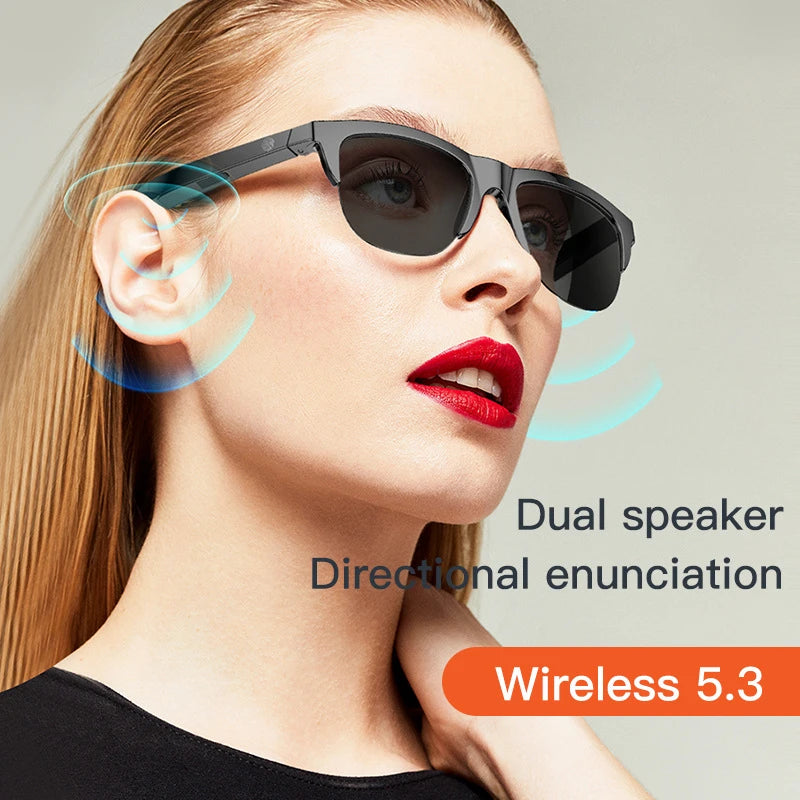
Hands free sunglasses – sleek, lightweight, and wireless
Who Should Buy Which Type?
Commuters
Commuters benefit from open-ear audio because they can enjoy music while remaining aware of traffic and surroundings.
Office Workers
Professionals who take frequent calls may prefer lightweight audio glasses that reduce the need to constantly wear earbuds.
Cyclists and Runners
Outdoor athletes often prefer music glasses because they allow environmental awareness during exercise.
Travelers
Travelers can benefit from compact smart eyewear that combines sunglasses, calls, and entertainment in one device.
Top Bluetooth Glasses Models Reviewed
Sound Quality Review
Bose Frames deliver some of the strongest audio performance, while Ray-Ban Meta focuses on balanced audio and smart features. KentDO Smart Bluetooth Sunglasses provide practical sound quality for everyday listening.
Comfort Review
Lightweight designs are easier to wear for extended periods compared with traditional headphones.
Battery Review
Most models provide enough battery for daily commutes and casual use, although heavy calling or high volume reduces runtime.
Best Value
- Bose Frames: Premium audio experience.
- Ray-Ban Meta Smart Glasses: Smart features and stylish design.
- KentDO Smart Sunglasses: Affordable wireless eyewear. Shop the KentDO Smart Bluetooth Sunglasses
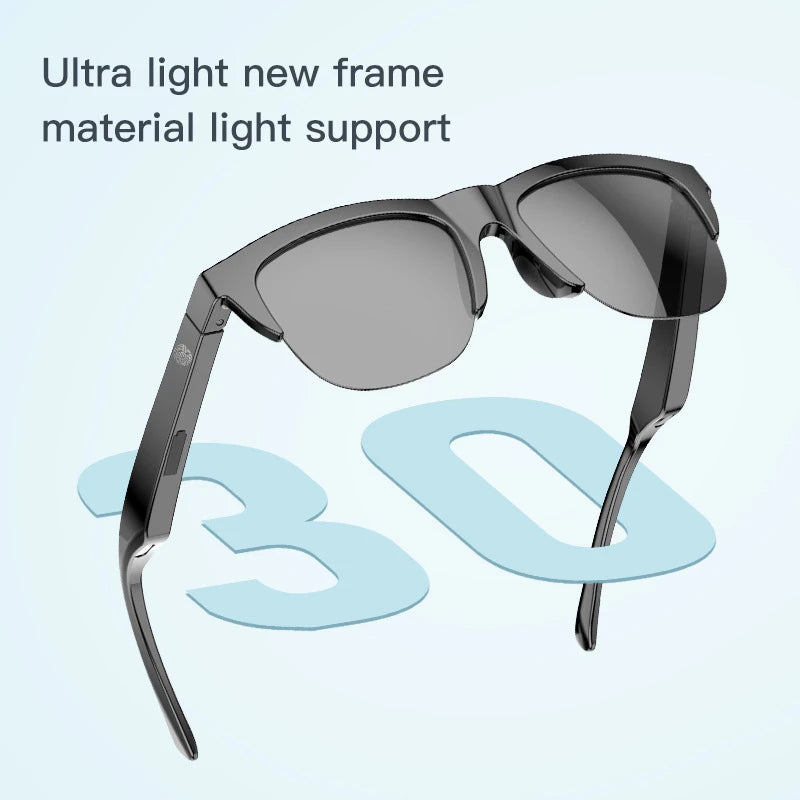
Experience wireless sound with KentDO smart eyewear
Real User Reviews: What People Are Saying
Smart eyewear reviews show that users appreciate convenience but also recognize the limitations of open-ear audio.
- Common Praise: Users like the lightweight design and ability to stay aware of surroundings.
- Frequent Complaints: Some users mention reduced bass and sound leakage.
- Long-Term Use: Comfort is often rated higher than traditional headphones.
- Overall Satisfaction: Most positive reviews come from commuters, travelers, and casual listeners.
FAQ
Are glasses with headphones better than earbuds?
They are better for users who value comfort and environmental awareness. Earbuds usually provide stronger isolation and audio detail.
Can you listen privately without sound leakage?
Open-ear designs reduce isolation, so some sound leakage may occur. Directional speakers help minimize this effect.
Can prescription lenses be added to audio glasses?
Yes. Many models support bluetooth glasses prescription options, allowing users to combine vision correction with wireless audio.
Are smart glasses with headphones good for phone calls?
Many models perform well for casual calls, especially indoors. Wind and background noise may reduce microphone clarity outdoors.
Do audio glasses work with iPhone and Android?
Most Bluetooth audio glasses are compatible with both iPhone and Android devices.
What battery life should you expect from music glasses?
Most models provide around 5–8 hours depending on volume, calls, and Bluetooth usage.
Are glasses with headphones safe for all-day wear?
Open-ear audio glasses are generally comfortable for extended use because they do not block the ear canal. Users should still listen at comfortable volume levels.
How long do glasses with headphones last on a charge?
Battery life varies by model, typically between 5 to 8 hours per charge.
Do they work well outdoors?
Yes. Most hands free sunglasses are designed for outdoor use with stable Bluetooth connections and lightweight frames.
Which glasses are best for workouts or commuting?
Look for secure fitting frames, sweat resistance, and reliable audio. KentDO Smart Sunglasses and Bose Frames are popular options.
Pillar Article: Top 10 Sunglasses with Bluetooth Headphones You’ll Actually Want to Wear
Other Related Articles:
- Smart Audio Sunglasses Showdown: The 5 Best for Sound and Style in 2025
- Glasses with Speakers vs. Earbuds: Which Sounds Better Outdoors?
- The Hidden Winner Among Bluetooth Sunglasses with Headphones (You’ll Be Surprised)
- Bluetooth Headphone Sunglasses Comparison: Which Model Fits Your Lifestyle Best?
Explore More:













