

Glasses with Speakers vs Earbuds: Which Is Better for Outdoor Listening in 2026?
Glasses with speakers are redefining outdoor sound freedom—no more sweaty ears or tangled cords. These sleek audio sunglasses and modern bluetooth glasses frames blend fashion with function, while comfortable bluetooth earbuds still promise immersive focus. But when wind, traffic, and sunshine hit, which one truly delivers the clearest sound experience?
⏱ 7 min read
Quick Verdict: Sunglasses vs Earbuds (TL;DR)
Choose Audio Sunglasses If…
- You prioritize situational awareness outdoors
- You want all-day comfort without ear fatigue
- You frequently walk, cycle, or commute in busy environments
- You prefer open-ear audio for safety and convenience
Choose Earbuds If…
- You want the best sound quality and bass performance
- You need noise isolation or active noise cancellation
- You listen in noisy environments (gyms, flights, public transit)
- You care about immersive audio experiences
Sunglasses vs Earbuds: Side-by-Side Comparison Table
| Feature | Audio Sunglasses | Bluetooth Earbuds |
|---|---|---|
| Sound Quality | Ambient, lighter bass | Rich, immersive, strong bass |
| Situational Awareness | Excellent (open-ear) | Limited (unless transparency mode) |
| Comfort | All-day wear, no ear pressure | Can cause fatigue over time |
| Privacy | Minor sound leakage possible | Fully contained audio |
| Battery Life | ~5–6 hours | 4–8 hours (+ case up to 30 hours) |
| Best Use | Outdoor movement & safety | Focused listening & travel |
What Are Audio Sunglasses (Open-Ear Glasses)?
Audio sunglasses combine UV protection with built-in speakers, allowing you to listen to music, take calls, and hear navigation without blocking your ears. Unlike traditional headphones, they sit on your face like regular eyewear—making them ideal for outdoor use.
How Open-Ear Audio Works
Instead of sending sound directly into your ear canal, these devices use directional speakers positioned near your ears. This creates a focused sound field while allowing ambient noise—like traffic or conversation—to remain audible.
Bone Conduction vs Directional Speakers
Some models use bone conduction technology, transmitting sound through vibrations in your skull. Others (like most modern audio sunglasses) rely on directional micro-speakers for clearer, more natural sound. Directional audio tends to offer better clarity for music and calls, while bone conduction emphasizes safety.
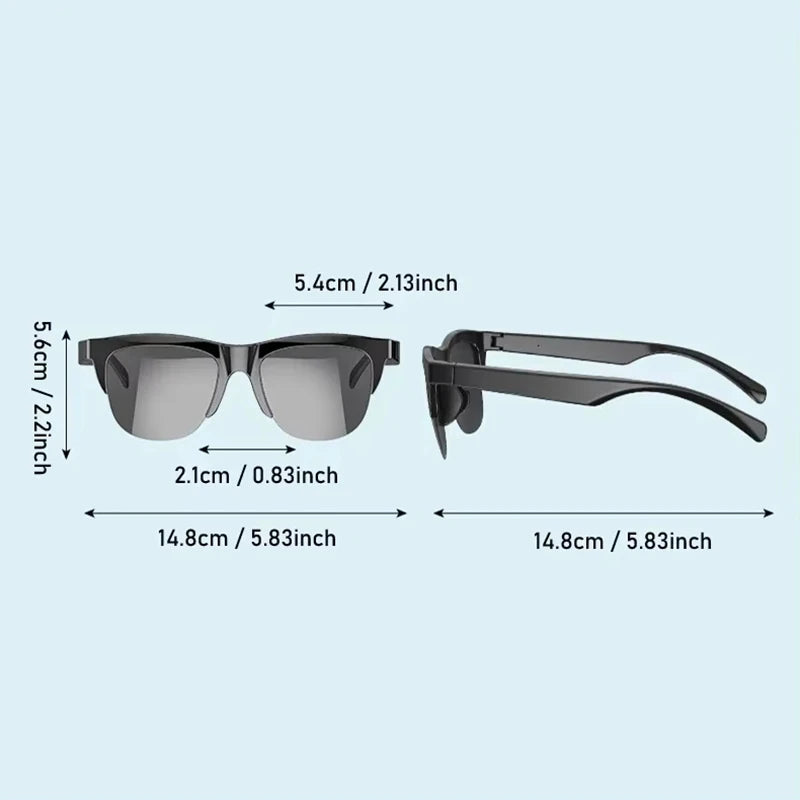
Glasses with speakers in action — fashion meets wireless sound freedom.
What Are Earbuds Today? (In-Ear Audio Explained)
Modern earbuds are compact wireless audio devices designed for immersive listening. They fit inside your ear canal, creating a seal that enhances bass, clarity, and isolation.
Noise Isolation & ANC
Most premium earbuds include active noise cancellation (ANC), which blocks external sounds using microphones and sound wave inversion. This makes them ideal for flights, offices, and noisy commutes.
Wireless & Smart Features
Today’s earbuds offer touch controls, voice assistants, spatial audio, and seamless device switching. These features make them versatile for both entertainment and productivity.
Audio Sunglasses vs Earbuds: Detailed Comparison
Sound Quality
Earbuds deliver deeper bass and higher clarity due to direct in-ear delivery. Audio sunglasses provide lighter, more ambient sound.
Situational Awareness
Audio sunglasses excel by keeping your ears open. Earbuds can reduce awareness unless transparency mode is enabled.
Portability & Convenience
Glasses eliminate the need for a charging case and feel like part of your outfit. Earbuds are smaller but require storage and charging accessories.
Durability & Weather Resistance
Sport earbuds often have better water resistance. Audio sunglasses are suitable for light outdoor use but may not handle intense workouts as well.
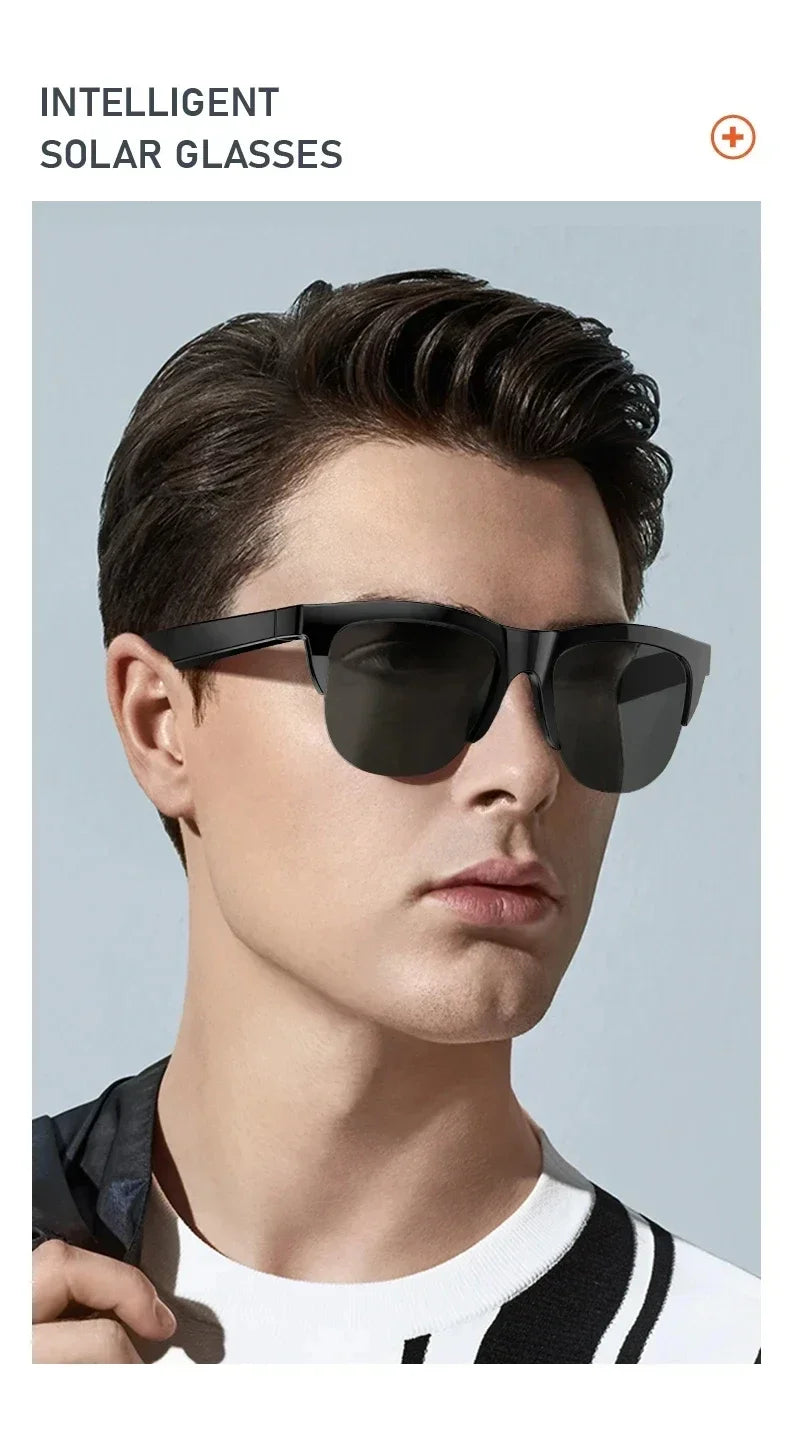
Eyeglasses with speakers vs earbuds — see and hear the difference.
Glasses with Speakers vs Earbuds: Real-World Scenario Comparison
Walking & Commuting
Audio sunglasses keep you aware of traffic and announcements—ideal for city life.
Cycling & Safety-Critical Situations
Open-ear audio significantly improves safety by preserving environmental awareness.
Work & Office Use
Glasses allow subtle listening without disconnecting from coworkers.
Travel & Long Listening Sessions
Earbuds excel with noise cancellation on flights and trains.
Workouts & Sweat Resistance
Earbuds are better for intense workouts; glasses suit lighter activity.
Sound Quality Breakdown: Open-Ear vs In-Ear Audio
Clarity & Bass
Earbuds win for bass and detail. Audio glasses offer more natural, ambient sound.
Volume & Noise Isolation
Earbuds perform better in loud environments due to isolation.
Call Quality & Microphones
Earbuds typically provide clearer voice isolation, while glasses rely on ambient pickup.
Comfort, Fit, and Long-Term Wearability
Audio sunglasses distribute weight evenly and avoid ear pressure—ideal for all-day wear.
Earbuds may cause discomfort over time, especially during extended use.
Battery Life, Charging, and Daily Convenience
Earbuds offer longer total battery life with charging cases.
Audio sunglasses provide simpler daily use without extra accessories.
Social Acceptability & Privacy (Underrated Factor)
Earbuds are discreet and private. Audio glasses may leak sound slightly at high volume and draw attention.
Pros and Cons: Audio Sunglasses vs Earbuds
Audio Sunglasses Pros & Cons
- ✔ Open-ear awareness for safety
- ✔ Comfortable for long wear
- ✔ Integrated into daily lifestyle
- ✘ Weaker bass and volume
- ✘ Limited in noisy environments
Earbuds Pros & Cons
- ✔ Superior sound quality
- ✔ Noise cancellation
- ✔ Better for travel and workouts
- ✘ Reduced environmental awareness
- ✘ Potential ear fatigue
Which Should You Choose? (Decision Framework)
Best for Safety & Awareness
Choose audio sunglasses for commuting, walking, and outdoor activities.
Best for Sound Quality
Choose earbuds if you want immersive music and strong bass.
Best for Daily Convenience
Many users benefit from using both: glasses for daytime movement and earbuds for focused listening.
How We Tested Audio Sunglasses vs Earbuds
Real-World Usage Testing
Devices were tested during commuting, walking, and outdoor activities to evaluate awareness and usability.
Sound and Call Performance
We compared clarity, bass response, microphone quality, and performance in noisy environments.
Comfort and Battery Evaluation
Long-term wear tests assessed fatigue, fit, and real-world battery performance across multiple sessions.
Smart Glasses vs Earbuds: Future Trends in Wearable Audio
Smart glasses are evolving with voice assistants, AR features, and health tracking.
Earbuds continue advancing with AI audio tuning and spatial sound.
The future lies in combining both into a seamless wearable ecosystem.
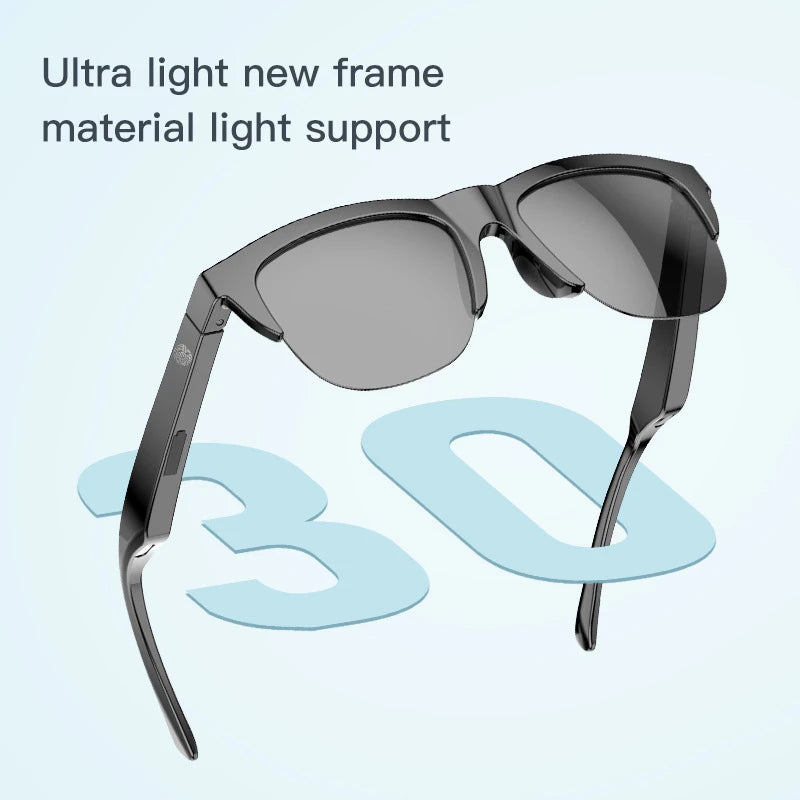
KentDO Bluetooth Glasses Frames — smart eyewear for everyday life.
FAQs
Are audio sunglasses safe for cycling or driving?
Yes. Open-ear design allows awareness of surroundings, making them safer than earbuds.
Do audio glasses leak sound to others?
Minimal leakage occurs at high volume, but sound is mostly directed toward your ears.
Do bluetooth glasses work with all phones?
Yes, they pair with most iOS and Android devices via Bluetooth.
Are audio glasses good in noisy places?
They work best in moderate environments. Earbuds perform better in loud settings.
Can audio sunglasses replace earbuds?
No. They complement earbuds rather than fully replace them.
Pillar Article: Top 10 Sunglasses with Bluetooth Headphones You’ll Actually Want to Wear
Other Related Articles:
- Smart Audio Sunglasses Showdown: The 5 Best for Sound and Style in 2025
- Glasses with Headphones Review: Do They Really Work or Just Hype?
- The Hidden Winner Among Bluetooth Sunglasses with Headphones (You’ll Be Surprised)
- Bluetooth Headphone Sunglasses Comparison: Which Model Fits Your Lifestyle Best?
Explore More:













