Best Bluetooth Sunglasses for Cycling (Tested & Compared)
Bluetooth sunglasses for cycling are redefining how riders experience the road. By combining UV protection with open-ear audio, these smart glasses let you stay connected without sacrificing awareness. We tested leading models across commuting, road riding, gravel routes, and mountain bike trails to determine which ones deliver the best balance of comfort, sound quality, battery life, and real-world safety.
⏱ 7 min read
Best Bluetooth Sunglasses for Cycling (Top Picks for 2026)
Best Overall Bluetooth Sunglasses for Cycling
KentDO Smart Bluetooth Sunglasses provide the strongest all-around package for most riders. Lightweight TR90 frames, Bluetooth 5.3 connectivity, dependable battery life, and clear directional speakers make them equally suitable for commuting, endurance rides, and weekend training. Their slim temples also fit comfortably under most cycling helmets. See it in action .
- Pros: Comfortable fit, stable Bluetooth, balanced sound, lightweight design.
- Cons: Open-ear speakers prioritize awareness over maximum bass.
- Best for: Riders wanting one pair for nearly every cycling discipline.
Best Budget Cycling Glasses with Bluetooth
Anker Soundcore Frames offer modular speaker temples and respectable audio quality at an affordable price. They're ideal for recreational cyclists who want smart eyewear without paying flagship prices.
- Pros: Good value, interchangeable frame options.
- Cons: Less cycling-focused fit and wind management.
- Best for: Casual rides and urban commuting.
Best Smart Sunglasses for Long-Distance Rides
Bose Frames Tempo remain an excellent option for endurance cyclists thanks to louder speakers, dependable battery performance, and premium construction that stays comfortable during extended hours in the saddle.
- Pros: Excellent battery life, powerful audio.
- Cons: Higher price and slightly heavier frames.
- Best for: Century rides and endurance training.
Best Open Ear Cycling Sunglasses for Road Safety
Razer Anzu Smart Glasses emphasize directional audio that minimizes distraction while preserving awareness of traffic, making them well suited for road cyclists who frequently navigate busy streets.
- Pros: Clear voice prompts, lightweight.
- Cons: Shorter battery life than premium competitors.
- Best for: Daily road riding.
Best Cycling Sunglasses with Speakers for MTB & Gravel
OhO Sunshine Bluetooth Sunglasses feature a secure wraparound fit that stays stable over rough terrain. Their grippy frame design performs well during technical descents and uneven gravel routes.
- Pros: Secure fit, affordable.
- Cons: Average microphone quality.
- Best for: Mountain biking and gravel adventures.
Comparison Table: Top Bluetooth Audio Sunglasses for Cyclists
| Model | Audio | Battery | Weight | Water Resistance | Helmet Compatibility | Best For |
|---|---|---|---|---|---|---|
| KentDO Smart Bluetooth Sunglasses | Open-ear speakers | Long ride capable | Lightweight | Sweat resistant | Excellent | All-around cycling |
| Anker Soundcore Frames | Open-ear speakers | Moderate | Light | Basic protection | Good | Budget riders |
| Bose Frames Tempo | Premium directional audio | Extended | Moderate | Weather resistant | Excellent | Long-distance rides |
| Razer Anzu | Directional speakers | Moderate | Light | Sweat resistant | Good | Road cycling |
| OhO Sunshine | Open-ear speakers | Moderate | Light | Water resistant | Very Good | MTB & gravel |
Quick Recommendations by Rider Type
Road Cyclists
Choose lightweight cycling smart glasses with directional speakers, excellent helmet compatibility, and strong wind-noise performance for safer riding in traffic.
Mountain Bikers
Look for secure-fitting frames with grippy temples and water resistance to handle vibration, sweat, and changing trail conditions.
Gravel Riders
Comfort, battery endurance, and polarized or photochromic lenses are valuable for long mixed-surface rides with varying light conditions.
Commuters
Prioritize reliable Bluetooth connectivity, clear microphone performance, and voice assistant support for navigation and hands-free calls.
Do Bluetooth Sunglasses Really Work for Cyclists?
Yes. Bluetooth sunglasses for cycling use open-ear directional speakers that deliver music, navigation prompts, and phone calls while allowing environmental sounds to remain audible. This provides a better balance between entertainment and situational awareness than traditional in-ear headphones.
While no audio device should distract you from riding, properly designed cycling glasses with Bluetooth make it easier to hear approaching vehicles, other riders, and warning signals compared with conventional earbuds.
How We Tested These Bluetooth Audio Sunglasses
Rather than relying on manufacturer specifications alone, we evaluated every pair during real cycling sessions covering different riding styles and weather conditions.
Each model was tested with multiple road and MTB helmets to identify pressure points around the temples and ears.
Wind Noise Testing
Audio performance was evaluated between 15 and 35 km/h, with additional downhill testing to determine how wind affected speech and navigation prompts.
Battery Endurance
Continuous playback tests measured practical runtime instead of advertised battery estimates.
Visibility & Comfort
We assessed lens clarity, frame stability during rough terrain, sweat management, and comfort over rides exceeding several hours.
- Urban commuting
- Road cycling
- Trail and gravel riding
- Voice assistant responsiveness
- Bluetooth stability in busy environments
Real-World Performance: Audio, Wind Noise & Safety
Audio Clarity at Riding Speed
The best Bluetooth headset sunglasses maintain understandable navigation prompts and podcasts even above 25 km/h without requiring excessive volume.
Wind Noise Reduction
Premium models position speakers close to the ears while shaping the frame to reduce turbulence. This noticeably improves listening quality during fast descents.
Microphone Call Quality
Built-in microphones perform well for short calls while commuting, although very strong crosswinds can still affect voice clarity.
Situational Awareness
Open ear cycling sunglasses allow ambient traffic sounds to remain audible, helping riders react more quickly than when wearing sealed earbuds. Riders should still keep audio volume at a reasonable level and remain attentive to surrounding traffic.
Comfort, Fit & Helmet Compatibility
Comfort becomes increasingly important on rides lasting several hours. The best cycling smart glasses disappear under a properly fitted helmet without creating pressure around the temples.
Helmet Arm Design
Slim, flexible temples slide easily beneath helmet retention systems while reducing hotspots during long rides.
Sweat Stability
Rubberized nose pads and temple grips help keep the glasses stable during climbing, sprinting, and hot weather.
Prescription Options
Some smart glasses support prescription inserts or compatible lenses, making them suitable for riders who normally require corrective eyewear.
- ✅ Lightweight frames reduce fatigue
- ✅ Slim arms improve helmet compatibility
- ✅ Rubberized contact points improve grip
- ✅ Balanced weight distribution enhances comfort
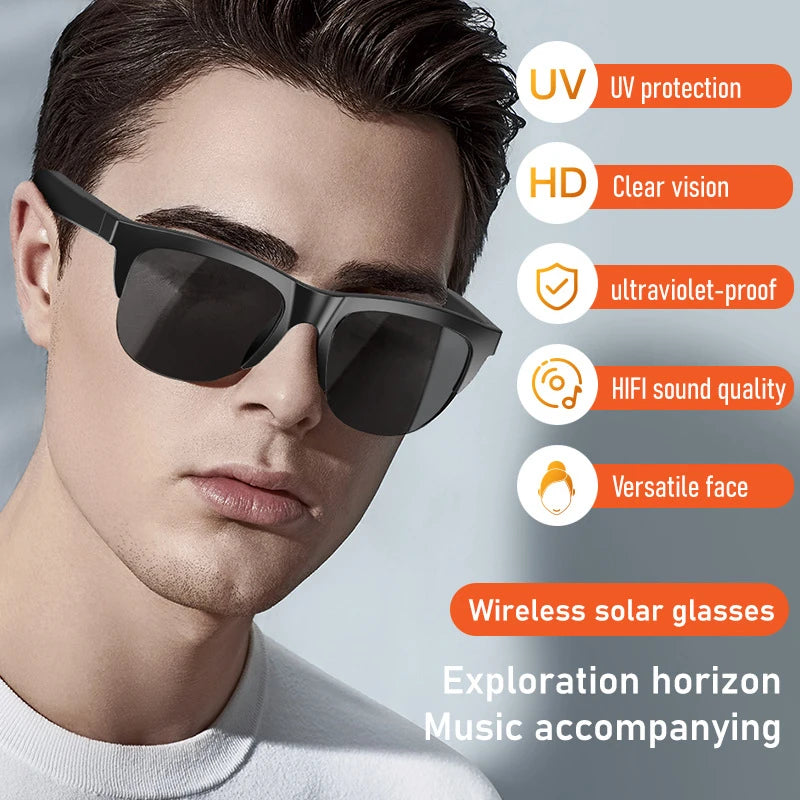
Lightweight and secure — built for long cycling sessions.
Bluetooth Sunglasses vs Bone Conduction Headphones for Cycling
| Feature | Bluetooth Sunglasses | Bone Conduction Headphones |
|---|---|---|
| Safety | Excellent ambient awareness | Excellent ambient awareness |
| Audio | Balanced music and calls | Often better speech clarity |
| Comfort | One integrated wearable | Additional headset required |
| Best Use | Daily riding and commuting | High-speed training and windy rides |
How to Choose the Best Bluetooth Sunglasses for Cycling
Lens Technology & UV Protection
Choose polarized lenses to reduce glare from roads and water, or photochromic lenses if you frequently ride through changing light conditions.
Battery Life
Commuters may only need 4 to 5 hours of runtime, while endurance cyclists should look for models capable of lasting 8 hours or longer.
Water & Sweat Resistance
An IPX4 rating or higher is recommended for regular cycling because it provides protection against sweat and light rain.
Controls & Voice Assistant
Large touch controls and voice assistants reduce the need to handle your phone while riding.
Helmet Compatibility
Always check that the temples fit comfortably beneath your preferred helmet without creating pressure during long rides.
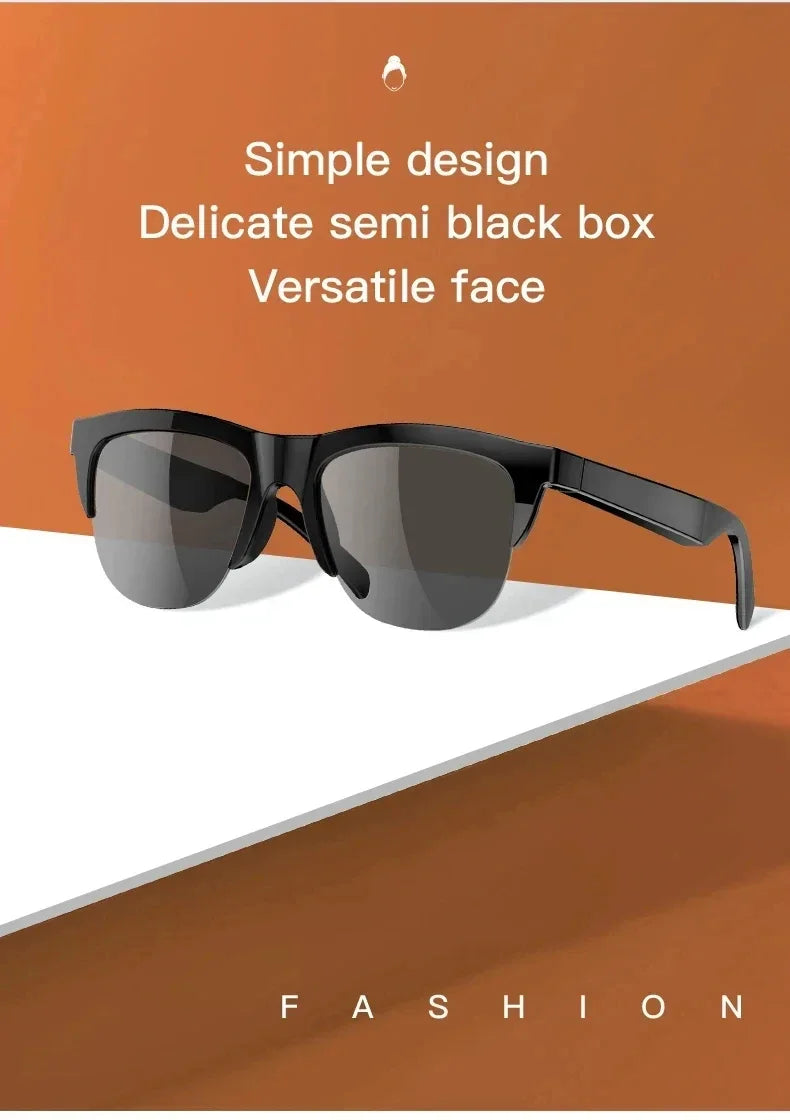
Experience hands free sunglasses with crystal-clear audio — see it in action .
Are Bluetooth Sunglasses Safe for Road Cycling?
Open-Ear Audio Explained
Unlike earbuds that seal the ear canal, open-ear audio projects sound toward your ears while leaving surrounding sounds accessible.
Traffic Awareness
Most cyclists find it easier to hear approaching vehicles, warning bells, and conversations with riding partners while using open-ear designs. However, audio should always be kept at a moderate volume.
Legal Considerations
Cycling laws regarding headphones and audio devices vary by region. Before riding, review local traffic regulations to ensure your audio equipment complies with applicable rules.
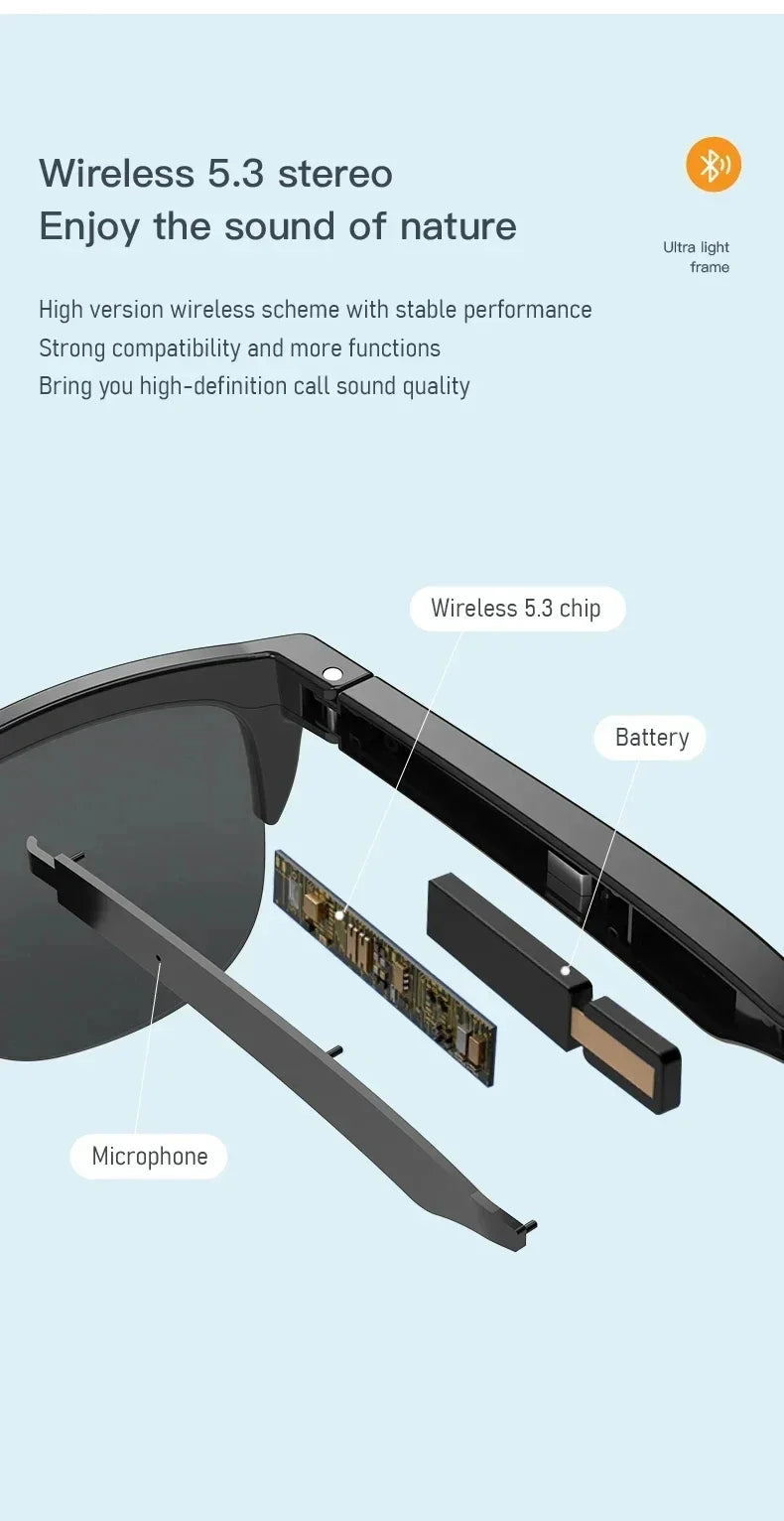
Tested on real rides — performance that goes the distance.
FAQ
Are bluetooth sunglasses safe for cycling?
Generally, yes. Open-ear designs allow more environmental awareness than traditional earbuds, although riders should still maintain safe listening volumes and remain attentive.
Can you hear traffic while riding?
Yes. Directional speakers are designed so surrounding sounds remain audible while listening to music or navigation.
Are bluetooth sunglasses better than earbuds for cycling?
Many cyclists prefer them because they combine eye protection with hands-free audio while preserving awareness of nearby traffic.
Do bluetooth sunglasses fit under cycling helmets?
Most cycling-focused models feature slim temples that fit comfortably beneath modern road and mountain bike helmets.
How long does the battery last on a full ride?
Battery life varies by model, but most quality Bluetooth audio sunglasses provide between 4 and 10 or more hours of continuous playback.
Are polarized lenses better for cycling?
Polarized lenses reduce glare from pavement and water, while photochromic lenses automatically adjust to changing light. The better option depends on your riding environment.
Pillar Article: Smart Bluetooth Sunglasses Review: Why DMES SG 11 Pro Leads the Market
Other Related Articles:
Explore More: