

⏱ 8 min read
Weighted Hula Hoop Workout: Beginner to Advanced Routine for Real Fat-Burning Results
A weighted hula hoop workout is an effective way to combine low-impact cardio, core strengthening, and coordination training in a single routine. Whether you're exercising with a traditional weighted hoop or enjoying a more engaging LED weighted hoop workout , regular sessions can help increase daily activity, improve endurance, and support long-term fat-loss goals. This guide explains how weighted hoop workouts work, what results you can realistically expect, and why consistency matters more than intensity alone.
Get Yours Now — Limited Stock!
Does a Weighted Hula Hoop Workout Really Work?
Yes. A weighted hula hoop workout can be an effective form of low-impact exercise that combines cardiovascular activity with continuous core engagement. While it is not a shortcut to weight loss, it can contribute meaningfully to improved fitness when paired with balanced nutrition, progressive training, and regular exercise habits.
How Weighted Hula Hoops Increase Workout Intensity
Compared with lightweight toy hoops, weighted fitness hoops require greater stabilization from your midsection throughout every rotation. Your abdominal muscles, obliques, hip flexors, glutes, and lower back work together to maintain rhythm and posture while your legs continuously shift your body weight to keep the hoop moving.
Because the movement is continuous, your heart rate gradually rises, turning what appears to be a simple motion into an accessible combination of aerobic exercise and muscular endurance training.
Calories Burned and Muscles Worked
Depending on your body weight, workout intensity, and session duration, a weighted hula hoop workout can burn approximately 150–300 calories in 30 minutes . Faster intervals, longer sessions, and full-body movements can increase overall energy expenditure.
The primary muscles worked include:
- Rectus abdominis and transverse abdominis for core stability
- Internal and external obliques during hip rotation
- Lower back muscles for spinal support
- Hip flexors and glutes for controlled movement
- Leg muscles that help maintain balance and posture
What Research Says vs Common Myths
Research on hoop-based exercise suggests it can improve cardiovascular fitness, balance, and core endurance when performed consistently. However, it's important to separate realistic benefits from common misconceptions.
- Myth: A weighted hula hoop directly burns belly fat.
- Reality: No exercise can specifically target abdominal fat. Overall fat loss occurs through sustained calorie balance.
- Myth: Heavier hoops always produce better results.
- Reality: Choosing a hoop that's too heavy can reduce workout quality and increase discomfort, especially for beginners.
- Myth: Hooping replaces strength training.
- Reality: It complements a well-rounded fitness routine but should ideally be combined with resistance training and proper nutrition.

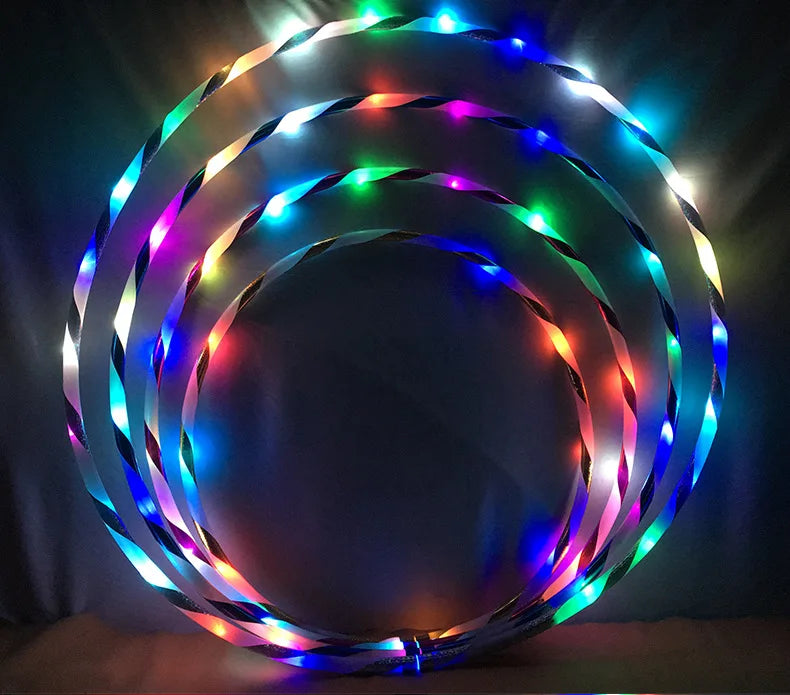
Experience the LED weighted hoop workout glow-up with a fun, motivating way to stay active.
Benefits of a Weighted Hula Hoop Workout (Backed by Science)
Core Activation & Muscle Engagement
One of the biggest advantages of a weighted hula hoop workout is continuous core activation. Every rotation requires your trunk muscles to stabilize your spine while coordinating movement between your hips and lower body. Over time, this may improve core endurance, balance, and functional movement used in everyday activities.
Cardio, Calorie Burn & Endurance
A fat burning weighted hula hoop workout provides moderate cardiovascular exercise that can help increase daily calorie expenditure. Regular sessions may improve aerobic endurance while remaining gentler on the knees and ankles than many higher-impact cardio workouts. Combined with healthy eating, it can support gradual and sustainable body-fat reduction.
Balance, Coordination & Posture
Maintaining consistent hoop motion develops rhythm, coordination, and body awareness. The repeated shifting of body weight encourages better posture, improves balance, and promotes smoother movement patterns, making weighted hoop workouts a practical option for beginners, older adults, and anyone looking for an enjoyable low-impact fitness routine.
How to Use a Weighted Hula Hoop for Exercise (Step-by-Step Guide)
Choose the Right Hoop Weight & Size
Learning how to use a weighted hula hoop for exercise starts with choosing equipment that matches your experience level. A hoop that is too heavy or too small can make it difficult to maintain proper technique and may increase unnecessary strain.
Most beginners do well with a hoop weighing 1–2 lbs . More experienced users may progress to heavier models after developing good control and endurance. As a general sizing guideline, a standard fitness hoop should reach approximately waist height when standing upright.
- 1–2 lbs: Best for beginners learning rhythm and coordination.
- 2–3 lbs: Suitable for intermediate users seeking greater resistance.
- 3+ lbs: Better reserved for experienced users who have already developed proper form.
Proper Form & Breathing
Good technique allows you to exercise longer while reducing unnecessary stress on your lower back and hips. Focus on controlled movement rather than spinning the hoop as quickly as possible.
- Stand with one foot slightly ahead of the other for better stability.
- Keep your shoulders relaxed, chest upright, and core gently braced.
- Start the hoop with a confident push in one direction.
- Drive the movement by shifting your hips forward and backward instead of making large circular motions.
- Breathe naturally throughout the workout, exhaling during stronger core engagement and avoiding holding your breath.
Common Beginner Mistakes
Small adjustments in technique can significantly improve comfort, consistency, and workout quality.
- Starting with a hoop that's too heavy before mastering the basics.
- Leaning backward instead of maintaining a tall, neutral posture.
- Moving only the waist instead of coordinating the hips and lower body.
- Skipping a proper warm-up before exercising.
- Trying to maintain maximum speed instead of focusing on smooth, controlled rotations.
Weighted Hula Hoop Exercise Routine (Beginner to Advanced)
10-Minute Beginner Workout
During your first two weeks, prioritize learning rhythm and building confidence rather than maximizing intensity.
- 2-minute easy warm-up.
- 6 minutes of steady hooping at a comfortable pace.
- Rest for 30–60 seconds if needed.
- 2-minute cooldown with slow hoop rotations and walking.
20-Minute Fat-Burning Workout
Once you can comfortably hoop for 10 minutes, gradually increase both duration and intensity.
- 5-minute warm-up.
- 10 minutes of continuous hooping.
- Alternate directions every 5 minutes.
- Add light squats or arm movements to increase total-body activity.
- Finish with 5 minutes of slower-paced recovery.
30-Minute Progressive Workout
Experienced users can improve cardiovascular fitness by introducing interval training while maintaining good posture.
- 5-minute warm-up.
- 20 minutes alternating 1 minute fast and 1 minute moderate intensity.
- Combine hooping with simple bodyweight movements between intervals if desired.
- 5-minute cooldown.
Weekly Progression Schedule
- Weeks 1–2: 10–15 minutes, 4–5 days per week.
- Weeks 3–6: 20–30 minutes, 4–6 days per week with direction changes.
- Week 7 and beyond: Up to 30–45 minutes using interval sessions and progressive intensity.
LED Weighted Hula Hoop Workout: Is It Different?
Benefits of LED Fitness Hoops
A LED light up weighted hula hoop performs the same fundamental workout as a standard weighted hoop, but the illuminated design creates a more engaging exercise experience. Many users find the visual feedback motivating, making it easier to stay consistent with regular workouts.
LED Fitness Hoop Workout Routine
- 5-minute warm-up.
- 10 minutes of steady hooping.
- 5 minutes of faster intervals.
- 5-minute cooldown.
Who Should Choose an LED Hoop
An LED weighted hula hoop workout is a great choice for beginners, home exercisers, and anyone who wants a more enjoyable indoor cardio routine. While LED lighting does not increase calorie burn by itself, it can encourage better workout adherence by making sessions feel more interactive and rewarding.
Does Weighted Hula Hoop Help Lose Belly Fat?
Spot Reduction Explained
The short answer is no . If you're wondering, does weighted hula hoop help lose belly fat , it's important to understand that no exercise can selectively burn fat from a single area of the body. This concept, known as spot reduction, has been consistently disproven by exercise research.
A weighted hula hoop workout can, however, contribute to overall body fat loss by increasing daily calorie expenditure. As your overall body-fat percentage decreases through consistent exercise and proper nutrition, you may gradually notice a leaner waistline.
In addition to supporting calorie burn, hooping strengthens the abdominal muscles and obliques, improving muscle definition beneath the fat layer. This combination often creates the appearance of a firmer, more toned midsection over time.
How to Maximize Fat Loss
To get the most from your weighted hula hoop workouts, combine them with healthy lifestyle habits instead of relying on hooping alone.
- Maintain a moderate calorie deficit through balanced eating.
- Include strength training two to four times per week to preserve lean muscle.
- Perform regular cardio sessions, including weighted hoop workouts.
- Increase daily movement by walking and reducing sedentary time.
- Aim for adequate sleep and recovery to support long-term progress.
Nutrition and Consistency
Nutrition plays a larger role in fat loss than any single workout. Even an effective weighted hula hoop routine cannot compensate for consistently consuming more calories than you burn. The most successful approach combines regular exercise, balanced meals rich in protein and fiber, and a training routine that you can maintain for months rather than weeks.
Weighted Hula Hoop Results Before and After: What to Expect
Week-by-Week Progress
Weighted hula hoop results before and after vary depending on training frequency, nutrition, starting fitness level, and overall activity. Most people notice improvements in performance before seeing visible body-composition changes.
- Week 1–2: Improved coordination, smoother rhythm, and increased workout endurance.
- Week 3–4: Better core control, improved posture, and a stronger feeling around the waist.
- Week 5–8: Visible changes in body composition may begin when workouts are combined with an appropriate calorie deficit and consistent training.
Factors Affecting Results
Individual progress depends on several variables working together rather than the hoop alone.
- Workout frequency and weekly training volume.
- Exercise intensity and gradual progression.
- Hoop weight and proper technique.
- Nutrition and overall calorie balance.
- Sleep, recovery, and long-term consistency.
How to Track Improvement
Instead of relying solely on the scale, monitor several indicators of progress throughout your fitness journey.
- Take waist and hip measurements every two to four weeks.
- Capture progress photos under consistent lighting.
- Record workout duration and perceived effort.
- Track how long you can hoop continuously without stopping.
- Notice improvements in balance, posture, and daily movement.
See how consistent training and healthy habits can lead to gradual weighted hula hoop results over time.
Safety Tips and Common Mistakes
Bruising and Soreness
Mild tenderness or light bruising can occur when you first begin using a weighted hoop, particularly if sessions are too long or the hoop is heavier than recommended. This discomfort typically decreases as your body adapts and your technique improves.
Back, Hip and Knee Considerations
- Start with a lighter 1–2 lb hoop if you're new to fitness hooping.
- Limit initial sessions to 10–15 minutes before gradually increasing duration.
- Wear fitted, comfortable clothing to reduce friction.
- Maintain an upright posture and avoid excessive leaning or twisting.
- Alternate hooping directions regularly to promote balanced muscle development.
When to Stop Exercising
Stop your workout immediately if you experience sharp pain, dizziness, numbness, or pain that worsens with continued movement. Mild muscle fatigue is expected, but persistent joint pain or significant discomfort should be evaluated before continuing your training program.
Choosing the Best Weighted Hula Hoop
Best Weight for Beginners
The ideal hoop depends on your experience level, fitness goals, and comfort. Starting with a manageable weight helps you learn proper technique before progressing to more challenging workouts.
- 1–2 lbs: Ideal for beginners developing coordination and endurance.
- 2–3 lbs: Suitable for intermediate users seeking longer workouts with moderate resistance.
- 3+ lbs: Best reserved for experienced users with good technique and sufficient core strength.
Choosing a hoop that's too heavy won't necessarily improve results. A comfortable weight allows you to exercise longer with better form, often leading to greater overall calorie expenditure.
Adjustable vs Fixed Hoops
Adjustable fitness hoops are a practical option for most people because they allow you to customize the diameter as your skills improve. They are also convenient for storage and can accommodate multiple users with different experience levels.
| Feature | Adjustable Hoop | Fixed Hoop |
|---|---|---|
| Beginner friendly | Excellent | Good |
| Portable | Excellent | Limited |
| Multiple users | Yes | No |
| Progression | Easy | Limited |
LED Light Up Weighted Hula Hoops
A LED light up weighted hula hoop offers the same fundamental training benefits as a standard weighted hoop while making workouts more enjoyable through colorful lighting effects. Although LEDs do not directly increase calorie burn, they can improve workout adherence by making sessions feel more engaging and rewarding.
If motivation is your biggest challenge, an LED hoop may help you maintain a more consistent fitness routine over the long term.
Get Yours Now — Limited Stock!
Cool Down and Recovery After Your Workout
Stretching Routine
Spend five minutes cooling down after every workout to gradually lower your heart rate and improve flexibility.
- Gentle trunk rotations
- Hip flexor stretch
- Standing hamstring stretch
- Side-body stretch
- Lower back mobility exercises
Recovery Tips
- Stay hydrated before and after training.
- Allow sore muscles adequate recovery time.
- Increase workout duration gradually rather than all at once.
- Combine hoop workouts with strength and mobility training for balanced fitness.
Weekly Training Frequency
Most beginners benefit from exercising three to five days per week. As endurance improves, many people comfortably perform a weighted hula hoop workout four to six days weekly, provided they recover well between sessions.
Frequently Asked Questions
How many calories does a weighted hula hoop workout burn?
Most people burn approximately 150–300 calories during a 30-minute session, depending on body weight, workout intensity, and fitness level.
Can beginners use a weighted hula hoop?
Yes. Beginners should choose a 1–2 lb hoop and begin with 10–15 minute sessions while learning proper technique.
Does weighted hula hoop help lose belly fat?
Not directly. It contributes to overall calorie burn and body-fat reduction, but no exercise can specifically target belly fat.
How long should I use a weighted hula hoop each day?
Start with 10–15 minutes and gradually build toward 20–30 minutes as your endurance and technique improve.
What muscles does a weighted hula hoop work?
The exercise primarily targets the abdominals, obliques, lower back, hip flexors, glutes, and supporting muscles responsible for posture and balance.
What weight weighted hula hoop should I buy?
A 1–2 lb hoop is appropriate for most beginners, while more experienced users may choose heavier models once they have developed proper control.
Are LED weighted hula hoops better than regular hoops?
LED hoops provide similar physical benefits but often improve motivation and workout consistency by making exercise more enjoyable.
Can I use a weighted hula hoop every day?
Yes, provided you recover well, use proper form, and avoid training through pain. Beginners should gradually increase both duration and frequency.
Ready to Transform Your Home Workouts?
Stay motivated and build a consistent fitness routine with the KentDO LED Fitness Hoop .
Get Yours Now — Limited Stock!Explore more fitness innovations in our Lifestyle Collection and Body Care & Health Devices .
Related Articles:
Pillar Articles:













