

What are the safest lower back pregnancy stretches for fast relief?
Most pregnancy-safe lower back stretches gently improve mobility, reduce muscle tension, and encourage better posture without placing excessive pressure on your abdomen. Safe options like pelvic tilts, cat-cow stretches, supported child's pose, and gentle hip stretches can relieve discomfort in minutes when performed consistently and without strain.
Lower Back Pregnancy Stretches: Safe Relief for Moms-to-Be
Pregnancy-related lower back pain is extremely common as your body adapts to hormonal changes, shifting posture, and increased physical demands. Fortunately, gentle stretching can help reduce stiffness, improve mobility, and support better comfort throughout pregnancy.
⏱ 5 min read
Feeling stiff already? Discover safe stretching techniques and supportive options designed to help relieve pregnancy-related back discomfort.
Lower back pregnancy stretches for daily comfort — See it in action
Quick safety checklist before you begin
- Stretch only until you feel mild tension, never pain.
- Breathe steadily throughout every movement.
- Move slowly without bouncing.
- Wear supportive footwear if stretching while standing.
- Use pillows, yoga blocks, or a sturdy chair for support when needed.
- Stop immediately if you experience dizziness, vaginal bleeding, contractions, leaking fluid, or severe pain.
Who should avoid stretching until speaking with a healthcare provider
Women with high-risk pregnancies, placenta previa, preterm labor risk, severe pelvic pain, cervical insufficiency, or other pregnancy complications should receive individualized medical guidance before beginning a stretching program.
How often should you stretch during pregnancy?
Most healthy pregnancies tolerate gentle stretching 5–7 days per week. Sessions lasting 5–15 minutes are usually enough to improve flexibility and reduce lower back discomfort without overstressing joints that become more mobile during pregnancy.
Why Lower Back Pain Happens During Pregnancy—and How to Ease It Fast
Pregnancy changes your posture, muscles, and joints. As your baby grows, your center of gravity shifts forward, increasing the workload placed on your lower back muscles and surrounding support structures.
Hormonal changes and ligament relaxation
The hormone relaxin loosens ligaments and joints to prepare your body for childbirth. While this increased flexibility is necessary, it can reduce stability and contribute to lower back discomfort and muscle fatigue.
How posture shifts as your baby grows
As abdominal weight increases, lumbar curvature often becomes more pronounced. This can tighten hip flexors, weaken core support, and place additional strain on the lower back muscles. Gentle stretching helps reduce tension while encouraging healthier movement patterns.
Lower back pain vs pelvic girdle pain vs sciatica
Muscular lower back pain typically feels achy and improves with movement. Pelvic girdle pain often occurs around the hips, buttocks, or pubic bone. Sciatica may cause shooting pain, numbness, or tingling that radiates down the leg. Understanding the source of your symptoms helps determine which stretches are safest.
10 Pregnancy-Safe Lower Back Stretches Step by Step
Perform each stretch slowly while maintaining steady breathing. Hold each stretch for 20–30 seconds unless otherwise directed and repeat 2–3 times.
1. Cat-Cow Stretch
- Start on hands and knees
- Inhale and gently lower your belly while lifting your chest
- Exhale and round your back comfortably
- Repeat for 8–10 repetitions
Helps improve spinal mobility and reduce stiffness.
2. Pelvic Tilt
- Stand against a wall or perform on hands and knees
- Gently tilt your pelvis upward
- Hold for 3–5 seconds
- Repeat 10 times
Strengthens deep core muscles while reducing stress on the lumbar spine.
3. Supported Child's Pose
- Kneel comfortably with knees wide apart
- Place pillows beneath your chest
- Lower your torso onto the support
- Relax for 30 seconds
Provides gentle decompression for the lower back.
4. Seated Figure-4 Stretch
- Sit in a sturdy chair
- Cross one ankle over the opposite knee
- Lean forward slightly
- Hold for 20 seconds
Helps relieve tight glute muscles that contribute to back discomfort.
5. Seated Forward Stretch
- Sit comfortably with legs apart
- Keep your back straight
- Lean forward gently
- Hold for 20 seconds
Relieves tension while accommodating your growing abdomen.
6. Hip Flexor Stretch
- Use a supported kneeling position
- Shift weight forward gently
- Feel a stretch through the front hip
- Hold for 20 seconds
Reduces tightness that can increase lower back strain.
7. Standing Side Stretch
- Stand with feet hip-width apart
- Raise one arm overhead
- Lean gently to the opposite side
- Repeat on both sides
Improves mobility through the sides of the trunk.
8. Supported Back Extension
- Use a cushion behind your mid-back
- Gently open your chest
- Maintain a comfortable position
- Relax for 1–2 minutes
Encourages gentle chest opening without excessive spinal extension.
9. Piriformis Stretch
- Sit comfortably
- Cross one leg over the other
- Rotate slightly without twisting deeply
- Hold for 20 seconds
Targets muscles near the sciatic nerve.
10. Tail Wag Stretch
- Begin on hands and knees
- Move hips gently from side to side
- Keep movements slow and controlled
- Repeat for 30 seconds
Improves lumbar mobility while reducing stiffness.
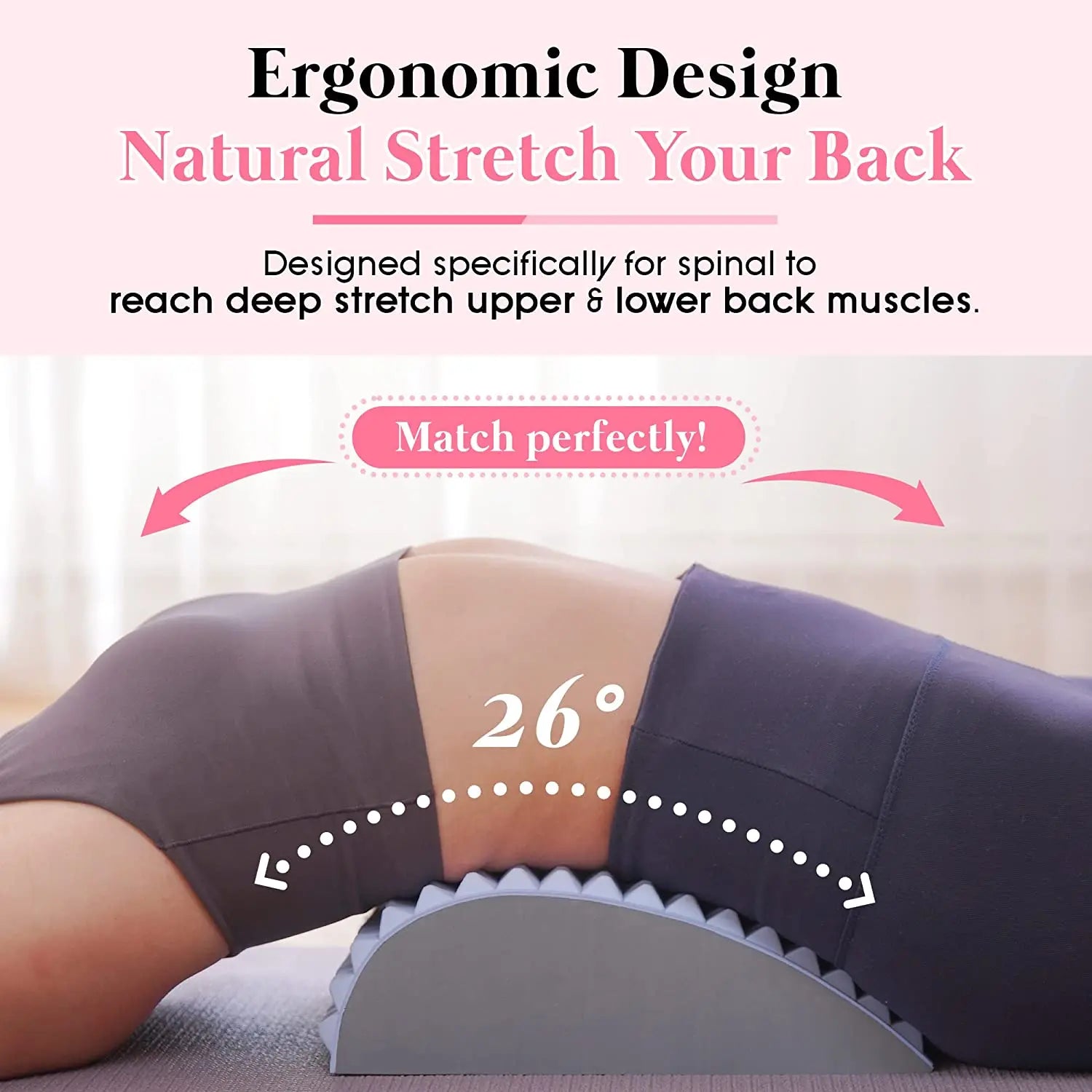
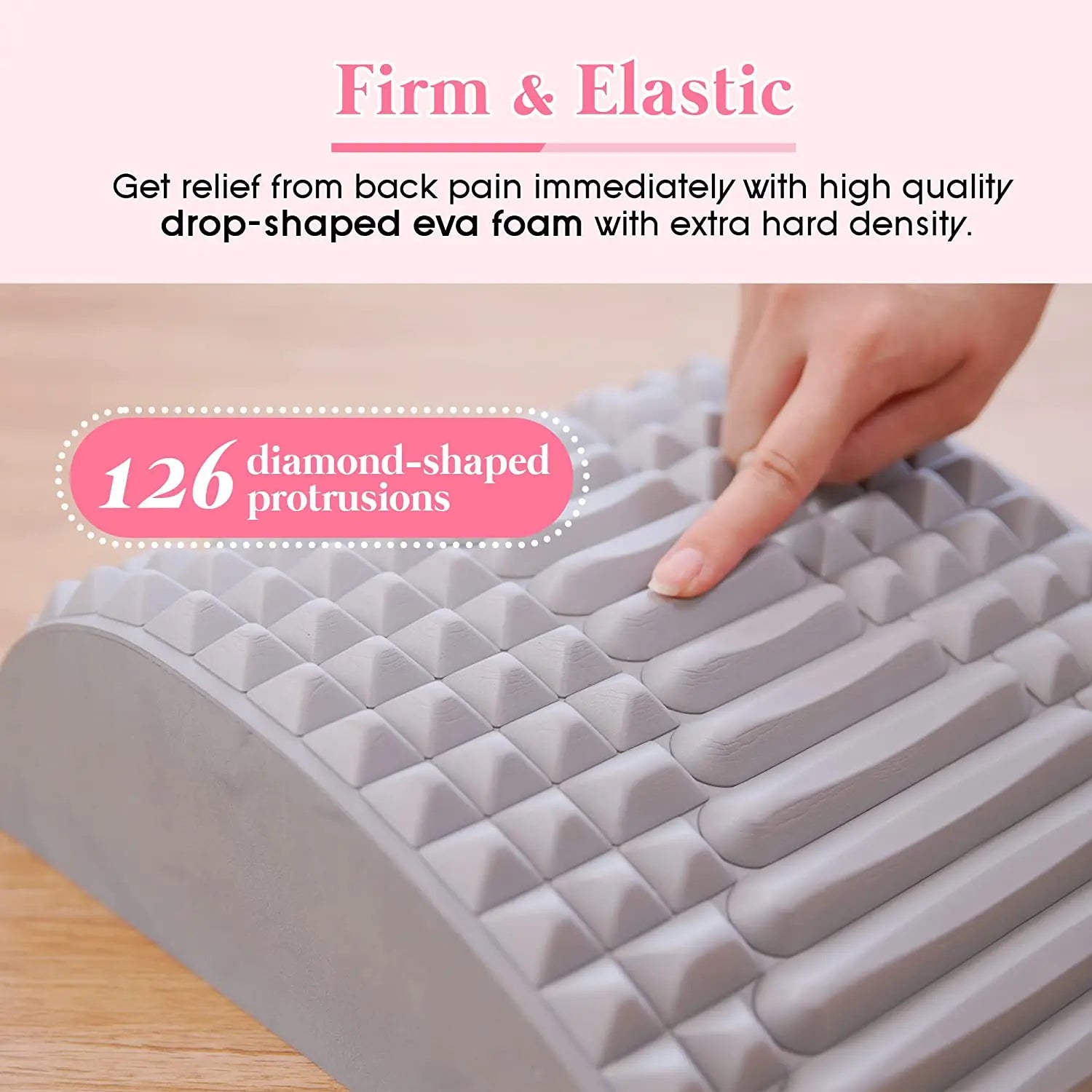
Need additional support? Learn how a back stretching device may complement gentle mobility exercises after discussing options with your healthcare provider.
Pregnancy Stretch Modifications by Trimester
First trimester
Continue gentle stretching while avoiding overheating and excessive fatigue. Most women can maintain their usual flexibility routines with appropriate modifications.
Second trimester
As balance changes, begin using pillows, yoga blocks, walls, or chairs for additional support and stability.
Third trimester
Choose wider stances, avoid prolonged periods lying flat on your back, and reduce stretch intensity as ligament laxity increases.
Exercises to avoid late in pregnancy
- Deep twisting stretches
- Aggressive backbends
- Ballistic or bouncing stretches
- Movements causing abdominal strain
- Exercises that trigger dizziness or instability
How to Stretch Safely When You Have Sciatica or Pelvic Girdle Pain
Signs your pain may not be simple muscle tightness
Pain radiating below the knee, numbness, tingling sensations, weakness, or severe pelvic pain may indicate sciatica or pelvic girdle dysfunction rather than ordinary muscular tightness.
Safe modifications
- Reduce stretch depth
- Use pillows and cushions for support
- Avoid painful single-leg positions
- Shorten hold times
- Prioritize gentle movement over flexibility gains
When stretching can make symptoms worse
Stop stretching if symptoms intensify during or after exercise, if pain becomes sharp rather than muscular, or if numbness and weakness worsen.
A Simple 5–10 Minute Daily Pregnancy Stretch Routine
Morning routine
- Cat-Cow Stretch — 1 minute
- Pelvic Tilt — 1 minute
- Standing Side Stretch — 1 minute
Evening routine
- Supported Child's Pose — 2 minutes
- Figure-4 Stretch — 2 minutes
- Hip Flexor Stretch — 2 minutes
Breathing cues
Inhale while preparing each movement and exhale as you move into the stretch. Slow breathing helps relax muscles and reduces unnecessary tension.
How to Stretch Lower Back Safely Daily Without Overdoing It
Proper breathing
Avoid holding your breath. Slow diaphragmatic breathing helps muscles relax and improves stretch effectiveness.
Stretch duration
Hold each stretch for approximately 20–30 seconds and repeat 2–3 times without forcing additional range of motion.
Common mistakes
- Bouncing during stretches
- Stretching into pain
- Moving too quickly
- Ignoring balance changes
- Skipping gentle warm-up movements
Recovery tips
- Drink water after stretching
- Walk gently for several minutes afterward
- Alternate stretching with healthcare provider-approved strengthening exercises
- Rest if symptoms worsen
Consistency matters more than intensity. Even 5–10 minutes daily may significantly improve comfort and mobility during pregnancy.
Safe stretching techniques during pregnancy — See it in action

Gentle movement and posture support during pregnancy — See it in action
FAQs About Lower Back Pregnancy Stretches
Are lower back pregnancy stretches safe every day?
For most uncomplicated pregnancies, gentle daily stretching is considered safe and may help reduce stiffness, improve mobility, and support better posture.
Which stretches should be avoided during pregnancy?
Avoid deep twists, forceful backbends, bouncing stretches, prolonged supine positions late in pregnancy, and any exercise causing pain or dizziness.
Can stretching help sciatica during pregnancy?
Some gentle stretches may reduce muscle tension contributing to sciatica symptoms, although severe or persistent symptoms require medical evaluation.
How long should I hold each stretch?
Most pregnancy-safe stretches are held for approximately 20–30 seconds and repeated two or three times.
Is it normal to feel sore afterward?
Mild muscle soreness can occur after stretching, but sharp pain, worsening symptoms, or prolonged discomfort are not considered normal.
Can stretching induce labor?
Gentle prenatal stretching is not intended to induce labor and is generally considered safe when performed appropriately.
When should I stop stretching and call my healthcare provider?
Seek medical advice immediately if stretching causes vaginal bleeding, leaking fluid, contractions, severe pain, dizziness, weakness, or reduced fetal movement.
Related Articles:
- Plastic Back Stretcher: Who Should Use It and Why It Works
- Devices for Posture: Fix Slouching and Back Strain Fast
Pillar Articles:













