

Best Ultrasonic Denture Cleaner 2026 — Reviewed & Compared
A: Yes. Denture ultrasonic cleaners use high-frequency sound waves to remove debris, bacteria, and stains from dentures, retainers, and aligners. The microscopic cleaning action reaches small crevices that brushing often misses, helping maintain denture hygiene in just a few minutes.
Looking for the best ultrasonic denture cleaner in 2026? With dozens of new devices entering the market, choosing the right model can be confusing. Some machines deliver powerful deep cleaning, while others struggle to remove even basic debris.
To help you make an informed decision, we evaluated several top-rated ultrasonic denture cleaners based on cleaning performance, ease of use, durability, and real user feedback. This guide compares the most reliable models and explains what features actually matter when choosing a denture cleaning machine.
⏱ 7 min read
How We Tested the Best Ultrasonic Denture Cleaners
To identify the best ultrasonic denture cleaner models in 2026, we evaluated popular machines based on cleaning performance, durability, ease of use, and real user feedback. Denture cleaners can vary widely in frequency, tank size, and usability, so each factor was analyzed to determine which devices actually deliver consistent results.
Our evaluation focused on practical everyday use for denture wearers rather than laboratory testing alone.
Testing Criteria
- Ultrasonic Frequency: Machines between 35–45 kHz were compared to determine which produced the most effective plaque and debris removal.
- Cleaning Performance: We analyzed how well each ultrasonic cleaner removed food particles, denture adhesive residue, and surface stains.
- Tank Capacity: Larger tanks allow easier cleaning of full dentures, partials, retainers, and mouthguards.
- Build Quality: Stainless steel tanks generally last longer and resist odor buildup compared with plastic tanks.
- Ease of Use: Controls, timer presets, and accessibility for seniors were evaluated.
- Noise Level: Some ultrasonic denture cleaners operate almost silently while others produce noticeable buzzing.
- User Reviews: Verified customer feedback helped confirm long-term reliability and cleaning consistency.
By combining hands-on evaluation with real user insights, we determined which ultrasonic denture cleaning machines perform best for everyday denture maintenance.
Quick Comparison Table: Top Rated Ultrasonic Denture Cleaners
The table below highlights key differences between the most popular ultrasonic cleaners used for dentures.
- KentDO Ultrasonic Denture Cleaner — 45 kHz cleaning frequency, compact design, one-button operation
- Generic 35kHz Ultrasonic Cleaner — basic budget option with simple timer
- iSonic F3900 — professional-grade cleaner with stainless steel tank
- Compact Travel Ultrasonic Cleaner — portable design for trips and small bathrooms
- Multi-Purpose Ultrasonic Cleaner — suitable for dentures, retainers, jewelry, and aligners
Although most ultrasonic denture cleaners operate within a similar frequency range, differences in tank capacity, durability, and usability can significantly affect everyday convenience.
Best Ultrasonic Denture Cleaner 2026: Top Picks Ranked
Best Overall: KentDO Ultrasonic Denture Cleaner
This model delivers a strong balance of cleaning performance, simplicity, and quiet operation. The sealed container design helps prevent splashing while the ultrasonic frequency removes debris effectively from dentures and aligners.
Best Budget Option: Generic 35kHz Model
Budget ultrasonic cleaners provide basic cleaning capability at a lower price point. However, the lower frequency and plastic tanks may require longer cleaning cycles and may not remove deeper stains as effectively.
Best Premium Model: iSonic F3900
The iSonic F3900 features a durable stainless steel tank and consistent 42 kHz ultrasonic frequency. It is commonly used for aligners, partial dentures, and other removable dental appliances.
Best for Seniors: KentDO Ultrasonic Cleaner
Simple controls and automatic shutoff make this cleaner particularly convenient for older users or anyone who prefers a quick one-button cleaning routine.
Best Compact Cleaner for Travel
Travel-sized ultrasonic cleaners are useful for maintaining denture hygiene while away from home. These models typically feature smaller tanks and simplified cleaning modes.
Best Multi-Purpose Ultrasonic Cleaner
Some ultrasonic cleaners are designed to handle multiple items such as dentures, retainers, jewelry, glasses, and mouthguards. These machines typically feature slightly larger tanks and versatile cleaning settings.
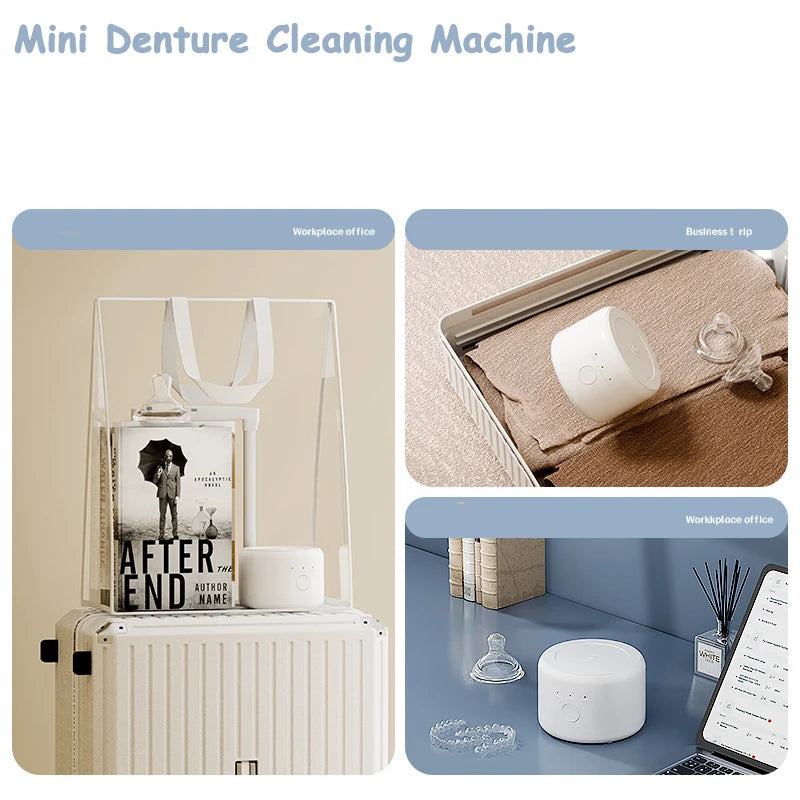
💡 Example of a compact ultrasonic denture cleaning machine.
Why Use a Denture Ultrasonic Cleaner in 2026?
Traditional denture cleaning methods typically rely on brushing and soaking tablets. While these approaches remove surface debris, they may not reach small grooves or tight spaces in denture materials.
An ultrasonic denture cleaner uses high-frequency vibrations in water to dislodge particles from tiny crevices. This process helps remove plaque buildup, food debris, and adhesive residue that manual cleaning may leave behind.
For many denture wearers, ultrasonic cleaning provides a faster and more convenient daily hygiene routine.
How Ultrasonic Denture Cleaning Works
Ultrasonic cleaners operate by producing high-frequency sound waves in water. These waves generate microscopic bubbles that rapidly collapse in a process known as cavitation.
The collapsing bubbles create gentle pressure that loosens debris and plaque from denture surfaces without requiring aggressive brushing. Because the bubbles can reach extremely small crevices, ultrasonic cleaning is particularly effective for dentures with complex shapes.
Ultrasonic Cleaner vs Denture Tablets: Which Cleans Better?
Denture tablets have been a traditional cleaning solution for many years, but ultrasonic cleaners offer a different approach focused on mechanical cleaning.
Denture Cleaning Tablets
- Use chemical reactions to break down stains and bacteria
- Require soaking for 10–30 minutes
- Help reduce odor and surface stains
- May not remove debris trapped in small grooves
Ultrasonic Denture Cleaners
- Use sound waves to create microscopic cleaning bubbles
- Dislodge debris from tight spaces
- Typically clean dentures in 3–10 minutes
- Can be combined with cleaning tablets for deeper sanitation
Many dental professionals recommend combining both methods periodically for the most thorough denture hygiene routine.
Buying Guide: How to Choose the Best Ultrasonic Cleaner for Dentures
What Frequency (kHz) Actually Matters?
Most ultrasonic denture cleaners operate between 40–42 kHz. This range balances cleaning strength and safety for acrylic dentures and metal frameworks.
Tank Size & Material: Stainless Steel vs Plastic
Stainless steel tanks tend to be more durable and resistant to odor buildup. Plastic tanks may be lighter but can wear faster with daily use.
Do You Need a Heating Function?
Some ultrasonic cleaners include heating features. While not essential, warm water can improve cleaning efficiency when removing oils or adhesive residue.
Noise Level & Daily Usability
Higher quality machines usually produce a soft humming sound. Excessive vibration or loud buzzing may indicate weaker construction.
Warranty & Durability Considerations
Because denture cleaners are often used daily, choosing a model with a warranty and reliable build quality can improve long-term value.
Safety for Acrylic, Flexible, and Partial Dentures
Most ultrasonic cleaners are safe for common denture materials including acrylic dentures, flexible partials, and dentures with metal clasps.
- Avoid extremely hot water that may warp acrylic dentures
- Do not run excessively long cleaning cycles
- Consult your dentist if your dentures include delicate attachments
- Use recommended cleaning solutions when needed
When used properly, ultrasonic cleaning is considered one of the safest daily methods for removable dental appliances.
Comparison Chart: Top Denture Ultrasonic Cleaners
| Product | Frequency | Cycle Time | Container Type | Best For |
|---|---|---|---|---|
| KentDO Cleaner | 42kHz | 5 mins | Sealed stainless steel | Daily deep cleaning |
| Generic Amazon Brand | 35kHz | 3 mins | Plastic basin | Budget use |
| iSonic F3900 | 42kHz | 5 mins | Open tank | Aligners + partials |
What Real Users Say
Feedback from denture wearers often highlights the convenience of ultrasonic cleaners compared with manual brushing alone.
- ⭐ “I didn’t realize how much debris was still on my dentures until I tried ultrasonic cleaning.”
- ⭐ “The five-minute cycle makes daily cleaning easy.”
- ⭐ “It works well for my retainers and mouthguard too.”
Users frequently report smoother-feeling dentures and reduced buildup after switching to ultrasonic cleaning routines.
Pros and Cons of Ultrasonic Denture Cleaners
Advantages
- Removes debris from small grooves
- Faster cleaning than soaking tablets alone
- Minimal scrubbing required
- Useful for retainers, aligners, and mouthguards
- Supports consistent denture hygiene
Potential Drawbacks
- Higher upfront cost than tablets
- Some models produce buzzing noise
- Lower quality machines may have weaker cleaning power
- Periodic disinfecting tablets may still be recommended
Is This Cleaner Right for You?
Ultrasonic denture cleaners can be helpful for many denture wearers, particularly those who want a faster and less labor-intensive cleaning routine.
Ideal for:
- People who wear full or partial dentures daily
- Users who struggle with manual brushing
- Anyone with dentures that have small grooves or complex shapes
- People who also use retainers or mouthguards
When a Denture Cleaning Machine May Not Be Necessary
Although ultrasonic cleaners are convenient, they may not be essential for every denture user.
- If you already follow a consistent brushing and soaking routine
- If your dentures rarely accumulate plaque or adhesive buildup
- If you only need occasional cleaning rather than daily maintenance
However, many users find ultrasonic cleaning especially helpful for maintaining dentures with complex surfaces.
How to Use a Denture Ultrasonic Cleaner the Right Way
- Fill the tank with water: Use lukewarm water to fully cover the dentures.
- Add cleaning solution (optional): Some users include denture tablets or mild cleaning solutions.
- Place dentures inside: Ensure they are fully submerged.
- Start the cleaning cycle: Most machines run for 3–10 minutes.
- Rinse dentures thoroughly: Use clean running water after the cycle finishes.
- Dry before wearing: Allow dentures to air dry briefly.
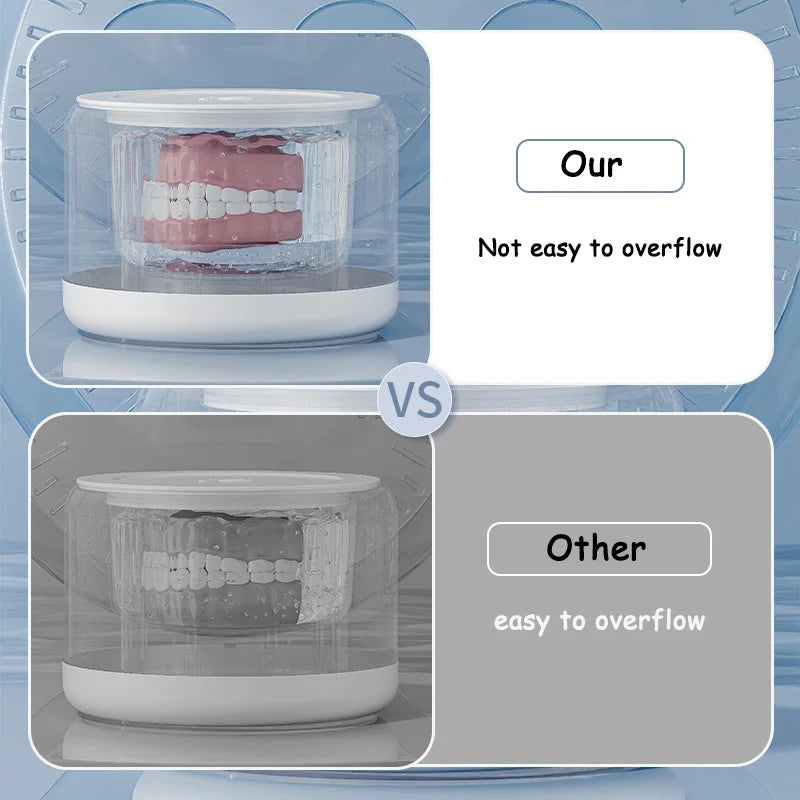
💡 Daily ultrasonic cleaning can help maintain denture hygiene.
Frequently Asked Questions About Ultrasonic Denture Cleaners
How often should I use an ultrasonic denture cleaner?
Most denture wearers use ultrasonic cleaning once per day as part of their normal hygiene routine.
Can ultrasonic cleaners damage dentures?
When used correctly within typical ultrasonic frequencies (around 40–42 kHz), they are safe for most denture materials.
Do ultrasonic cleaners replace denture tablets?
They remove debris mechanically. Many users still combine ultrasonic cleaning with occasional soaking tablets for disinfecting.
Is warm water necessary?
Warm water can improve cleaning efficiency but is not strictly required.
Are ultrasonic cleaners safe for partial dentures?
Yes. Most models safely clean dentures with metal clasps or frameworks.
What is the best ultrasonic denture cleaner for daily use?
Devices that operate around 40–45 kHz with durable tanks and simple timers are generally the most practical for everyday cleaning.
Can you clean retainers and mouthguards in an ultrasonic cleaner?
Yes. Many ultrasonic denture cleaners are designed to clean retainers, aligners, and mouthguards in addition to dentures.
Related Articles:
Pillar Articles:
What is this?












