

Do remedies for wrist tendonitis really ease daily pain?
Yes. Evidence-based home remedies for wrist tendonitis can reduce pain, improve mobility, and support healing when used consistently. A combination of temporary activity modification, gentle stretching, ice or heat at the right stage of recovery, wrist support, and progressive strengthening often improves mild to moderate symptoms within a few weeks while helping prevent future flare-ups.
Remedies for Wrist Tendonitis: How to Ease Pain Daily
⏱ 8 min read
Remedies for wrist tendonitis work best when they address both pain relief and the underlying cause of irritation. Whether your symptoms come from repetitive work, sports, childcare, or daily activities, this guide explains how to treat wrist tendonitis at home with proven conservative care, safe exercises, recovery timelines, and practical strategies that support long-term healing.
Consistent home care and healthy movement habits can help reduce wrist tendon pain over time.
Home Remedies for Tendonitis of the Wrist: What Works and When to Use Them
Wrist tendonitis is irritation or inflammation affecting one or more tendons that move the wrist and fingers. It commonly develops after repetitive gripping, lifting, typing, sports, or other activities that overload the tendons before they have time to recover.
Most mild to moderate cases respond well to conservative care. Home remedies for tendonitis of the wrist focus on reducing irritation, allowing damaged tissue to recover, and gradually restoring strength without overloading healing tendons.
Home treatment is generally appropriate if:
- Symptoms developed gradually rather than after a major injury.
- Pain is mild to moderate.
- You can still move your wrist despite discomfort.
- There is no obvious deformity or severe swelling.
If pain becomes severe, follows a fall, or continues despite several weeks of home care, a medical evaluation is recommended.
How to Tell If You Have Wrist Tendonitis
Common symptoms
- Aching or burning pain around the wrist.
- Tenderness over a specific tendon.
- Pain that worsens with gripping or lifting.
- Morning stiffness or discomfort after repetitive activity.
- Mild swelling around the affected area.
Quick self-assessment checklist
- ✓ Does pain increase when gripping objects?
- ✓ Does moving the wrist against resistance reproduce symptoms?
- ✓ Does resting the wrist temporarily improve pain?
- ✓ Have symptoms gradually developed over days or weeks?
If you answered yes to most of these questions, wrist tendonitis may be the cause, although only a healthcare professional can provide a definitive diagnosis.
Conditions that mimic wrist tendonitis
Several problems produce similar symptoms. Carpal tunnel syndrome often causes numbness and tingling in the thumb, index, and middle fingers. Arthritis usually causes joint stiffness and pain deep within the joint, while wrist sprains are typically linked to a sudden injury. Conditions such as De Quervain's tenosynovitis can also affect tendons near the thumb and require slightly different treatment.
What Causes Wrist Tendonitis?
Wrist tendonitis develops when repeated stress exceeds the tendon's ability to recover. Tiny areas of irritation accumulate over time, eventually causing pain during everyday movement.
- Repetitive typing or computer work.
- Sports such as tennis, golf, climbing, or rowing.
- Frequent lifting at work.
- Poor workstation ergonomics.
- Repeated gripping or twisting motions.
- Sudden increases in exercise intensity.
Correcting these contributing factors is just as important as treating the pain itself because continuing the same repetitive movements often delays recovery.
The Most Effective Home Remedies for Wrist Tendonitis
The most effective wrist tendonitis home remedies combine several conservative treatments rather than relying on a single technique.
Rest and activity modification
You rarely need complete immobilization. Instead, reduce activities that repeatedly trigger pain while continuing comfortable daily movement. This allows irritated tendons to recover without becoming excessively stiff.
Ice therapy
Apply an ice pack wrapped in a towel for 15–20 minutes after activities that increase pain. Ice is particularly helpful during the first few days of a flare-up or after repetitive use.
Compression and elevation
A light compression wrap may reduce mild swelling, while elevating your wrist above heart level can help minimize inflammation after strenuous activity.
Pain relief options
Some people benefit from over-the-counter anti-inflammatory medications or pain relievers if appropriate for their health. Always follow label instructions and consult your healthcare provider if you have medical conditions or take other medications.
When a wrist brace helps
A wrist brace may temporarily reduce painful movement during work or sleep. However, wearing one continuously for extended periods may contribute to stiffness or muscle weakness, so it should be combined with gentle mobility exercises unless advised otherwise by a healthcare professional.
Exercises to Restore Wrist Strength and Mobility
Begin exercises once severe pain has settled. Movements should create only mild stretching—not sharp pain. Stop and consult a healthcare professional if symptoms worsen.
Wrist Flexor Stretch
- Extend one arm with the palm facing upward.
- Use your opposite hand to gently pull the fingers downward.
- Hold for 20–30 seconds.
- Repeat 2–3 times.
Wrist Extensor Stretch
- Extend your arm with the palm facing downward.
- Use your opposite hand to gently bend the wrist downward.
- Hold for 20–30 seconds.
- Repeat several times.
Grip Strength Progression
- Squeeze a soft therapy ball.
- Hold for 5 seconds.
- Repeat 10–15 repetitions.
- Gradually increase resistance as pain improves.
Wrist Rotation Mobility Drill
- Keep your elbow close to your body.
- Rotate the wrist slowly clockwise ten times.
- Repeat in the opposite direction.
Consistency matters more than intensity. Performing these exercises once or twice daily often produces better results than occasional long sessions.
A Simple Daily Home Recovery Routine
A structured routine makes wrist tendonitis home treatment easier to maintain.
- Morning: Gentle range-of-motion exercises followed by light stretching.
- During the day: Modify repetitive activities, maintain neutral wrist posture, and take movement breaks every 30–60 minutes.
- After demanding activities: Apply ice for 15–20 minutes if pain increases.
- Evening: Perform strengthening exercises and stretching before relaxing.
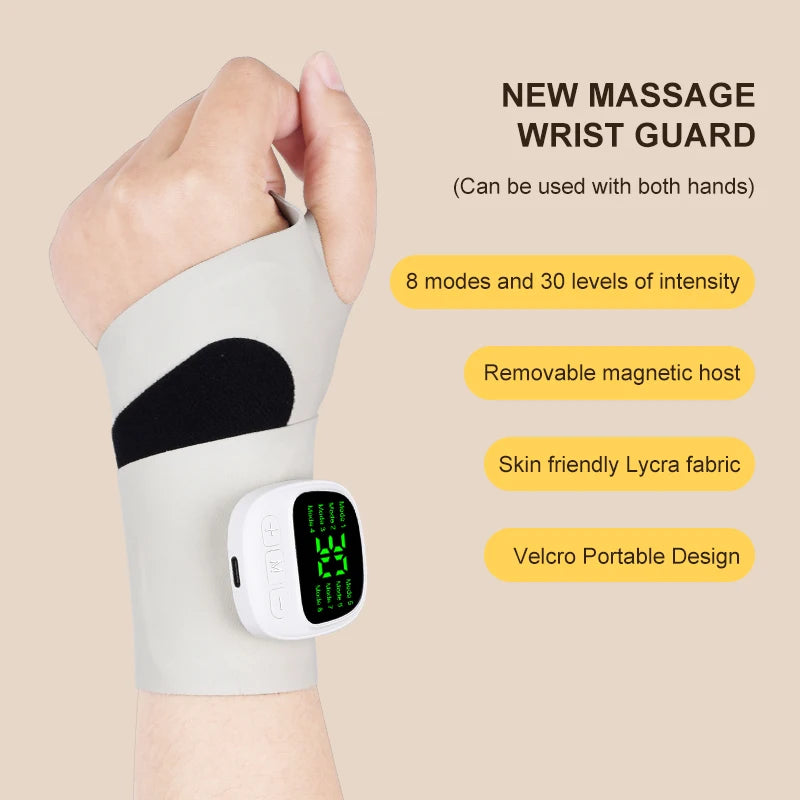
If you want additional comfort after exercising, a portable wrist therapy device for parents may provide soothing vibration that complements—not replaces—your recovery exercises.
How Long Does Wrist Tendonitis Take to Heal?
Recovery timeline by severity
- Mild: Approximately 2–4 weeks with consistent home care.
- Moderate: Around 4–8 weeks.
- Persistent or chronic: Several months depending on ongoing tendon irritation.
Signs you are improving
- Less morning stiffness.
- Improved grip strength.
- Reduced pain during daily tasks.
- Greater wrist flexibility.
Factors that delay healing
- Continuing painful repetitive activities.
- Returning to sports too quickly.
- Ignoring worsening symptoms.
- Poor workstation ergonomics.
- Skipping strengthening exercises once pain improves.
Even after symptoms improve, continue gradual strengthening to reduce the chance of recurrence.
When to See a Healthcare Professional
Seek medical evaluation if you experience:
- Severe pain after an injury.
- Visible deformity.
- Significant swelling or redness.
- Numbness or persistent tingling.
- Loss of grip strength.
- Pain lasting longer than several weeks despite appropriate home treatment.
A healthcare professional may recommend imaging, supervised physical therapy, or additional treatments if conservative care is not providing adequate improvement.
Frequently Asked Questions
What is the fastest home remedy for wrist tendonitis?
The fastest approach combines temporary activity modification, ice after painful activities, gentle stretching, and gradual strengthening. There is no instant cure, but combining these treatments usually provides quicker relief than relying on only one method.
Is heat or ice better for wrist tendonitis?
Ice is generally more helpful during painful flare-ups or after repetitive activity because it helps reduce irritation. Heat may feel better before stretching or exercise if stiffness is your main symptom.
Can wrist tendonitis heal without medication?
Yes. Many mild cases improve through activity modification, home exercises, stretching, ergonomic improvements, and patience. Medication is not always necessary.
Should I wear a wrist brace all day?
No. A brace can reduce painful movement during certain activities or while sleeping, but wearing it continuously may contribute to stiffness. Use it strategically unless directed otherwise by your healthcare provider.
How do I know if it's tendonitis or carpal tunnel syndrome?
Tendonitis usually causes localized pain that worsens with movement. Carpal tunnel syndrome commonly produces numbness, tingling, or burning in the thumb, index, middle, and part of the ring finger.
What activities should I avoid while healing?
Limit repetitive gripping, heavy lifting, prolonged typing without breaks, and sports or exercises that significantly increase pain until symptoms improve.
Can I exercise with wrist tendonitis?
Yes. Gentle stretching and progressive strengthening are encouraged once severe pain settles. Stop exercising if pain becomes sharp or continues worsening afterward.
How can I prevent wrist tendonitis from returning?
Maintain wrist strength, improve ergonomics, increase training loads gradually, take regular movement breaks, and avoid repeating painful movements for long periods without rest.
Pillar Article: What to do for wrist pain: step-by-step relief guide at home
Other Related Articles:
- Heating pad for wrist pain: how to use it correctly
- Home care for wrist pain: how to reduce discomfort fast
- Wrist pain remedies at home: simple steps that work
Explore More:













