

Does a USB powered heated vest really keep you warm?
Yes, a USB powered heated vest can provide noticeable, targeted warmth by using a compatible power bank to heat areas such as the chest and back. It is especially useful for commuting, travel, outdoor work, and everyday activities because it adds active heat without the bulk of another heavy layer. Most 5V USB heated vests provide moderate warmth rather than the maximum heat output of higher-voltage systems, so they work best as part of a flexible layering system in cool to moderately cold conditions.
USB Powered Heated Vest: Pros, Cons, How They Work & Best Picks (2026 Guide)
USB Powered Heated Vest: What to Expect Before You Buy
A USB powered heated vest is designed to add targeted warmth to your core using heating elements connected to a USB-compatible power bank. Unlike a conventional insulated vest, it does not rely only on trapped body heat. Instead, it actively generates warmth through built-in heating zones that you can typically adjust with a controller or button.
The biggest advantage is flexibility. A USB heated vest is generally lightweight, easy to layer, and compatible with widely available portable power banks. The trade-off is that standard 5V USB systems usually deliver moderate rather than extreme heat. For most users, that makes them a practical choice for daily commuting, travel, outdoor tasks, and mild-to-cold weather—not a complete replacement for a properly insulated winter jacket in severe conditions.
When comparing the best USB heated vest options, focus on four things: heating performance, power-bank compatibility, comfort and fit, and real-world runtime. The right model should provide consistent warmth without creating unnecessary bulk or requiring a proprietary battery system.
Best USB Powered Heated Vest Picks (Tested & Compared)
To help you choose the best USB heated vest, we compared the main features that affect everyday performance: heating zones, USB power requirements, estimated runtime, comfort, and intended use. The options below represent different priorities, from everyday value to portability and more demanding outdoor use.
Quick Comparison Table (Battery, Heat Zones, Runtime)
| Vest | Heat Zones | Power Input | Estimated Runtime | Best For |
|---|---|---|---|---|
| Model A | 5 Zones | 5V/2A USB | 4–8 hours | All-around use |
| Model B | 3 Zones | 5V/2A USB | 3–6 hours | Budget buyers |
| Model C | 7 Zones | 5V/3A USB | 5–9 hours | Cold commuting |
Best Overall USB Heated Vest
The best overall choice balances consistent heating, comfortable materials, useful heat-zone coverage, and reasonable power consumption. A model with chest and back heating zones is particularly practical because it warms the core while leaving the arms unrestricted for driving, walking, or other daily activities.
- ✔ Multiple heat levels for changing weather conditions
- ✔ Soft, flexible fabric for comfortable layering
- ✔ Standard USB compatibility for convenient portable power
- ✔ Balanced coverage for everyday warmth without excessive bulk
View the USB powered heated vest here
Best Budget USB Heated Vest
Budget USB heated vests are a practical option when you want active warmth without paying for a more complex high-voltage battery system. They typically use fewer heating zones, but a well-designed 5V/2A model can still provide useful warmth for commuting and everyday wear.
The main compromise is usually reduced coverage or less powerful heating. For occasional use, however, a simple design can offer good value when paired with a reliable compatible power bank.
Best for Commuting & Daily Use
For commuting, look for a lightweight portable heated vest that fits comfortably beneath a coat or over a base layer. Moderate heat, easy controls, and a power bank that can last through a typical commute are usually more important than the highest possible temperature.
Best Lightweight & Travel-Friendly Option
Travel-friendly designs prioritize low bulk, flexible fabric, and simple USB power. They are easy to pack into a backpack or suitcase and can be useful when temperatures change throughout the day or when indoor and outdoor conditions vary.
Best Premium USB Heated Vest
A premium USB heated vest typically offers more refined materials, broader heat-zone coverage, better temperature control, and improved comfort during extended wear. These features can justify a higher price for users who rely on heated clothing regularly rather than only occasionally.
Best for Outdoor Work
For outdoor work, prioritize durable construction, dependable heating coverage, easy-to-operate controls, and compatibility with a sufficiently large power bank. A vest should also fit comfortably under an outer shell without restricting movement.
⏱ 6 min read
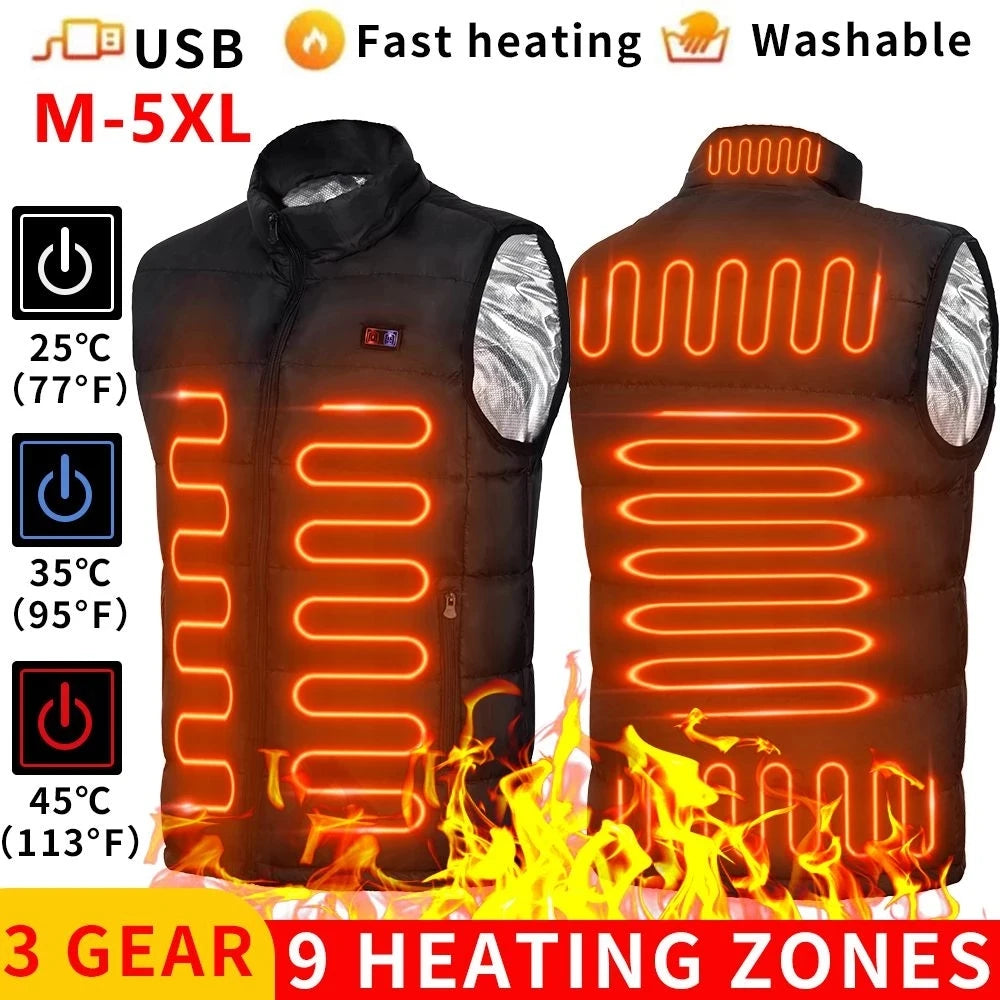
USB powered heated vest for everyday warmth and mobility — See it in action
How We Tested and Ranked These USB Heated Vests
We evaluated USB heated vest options using the features that most directly affect real-world usefulness. Because USB-powered models vary in heat output, battery requirements, construction, and intended use, a single specification does not determine which vest is best for everyone.
Testing Criteria
- Heating performance: How effectively the vest distributes warmth across the chest, back, and other heated zones.
- Battery compatibility: Whether the vest works with common USB power banks and has clear power requirements.
- Comfort and fit: How easily the vest can be worn during movement or layered under outerwear.
- Runtime practicality: Whether expected battery life matches common commuting, travel, and outdoor-use scenarios.
- Value for money: Whether the heating coverage and features justify the overall cost.
Scoring Methodology
We give the greatest weight to consistent heating and practical power compatibility, followed by comfort, portability, durability, and value. A vest that produces strong heat but is uncomfortable or difficult to power may be less useful for everyday wear than a slightly less powerful model that is lightweight and easy to use.
Why Choose a USB Heated Vest Instead of Traditional Layers?
A USB heated vest adds active warmth directly to the core, helping you adjust your comfort without automatically adding another thick layer. This can be useful when temperatures fluctuate throughout the day or when you need warmth while keeping your arms free for driving, walking, cycling, or work.
- ✔ Less bulk and better mobility
- ✔ Adjustable heat for changing conditions
- ✔ Works with common USB power banks
- ✔ Easy to pack for commuting and travel
- ✔ Useful as part of a flexible layering system
The key expectation is that a USB rechargeable heated vest complements insulation rather than replacing every other layer. In colder weather, combining active heat with an appropriate base layer and outer shell can provide more complete protection.
How Does a USB Heated Vest Work?
A USB heated vest converts electrical energy from a compatible power bank into heat through flexible heating elements built into selected areas of the garment. A controller or integrated button typically allows the wearer to select different heat levels.
Heating Elements
Many heated vests use thin conductive wires, carbon-based heating elements, or similar flexible components positioned in areas such as the chest and upper back. These elements are designed to distribute warmth while remaining flexible enough for normal movement.
Temperature Controls
Most models offer multiple heat settings. Lower settings can help conserve battery power during longer periods of use, while higher settings provide more immediate warmth but generally consume energy faster.
USB Power Delivery
The power bank sends electricity through the vest's USB connection to the heating elements. The amount of power available affects how consistently and intensely the vest can heat. This is why checking the vest's required USB output is important before choosing a battery.
- Power Source: Typically 5V USB output
- Heating Elements: Flexible conductive elements distributed through selected zones
- Temperature Control: Usually adjustable through multiple heat settings
- Heat Zones: Often concentrated around the chest and back for core warmth
USB Heated Vest Battery Requirements & Performance Explained
Battery compatibility is one of the most important factors when choosing a heated vest with USB power bank support. Capacity affects how long the vest can operate, while output affects whether it can deliver the power required for consistent heating.
What Power Bank Do You Need? (5V/2A vs 5V/3A)
- 5V/2A: A common requirement for basic USB heated vests and moderate heating performance.
- 5V/3A: Provides a higher available current for models designed to support stronger or more consistent heating.
Always check the vest's specific requirements before purchasing a USB battery for a heated vest. A larger capacity power bank is not automatically better if its output does not match the garment's requirements.
Realistic Heating Time by Battery Capacity
- 10,000mAh: Approximately 3–5 hours in many typical use scenarios
- 20,000mAh: Approximately 6–9 hours in many typical use scenarios
- Higher heat settings: Usually reduce runtime compared with lower settings
Actual runtime depends on the vest's power draw, battery efficiency, temperature setting, battery condition, and ambient temperature. Treat these figures as practical estimates rather than guaranteed results.
Why Some USB Vests Feel Less Powerful
Standard USB heated vests often operate at lower voltage than some dedicated heated clothing systems. That can limit maximum heat output, especially in very cold conditions. Their strength is usually convenience, portability, and compatibility with common power banks rather than maximum heat intensity.
Recommended USB Power Banks
Choose a reputable power bank with enough capacity for your expected wear time and an output rating that meets the vest manufacturer's requirements. For a full day away from a power outlet, a higher-capacity model can be useful, but it may also add weight to the garment.
Before using a new battery, verify the connector type, voltage, current requirements, and whether the vest is designed for standard USB-A, USB-C, or another connection format.
USB Heated Vest Pros and Cons (Real-World Use)
Advantages of USB Heated Vests
- Works with widely available USB power banks
- Lightweight and portable compared with some dedicated heated systems
- Often more affordable than higher-voltage heated clothing
- Provides targeted warmth without covering the arms
- Convenient for commuting, travel, and everyday wear
Limitations & Trade-Offs (Important Before Buying)
- May produce less maximum heat than some dedicated higher-voltage systems
- Performance depends on the quality and output of the power bank
- May need additional insulation in freezing or severe conditions
- Higher heat settings reduce battery runtime
- Some models may require a specific connector or output rating
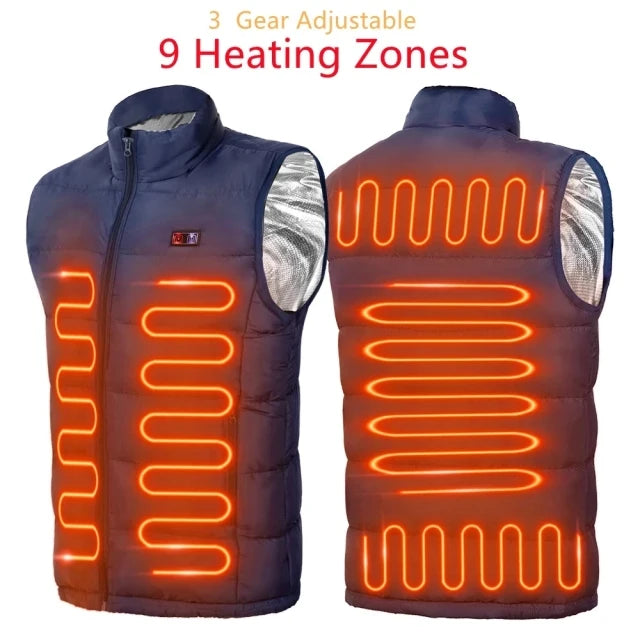
Portable heat clothing designed for modern commuting — See it in action
USB Heated Vest vs Other Heated Clothing
The best heated clothing option depends on how much warmth you need, how portable the system should be, and whether you prefer to use a standard power bank or a dedicated battery pack.
USB Vest vs Battery-Pack Vest
A USB powered heated vest typically offers broader power-bank compatibility and easier replacement options. A dedicated battery-pack vest may provide higher output or a more integrated design, but the battery can be more expensive or proprietary.
USB Vest vs Heated Jacket
A heated jacket generally provides more complete coverage because it combines heated zones with sleeves and an outer layer. A USB vest is usually lighter and more versatile because it can be worn beneath an existing jacket or outer shell.
USB Vest vs Heated Hoodie
A heated hoodie can offer additional warmth around the head and upper body, while a vest keeps the arms unrestricted and is often easier to layer. A USB heated vest is usually the more flexible choice for commuting, travel, and activities where mobility matters.
- USB Heated Vests: Portable, lightweight, and typically moderate in heat output
- Battery-Pack Vests: May offer stronger or more integrated power systems
- Heated Jackets: Provide broader body coverage and stronger cold-weather protection
- Heated Hoodies: Combine heated torso coverage with a hood and casual styling
Best Use Cases: Who Should Buy a USB Heated Vest?
Commuting in Mild to Cold Weather
A portable heated vest for commuting is useful when you need targeted warmth during walks, public transportation, driving, or outdoor waiting periods. A lightweight design can be worn beneath a coat without creating excessive bulk.
Outdoor Work & Travel
USB heated vests provide portable warmth for travel and light outdoor tasks where access to a power outlet may be limited. A sufficiently large power bank can extend use throughout the day, provided it meets the vest's power requirements.
Cycling & Lightweight Activities
A sleeveless heated design can preserve arm mobility during cycling and other light activities. Look for a secure fit and breathable construction, and remember that active movement can change how much heat you actually need.
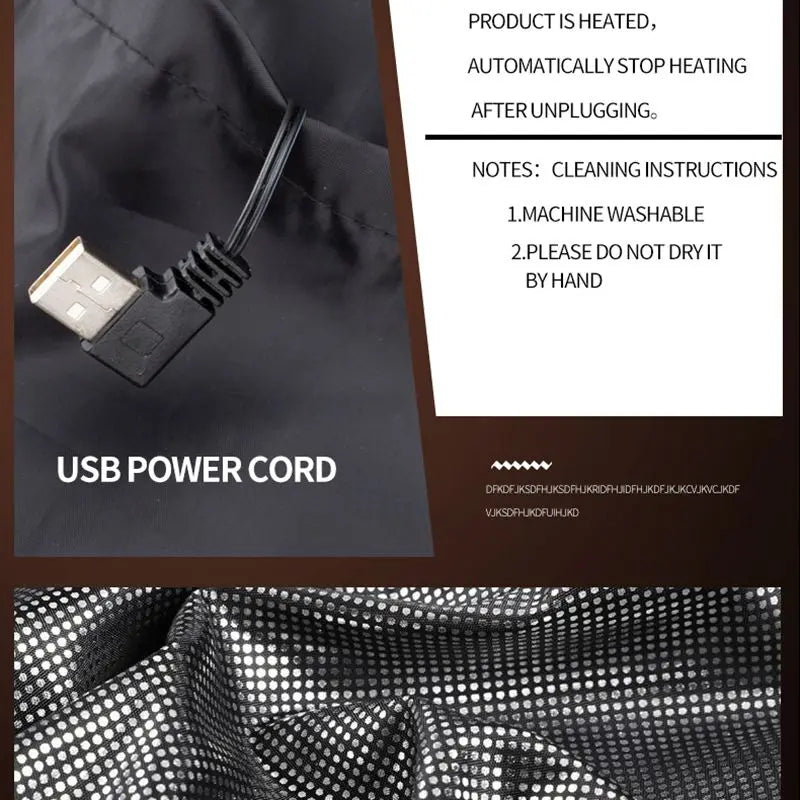
Heated vest for cold commuting with flexible comfort — See it in action
Buying Guide: How to Choose the Best USB Heated Vest
Heating Zones & Placement
Chest and upper-back zones are often sufficient for everyday core warmth. Additional zones can increase coverage, but more heating elements may also affect power consumption. For daily commuting, several well-positioned zones may be more useful than simply choosing the highest number.
Fabric & Insulation Type
Consider the vest's outer fabric, lining, breathability, and ability to layer beneath a jacket. Fleece-lined or softshell materials can improve comfort and heat retention, while lighter fabrics may be preferable for active use.
Safety Features (Overheat Protection)
Look for clear temperature controls and built-in safety features such as thermal regulation or automatic shutoff when provided by the manufacturer. Use only compatible power sources and stop using the garment if the wiring, connector, or fabric shows signs of damage.
Fit, Layering & Comfort
A comfortable fit helps the heated zones remain close enough to the body to provide effective warmth, but the vest should not feel restrictive. Choose a size that allows the layers you expect to wear underneath or over the vest.
Warranty & Washability
Check the care instructions, warranty coverage, and whether the battery must be removed before washing. A clear maintenance process can make a meaningful difference if you plan to wear the vest frequently.
USB Heated Vest Care, Maintenance & Safety Tips
Washing Instructions
Follow the manufacturer's care instructions. In most cases, the power bank should be disconnected and removed before washing, and any exposed electrical connectors should be protected as directed. Do not assume every USB heated vest is safe for machine washing.
Battery Storage
Store the power bank separately when the vest is not in use for an extended period. Keep batteries in a dry location and follow the battery manufacturer's recommendations for long-term storage and charging.
Cold Weather Safety
Use the vest only as intended and inspect the garment, cable, and connector before use. Do not continue using a damaged heating system. In very cold conditions, combine the vest with appropriate clothing and protection rather than relying on a USB heating system alone.
Frequently Asked Questions About USB Heated Vests
How long does a USB heated vest stay warm?
Many USB heated vests operate for approximately 3 to 9 hours, depending on the power-bank capacity, heat setting, power draw, and battery condition. Higher heat settings generally use more energy.
What size power bank is best for a USB powered heated vest?
A 10,000mAh power bank can be suitable for shorter periods of use, while a 20,000mAh model may provide longer runtime. The best choice depends on the vest's power requirements, expected wear time, and how much battery weight you are comfortable carrying.
Can I wash a USB heated vest?
Many heated vests can be washed after the power bank is removed, but the exact method varies by product. Always follow the manufacturer's washing instructions and disconnect all removable power sources first.
Is a USB heated vest safe for daily use?
A USB heated vest can be used regularly when operated according to the manufacturer's instructions with a compatible power source. Inspect the vest and cables for damage, follow the recommended power requirements, and use the available temperature controls appropriately.
Can you use any power bank with a heated vest?
No. The power bank should meet the vest's required voltage and current output and use a compatible connector. A high-capacity battery is not necessarily suitable if its output does not match the vest's requirements.
Do all USB heated vests support USB-C power banks?
No. USB heated vests can use different connector types and power configurations. Check the product specifications before buying a USB-C power bank or adapter.
How many heat zones are enough for everyday commuting?
For everyday commuting, chest and back heating zones are often sufficient for useful core warmth. More zones can provide broader coverage, but the best configuration depends on the vest's design, power consumption, and your preferred level of warmth.
Is a USB heated vest warm enough without a winter jacket?
In mild to moderately cold conditions, a USB heated vest may provide useful warmth on its own when combined with suitable clothing. In freezing or severe weather, it is generally better to use it as part of a complete layering system with appropriate insulation and weather protection.
How long does a 10000mAh battery last in a heated vest?
A 10,000mAh battery may power a USB heated vest for roughly 3 to 5 hours in many typical use situations, although actual runtime varies by the vest's power draw and heat setting.
Pillar Article: Best Heated Vest for Winter Compared Side by Side
Other Related Articles:
- Heated Vest Without Bulky Layers Is It Worth It
- Lightweight Heated Vest Daily Wear Compared
- Graphene Heated Vest Unisex Options Compared
- Heated Vest Review Which Models Are Worth It
Explore More:













